
Table of Contents
Figuring out your Mexico travel essentials shouldn’t feel like guesswork. Between coastal humidity in Cancún, cool evenings in Oaxaca’s highlands, and the unpredictable afternoon downpours of rainy season, a one-size-fits-all packing list rarely covers everything. This guide pulls together what actually matters — documents, health and safety gear, clothing, tech, and toiletries — so you can build a list that fits your specific trip instead of copying someone else’s beach vacation.
Whether you’re headed to Puerto Vallarta for a week at an all-inclusive resort or backpacking through Yucatán ruins and Mexico City markets, the fundamentals below apply. We’ll also break down how packing shifts by region and altitude, since Mexico’s climate is far more varied than most first-time visitors expect. For more destination-specific packing advice beyond Mexico, browse the rest of our travel guides.
Why a Mexico Travel Essentials List Matters
Mexico is enormous and climatically diverse. A traveler packing only for beach days in Riviera Maya will be underprepared for a chilly evening in San Cristóbal de las Casas, and vice versa. Getting your Mexico travel essentials right up front means fewer emergency purchases, fewer stomach issues from unfiltered water, and fewer moments of realizing — three days in — that you left something critical at home.
There’s also a safety dimension. While most trips to Mexico are uneventful, petty crime does happen in tourist-heavy areas, and some regions carry a higher risk profile due to cartel activity near certain border zones. None of this should stop you from traveling, but it does mean your packing list should include a few safety items most generic travel guides skip.
Travel Documents and Money
Passport, Visa, and the FMM Tourist Card
Every international trip starts with the same non-negotiable: a valid passport. Before you fly, it’s worth a quick check of the current U.S. travel advisory for Mexico so you know if any specific regions carry extra precautions. Make sure it won’t expire during your stay, and keep a digital copy — a photo on your phone or an email to yourself — as backup in case the original is lost or stolen.
Most travelers from the United States, Canada, the United Kingdom, the Schengen Area, and Japan don’t need a separate tourist visa for stays under 180 days. What you will need is the tourist card (FMM) — the Forma Migratoria Múltiple, Mexico’s official visitor permit. If you fly in, this is often processed electronically with your passport stamp. If you cross by land, you’ll typically need to complete the form at the border or online beforehand. Keep the paper copy safe; losing it can mean a fine when you leave the country.
If you’re planning to rent a car, bring your driver’s license too, even if you’re not sure you’ll need it. Plans change, and having it on hand costs nothing.
Travel Insurance
Travel insurance rarely makes anyone’s “exciting” packing list, but it belongs at the top of your Mexico travel essentials regardless. U.S. health insurance frequently doesn’t cover care abroad, and unexpected medical costs — even for something as ordinary as a sprained ankle on a hike — can run into thousands of dollars paid up front, in cash, before treatment.
Save your policy and emergency contact numbers to your phone so you’re not digging through email if something goes wrong. A PDF saved offline works fine; you don’t need a signal to open it.
Cash, Cards, and Currency Tips
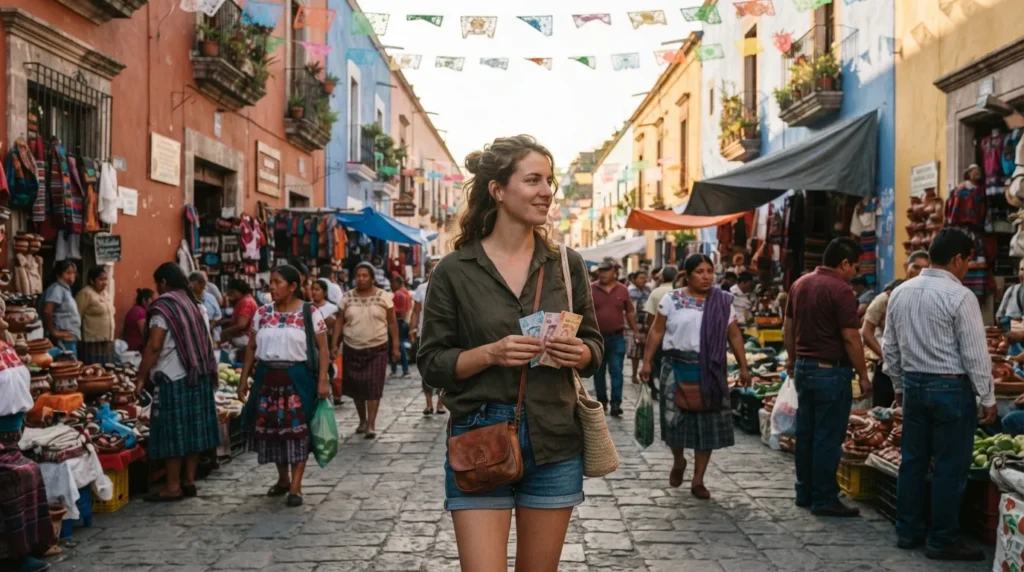
Mexico runs on a mix of pesos and cards, and the split matters more than first-time visitors expect. Tourist zones, hotels, and restaurants in cities like Mexico City, Oaxaca City, and Puerto Escondido widely accept credit cards and debit cards. Smaller towns, street food stalls, and local markets are frequently cash-only.
ATMs typically dispense large bills that street vendors can’t break, so it’s worth packing a small coin purse for pesos and smaller denominations. Notify your bank before you travel so your card isn’t flagged for suspicious activity, and stick to ATMs attached to actual bank branches rather than standalone kiosks in tourist areas, which carry a higher fraud risk.
Worked example: A traveler heading to Sayulita for a week budgets 2,000–3,000 MXN in small bills and coins for daily taco stands, beach vendors, and tips, while relying on a card for hotel and restaurant bills in town. This split avoids both the awkwardness of handing over a 500-peso note for a 30-peso coconut and the risk of carrying too much cash at once.
Health and Safety Essentials
Water Safety and Filtered Bottles
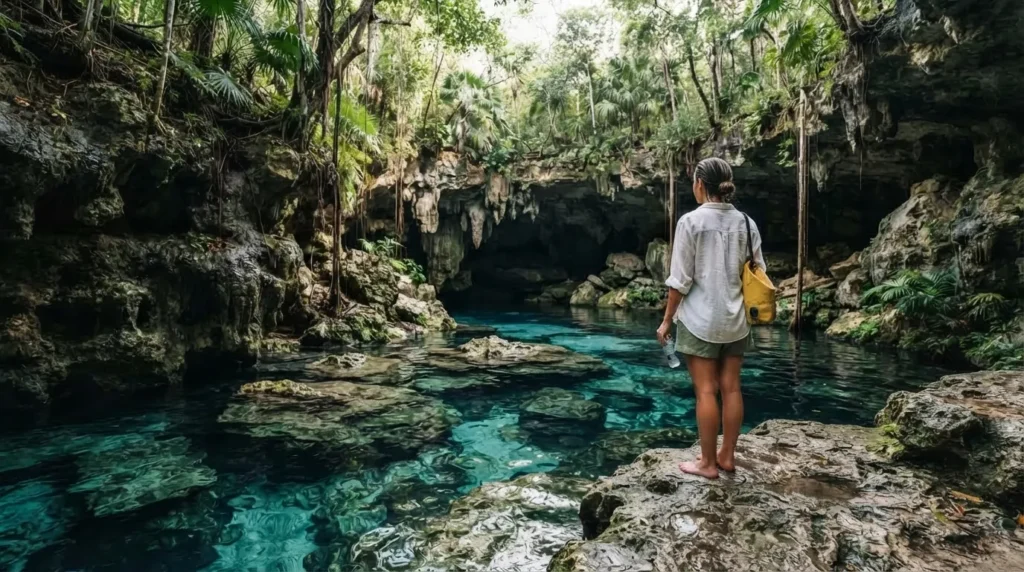
Tap water in Mexico isn’t safe to drink, even in major cities. Locals don’t drink it either, which is the clearest signal you should skip it too. A filtered water bottle — LifeStraw is the most recognized brand, but several competitors make similarly effective ones — filters out bacteria, parasites, and microplastics on the go, cutting down on single-use plastic and the ongoing cost of bottled water.
Pair this with electrolyte packets for days when the heat, altitude, or an off meal leaves you dehydrated faster than usual.
Sun Protection and Bug Defense
Reef-safe sunscreen protects both your skin and the coral ecosystems along Mexico’s coast — regular sunscreen containing oxybenzone and octinoxate is genuinely harmful to reefs, and some marine parks now restrict it. Pack a sunburn treatment like aloe vera as backup; even careful travelers get caught out occasionally.
Insect repellent and mosquito bite relief deserve equal attention. Most people remember the spray and forget the after-care — a patch or cream with aloe and witch hazel makes a meaningful difference on a multi-day trip through jungle or rainforest regions.
First Aid and Medication
A basic first aid kit — bandages, antiseptic cream, moleskin, ibuprofen — covers minor scrapes and blisters from a day of exploring ruins or cobblestone streets. For anything more serious, pack over-the-counter remedies for Montezuma’s revenge (traveler’s diarrhea), since even cautious eaters occasionally react to unfamiliar food or water. Imodium and electrolyte tablets are common choices; some experienced travelers also carry a prescription antibiotic as a backup.
If you take prescription medications, bring enough for your full trip plus a few extra days, along with any paperwork confirming what they are — Mexican pharmacies are well stocked, but having documentation in a language you understand saves confusion if you need a refill or run into customs questions.
Personal Safety Gear for Solo and Female Travelers
Mexico is safe for the overwhelming majority of visitors, but sensible precautions are still worth packing. A portable door lock gives extra peace of mind in hotels or short-term rentals, particularly for solo travelers. A compact personal safety alarm — small enough to clip to a keychain — is a low-cost addition that many solo female travelers specifically recommend.
A beach lock box or small travel lock is useful if you’re leaving valuables on shore while you swim, and a secured crossbody bag with a zipper closure is a simple deterrent against pickpocketing in crowded markets or on public transit.
Clothing and Footwear to Pack
Building a Capsule Wardrobe
Rather than overpacking, most experienced Mexico travelers build a small capsule wardrobe: a handful of mix-and-match tops, one or two bottoms in neutral colors, a swimsuit, a cover-up, and layering pieces for cooler evenings. This approach works whether you’re traveling carry-on only or checking a bag, and it saves suitcase space for souvenirs.
Core pieces worth including:
- T-shirts and tank tops
- A lightweight dress or jumpsuit for evenings out
- Shorts and one pair of lightweight pants
- A sarong — genuinely one of the most versatile items you can pack, doubling as a beach cover-up, scarf, or head covering at religious sites
- A light jacket or sweater for air-conditioned restaurants and cooler nights
- A packable rain jacket, especially if you’re traveling during rainy season (roughly May through October)
- Swimwear — pack two if you’re beach-focused, so one is always dry
Because parts of Mexico, especially cities and smaller towns, lean more conservative than beach resorts, it’s worth packing at least one outfit that covers shoulders and knees for visits to churches, formal restaurants, or more traditional communities.
Footwear for Beaches, Cities, and Hikes
Footwear is where packing lists go wrong most often — people either bring too many pairs or the wrong kind entirely. A practical approach covers three bases:
- Flip-flops or water sandals for the beach, pool, and quick trips to a corner store
- Comfortable walking shoes or lightweight sneakers for cities, markets, and archaeological sites, where cobblestones and uneven ground are common
- Proper hiking shoes, only if your itinerary includes serious trekking (waterfalls, mountain trails, or the Copper Canyon)
Water shoes are worth the extra space if you’re planning to visit cenotes, since some have rocky entry points that flip-flops can’t handle safely.
Tech and Gadgets Worth Bringing
Beyond the obvious phone and charger, a few tech items consistently show up on seasoned travelers’ lists. A Mexican SIM card or eSIM gets you better local coverage and cheaper data than most international roaming plans — Telcel is the most widely used provider, and SIMs are available at the airport for roughly $15–20 USD.
A power bank is close to mandatory if you’re taking long-distance buses (Mexico City to Oaxaca can run seven hours) or spending full days away from an outlet at ancient sites. Pack a plug adapter only if you’re traveling from Europe or another region using non-Type-A/B outlets — U.S. and Canadian travelers don’t need one, since Mexico uses the same plug types.
A waterproof phone case is worth it for cenote swimming, boat trips, and rainy season downpours. If you’re a serious photographer, an underwater camera or GoPro captures snorkeling and diving moments a phone case can’t. Headphones or earbuds make long travel days more bearable, and a Kindle or a couple of physical books cover downtime at the beach or during flights.
Bags, Luggage, and Packing Organization
Your choice of bag depends heavily on your itinerary. A 25–35L backpack or a hard-shell carry-on suitcase works well for beach-focused trips or short stays; a larger bag makes more sense if you’re combining multiple regions or bringing gear for hiking and snorkeling.
Compression packing cubes are close to universally recommended — they organize clothing by type, compress bulk, and make repacking mid-trip far faster. A dry bag protects phones, cameras, and electronics during boat trips, cenote visits, or beach days, and a small crossbody bag or daypack keeps your essentials — phone, cash, sunscreen — close and secure while you explore.
Worked example: A traveler splitting a 10-day trip between Tulum beaches and a few days in Mexico City packs one 35L carry-on backpack using three packing cubes (tops, bottoms, swimwear), a foldable dry bag for cenote days, and a small crossbody bag that doubles as their daily “go-bag” in both locations — no checked luggage, no lost bag risk.
Toiletries and Personal Care
Most major toiletry brands sold in the U.S. are also available in Mexico, so there’s no need to overpack. A lean toiletries list covers:
- Reef-safe sunscreen and after-sun aloe vera
- Toothbrush, toothpaste, and floss
- Shampoo, conditioner, and soap (many hotels provide these — check before duplicating)
- Deodorant and razor
- Hand sanitizer and face wipes
- Period products, since brand availability varies outside major cities
- Prescriptions, supplements, and a basic travel medicine kit
Sticking to travel-sized containers keeps you within carry-on liquid limits and saves suitcase weight for the trip home.
Regional Packing Differences: Coast vs. Highlands
Cancún, Riviera Maya, and Puerto Vallarta
Coastal destinations stay hot and humid nearly year-round, so lightweight, breathable fabrics — linen and cotton over synthetics — make the biggest comfort difference. Expect to live in swimwear, cover-ups, and sandals, with one slightly dressier outfit for dinners at resorts or beach clubs.
Oaxaca and the Highlands
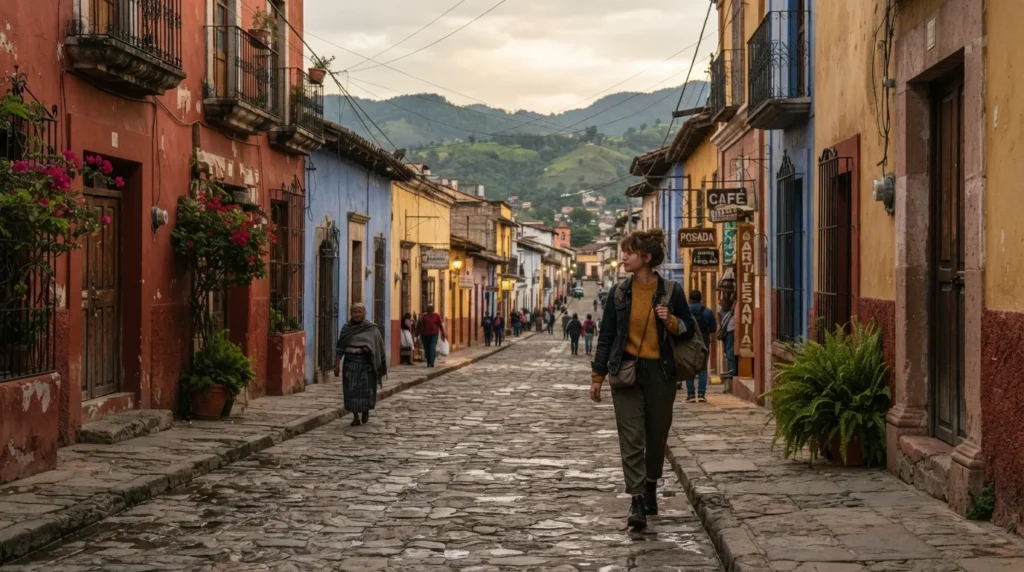
Altitude changes everything. Oaxaca City sits around 1,550 meters, and San Cristóbal de las Casas climbs to roughly 2,200 meters — high enough that evenings can drop into the 8–12°C range even during summer. If your trip includes highland cities, pack at least one real layer: a sweater, a light jacket, or both, plus long pants for cooler nights that coastal-only packing lists won’t prepare you for.
Mexico Travel Essentials Quick-Reference Checklist
| Category | Key Items |
|---|---|
| Documents & Money | Passport, FMM tourist card, travel insurance, pesos, credit/debit cards |
| Health & Safety | Filtered water bottle, reef-safe sunscreen, insect repellent, first aid kit, diarrhea medication, personal safety alarm |
| Clothing | Capsule wardrobe basics, swimwear, sarong, light jacket, rain jacket |
| Footwear | Sandals, walking shoes, water shoes, hiking shoes (if needed) |
| Tech | Mexican SIM/eSIM, power bank, plug adapter (if needed), waterproof phone case |
| Bags | Packing cubes, dry bag, crossbody bag or daypack |
| Toiletries | Sunscreen, toiletries in travel sizes, prescriptions, period products |
Smart Packing Tips from Experienced Travelers
- Lay out everything you think you need, then remove half the clothes — you’ll rarely miss them.
- Wear your bulkiest shoes and jacket on the plane instead of packing them.
- Choose one neutral bottom color so tops and accessories can mix freely without extra shoe or jewelry weight.
- Roll clothing instead of folding to save space and reduce wrinkles.
- Photograph your documents and email them to yourself before you leave home, separate from the physical copies.
Frequently Asked Questions
Do I need a visa to travel to Mexico?
Most travelers from the U.S., Canada, the U.K., the Schengen Area, and Japan don’t need a separate tourist visa for stays under 180 days, but you will need the FMM tourist card. Check with your local consulate if you hold a passport from elsewhere.
Is tap water safe to drink in Mexico?
No. Stick to bottled or filtered water throughout your trip, including for brushing your teeth if you’re being cautious.
Do I need a power adapter for Mexico?
Not if you’re traveling from the U.S. or Canada — outlets are the same Type A/B standard. Travelers from Europe, the UK, or other regions will need an adapter.
What should I pack for Mexico’s rainy season?
A packable rain jacket is essential between roughly May and October, along with quick-dry clothing and a dry bag for electronics.
Is Mexico safe for solo female travelers?
Millions of solo travelers visit Mexico safely every year. Standard precautions — a secured crossbody bag, a personal safety alarm, avoiding isolated areas at night — go a long way, and tourist zones generally see far less crime than the headlines suggest.
Do I need a Mexican SIM card?
It’s not mandatory, but it’s worth it. Local SIMs and eSIMs offer better coverage and cheaper data than most international roaming plans.
Conclusion
The right Mexico travel essentials list isn’t about packing everything — it’s about matching your gear to your actual itinerary, climate, and comfort level. Nail the documents, water safety, sun and bug protection, and a capsule wardrobe that adapts to both coast and highlands, and the rest is just details. Pack smart, leave room for souvenirs, and get ready to enjoy the trip instead of managing your luggage.