
Table of Contents
Getting your Thailand travel essentials right before you fly saves you money, time, and at least one sweaty argument with a suitcase zipper. Thailand’s heat, humidity, and mix of temples, beaches, and cities mean a packing list built for Europe or North America simply doesn’t translate. This guide breaks down exactly what to bring, what to skip, and why—season by season, activity by activity. For more destination-specific packing guides and travel tips, check out our full travel blog.
Whether you’re backpacking for a month or flying in for a ten-day resort trip, the core list below adapts to both. We’ll also cover cultural rules, local laws, and the small gear choices (like a reef-safe sunscreen or the right daypack) that make a bigger difference than most first-time visitors expect.
Understanding Thailand’s Climate Before You Pack
Thailand runs on a tropical climate with three loose seasons: hot and dry (March–May), wet (May–October), and cool and dry (November–February). “Cool” is relative—daytime temperatures still sit in the high 20s°C (80s°F) most of the year.
Humidity, not heat alone, is what wrecks a packing list. Cotton takes hours to dry after a downpour or a sweaty scooter ride. That’s why breathable clothing in linen, bamboo, or moisture-wicking synthetic blends consistently outperforms anything heavy or tightly woven.
Rainy Season vs. Dry Season Packing
If you’re traveling between May and October, a rain jacket, a backpack rain cover, and a couple of zip-lock bags for electronics are non-negotiable. Sudden, short downpours are normal—not the all-day monsoon many travelers picture.
During the dry season (November–February), mornings and evenings in the north (Chiang Mai, Pai) can dip cool enough for a light layer. Bangkok and the southern islands stay warm year-round.
| Season | Months | Must-Pack Extras | Skip |
|---|---|---|---|
| Hot/Dry | March–May | Sun hat, extra electrolytes, cooling towel | Heavy layers |
| Rainy | May–October | Rain jacket, dry bag, quick-dry shoes | Suede or leather shoes |
| Cool/Dry | November–February | Light jacket for evenings, layering pieces | Winter coats |
Worked example: A traveler flying into Chiang Mai in December packs a packable rain shell “just in case,” a light fleece for the 6 a.m. hilltop sunrise trek, and swaps it all for tank tops by midday in Bangkok two days later. That’s the layering logic this whole list is built around.
Layering for Air-Conditioned Spaces and Time Change Fatigue
Malls, airports, and long-distance buses in Thailand run brutally cold air conditioning. A packable cardigan or scarf isn’t optional if you want to enjoy shopping malls or a 10-hour overnight bus without shivering.
The time change from Europe or North America (6–14 hours depending on origin) also disrupts sleep for the first few days. Pack earplugs and a contoured sleep mask—cheap insurance against jet lag and thin hotel curtains.
Backpack vs. Suitcase: Choosing the Right Luggage
This is the first real decision on any Thailand travel essentials list, and it depends on your itinerary. Island hopping, train transfers, and unpaved roads favor a travel backpack (50–70L for longer trips, 28–40L for two weeks). A wheeled suitcase works fine if you’re mostly resort-based or moving between just two or three cities.
Carry-On Only and the 7kg Baggage Limit
Domestic budget carriers like AirAsia, Thai Lion Air, and Nok Air enforce a strict 7kg cabin limit—far tighter than international carry-on rules. If you’re taking any domestic flights, weigh your bag before you leave home.
Worked example: A traveler packs a 40L backpack for a Bangkok–Phuket–Koh Phi Phi route. At Don Mueang Airport, their bag weighs 9kg. They shift a jacket and a book into a tote bag carried separately to dodge the gate-side repacking scramble other passengers face.
Daypack, Belt Pouch, and Crossbody Bag Options
Your main bag stays at the hotel; a smaller daypack, belt pouch, or crossbody bag handles daily essentials—water, cash, phone, sunscreen, and a scarf for impromptu temple visits. Anti-theft zippers matter more in crowded markets and on night trains than most guides admit.
Thailand Travel Essentials: Documents, Money, and Tech
Every other item on this list is replaceable in Thailand’s 7-Elevens and markets. Documents and money are not, which is why they deserve their own category among your Thailand travel essentials.
Passport, Visa/TDAC, and Travel Insurance
Check passport validity—most entries require at least six months remaining. Confirm your visa requirement and complete the Thailand Digital Arrival Card (TDAC) before departure; rules shift periodically, so check close to your travel date.
Travel insurance is worth the cost even on a budget trip—motorbike accidents and food-related hospital visits are the most common claims among visitors. Keep both digital and printed copies of your passport, insurance policy, and flight confirmations.
Cash, Cards, and Currency Tips
Thailand still runs largely on cash, especially at markets, street food stalls, and songthaew rides. Budget roughly 1,000–1,500 baht per day for food, local transport, and incidentals, and bring at least one backup card in case your primary is blocked abroad.
ATM withdrawal fees add up fast (200–300 baht per transaction at many machines). Opt for “no conversion” when an ATM asks, letting your home bank apply the exchange rate.
Powerbank, Travel Adapter, eSIM, and SIM Cards
Thailand uses Type A, B, and C sockets at 220V. A universal travel adapter and a 10,000mAh powerbank cover almost every situation—GPS, photos, and translation apps drain batteries fast.
Set up an eSIM (Airalo or a Thai provider) before landing, or grab a tourist SIM card at the airport. Either gets Grab and other ride-hailing apps, Google Maps, and Google Translate working the moment you land—arguably the most useful modern Thailand travel essentials on this whole list.
Worked example: A solo traveler lands at Suvarnabhumi at midnight, activates a pre-purchased eSIM before leaving the plane, and books a Grab straight from arrivals—no cash exchange queue, no confusion with taxi touts.
What to Wear in Thailand: Clothing Essentials
A capsule wardrobe of 5–7 tops, 2–3 bottoms, and one swimsuit covers a two-week trip when you factor in cheap, fast local laundry. Stick to breathable clothing in neutral colors that mix and match easily.
Men’s Clothing List
- 3–4 breathable T-shirts
- 1 long-sleeve shirt (temple coverage)
- 1–2 pairs of shorts, 1 pair of lightweight long pants
- Swim trunks
- 1 light rain jacket
Women’s Clothing List
- 5–7 lightweight tops
- 2 pairs of temple-appropriate long pants or skirts
- 1–2 swimsuits
- A versatile sarong (doubles as a beach towel, temple cover-up, and blanket on cold buses)
- 1 light rain jacket
Temple Dress Code and the Grand Palace Dress Code
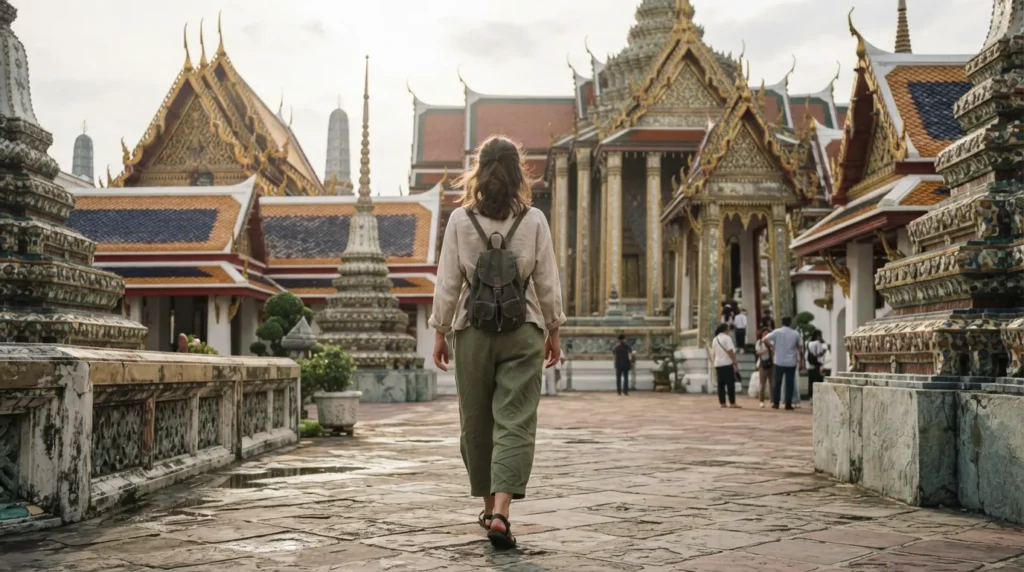
Shoulders and knees covered—no exceptions—at religious and royal sites. The Grand Palace dress code is stricter still: sleeved tops, no tight or torn clothing, no flip-flops, no spaghetti-strap tops. Rental covers exist at the gate, but arriving prepared saves queue time.
Footwear for Thailand
Two pairs beat three. Slip-on shoes or trainers work for cities and light trekking; flip-flops or trekking sandals cover the beach and casual days. Skip heavy hiking boots unless a multi-day jungle trek is actually on your itinerary—they’re bulky, slow to dry, and rarely necessary.
Worked example: A traveler doing Bangkok temples, Chiang Mai markets, and a Krabi beach stop packs slip-on sneakers and one pair of strapped sandals—enough for every stop without a third pair taking up backpack space.
Toiletries and Health Essentials
First-Aid Kit, Electrolytes, and Stomach Essentials
A compact first-aid kit (band-aids, antiseptic, pain relievers) covers minor issues; pharmacies handle the rest. For “Thai Tummy,” pack activated charcoal, electrolytes, and general stomach essentials like Imodium and rehydration salts. Probiotics beforehand can ease digestive support during the adjustment period.
Reef-Safe Sunscreen and Insect Repellent
Thailand enforces a national parks sunscreen ban on products containing oxybenzone, octinoxate, and similar bleaching agents in sunscreen that damage coral. Pack reef-safe sunscreen and bug spray or insect repellent from home—both cost more locally and selection is limited.
Vaccinations and Health Insurance
Check the CDC’s Thailand travel health page for recommended vaccinations well before departure. Carry a physical health insurance card alongside your digital policy.
Packing for Specific Trips and Activities
Beach and Island Hopping
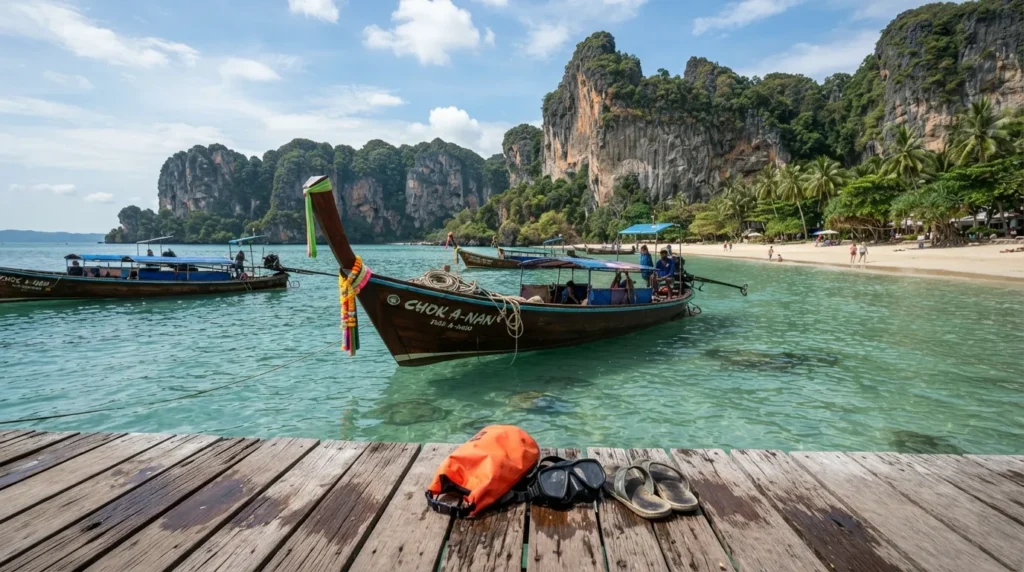
A dry bag, snorkel kit, and quick-dry towel handle boat transfers and impromptu swims. Pack a mesh laundry bag to separate salty, sandy clothes from clean ones.
Trekking and Jungle Packing
Lightweight trail runners beat heavy hiking boots in humidity. During wet-season treks, leech socks are genuinely useful, alongside trekking poles for muddy northern trails and purification tablets if you’ll need to treat stream water.
Packing for Bangkok and City Exploration
Slip-on shoes, a foldable tote bag (plastic bags are restricted at many retailers), and a portable fan make crowded, sun-baked spots like Chatuchak Market or the Grand Palace far more bearable.
Festival Packing: Songkran, Loy Krathong, and Full Moon Party
Songkran calls for quick-dry clothing and a waterproof phone pouch. Loy Krathong is calmer—a lightweight linen shirt and a pocket lighter cover most needs. The Full Moon Party demands closed-toe shoes (broken glass on the sand is real) and a crossbody bag worn tight across the chest.
Cultural Etiquette and Local Laws to Know
Monks, Royal Family, and Public Behavior
Avoid physical contact with monks, especially if you’re a woman. Criticism of the royal family carries serious legal penalties under lese-majeste laws—this isn’t a topic for jokes, even online. Feet etiquette matters too: never point your feet at people, Buddha images, or religious objects.
Vaping and Cannabis Laws
Vaping laws in Thailand are strict, with vape devices technically banned. Cannabis laws have also tightened significantly since 2025—recreational use is no longer the gray area it briefly was, so check current regulations before assuming anything is permitted.
Customs Rules and Prohibited Items
Customs regulations ban counterfeit goods, endangered wildlife products protected under CITES (ivory, certain corals, reptile skins), and any material disrespecting the monarchy. Fake currency and undeclared narcotics carry severe penalties.
Sustainable Packing: Reducing Plastic Waste
A reusable water bottle paired with a water bottle filter or purification tablets cuts single-use plastic significantly—tap water isn’t safe to drink, but filtered refill stations are common. A cloth shopping bag also helps, since several Thai retailers now restrict free plastic bags. These small swaps support plastic waste reduction without adding real weight to your bag.
Smart Packing Tips and What to Leave Behind
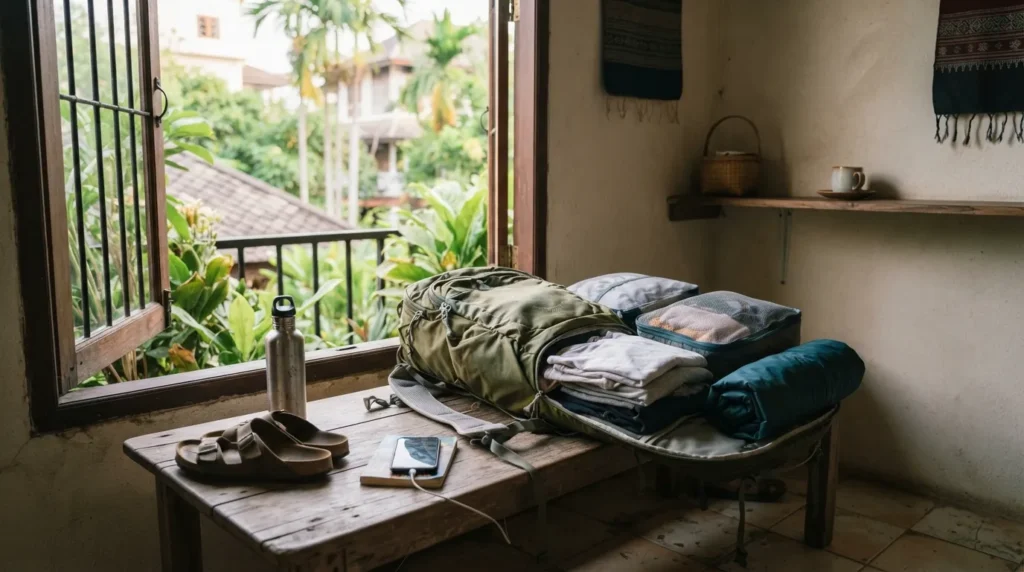
Packing cubes keep a backpack organized far better than stacked folding. A padlock secures hostel lockers and zippered bags on night trains. Luggage tags and a spare set of house keys stashed in a dedicated pocket prevent two of the most common post-trip headaches.
Skip heavy denim (it takes forever to dry in 90% humidity), expensive jewelry (theft risk and inflated “tourist pricing”), and a fully stocked toiletry kit—7-Eleven and Watsons cover almost everything at lower cost and less luggage weight.
| Pack This | Skip This |
|---|---|
| Merino wool or odor-resistant T-shirts | Heavy denim jeans |
| Reef-safe sunscreen | Regular sunscreen with bleaching agents |
| Trekking sandals or trail runners | Bulky leather hiking boots |
| Compact first-aid kit | “Pro” oversized medical kit |
| Disposable poncho or packable rain jacket | Heavy, non-packable raincoat |
A Note for Digital Nomads and Long-Term Travelers
Long-stay travelers add a few extras: an external hard drive for photo backups, a GoPro for underwater content, and a portable Wi-Fi hotspot for co-working days away from cafés. Regional manager insights from long-term expats consistently point to one theme—less gear, more flexibility, and a real relationship with the local laundromat.
FAQ
What should I definitely pack for Thailand?
Breathable clothing, a reef-safe sunscreen, a powerbank, travel adapter, first-aid basics, and temple-appropriate clothing covering shoulders and knees.
Can I pack carry-on only for Thailand?
Yes. A 28–40L backpack easily covers a two-week trip using the laundry-and-repeat approach, and it avoids checked-bag fees on domestic budget airlines.
Do I need a visa for Thailand?
It depends on your nationality and length of stay. Check current requirements and complete the TDAC before your flight, since rules are updated periodically.
What shouldn’t I bring to Thailand?
Heavy denim, bulky hiking boots (unless doing serious multi-day treks), expensive jewelry, and a full-size toiletry bag—all are either impractical in the heat or easily replaced locally for less.
Is tap water safe to drink in Thailand?
No. Use a reusable water bottle with a built-in filter, or rely on the widely available filtered refill stations and bottled water.
Packing for Thailand comes down to one principle: pack light, pack breathable, and let 7-Eleven handle the rest. Get your documents, tech, and temple-appropriate clothing sorted, and everything else is a five-minute market purchase away.