
Table of Contents
Packing well is a skill, not a guessing game. Whether you’re heading out for a weekend business trip or a three-week backpacking run through Southeast Asia, having a reliable list of men’s travel essentials saves you from overpacking, underpacking, and the inevitable “I forgot my charger” panic at the airport.
This guide breaks down everything a modern traveler needs — bags, clothing, toiletries, gadgets, documents, and safety gear — plus the packing frameworks and strategies that keep your luggage light and organized. It’s built for DIYers who pack their own bag the night before a flight and for frequent business travelers who need a repeatable system.
By the end, you’ll have a complete, adaptable checklist you can use for any trip length, climate, or purpose.Building the right men’s travel essentials kit doesn’t have to be complicated.
What Are Men’s Travel Essentials?
Men’s travel essentials are the core set of items — clothing, toiletries, electronics, documents, and accessories — that cover the practical needs of nearly any trip.Before finalizing your men’s travel essentials, know what to leave behind. The goal isn’t to pack everything you own; it’s to pack a functional, versatile kit that adapts to different situations without extra weight.
A good essentials list is built around five categories: bags, clothing, hygiene, electronics, and extras. Get those five right, and almost any trip — business, leisure, or long-haul — becomes easier to plan for.
Example scenario: A reader planning a 5-day work trip to Chicago in October doesn’t need a full toiletry arsenal or six shirts. They need a durable travel bag, two to three versatile outfits, a compact grooming kit, a laptop bag, and weather-appropriate add-ons like a light jacket. That’s the essentials mindset in action — matching the kit to the trip, not the other way around.
Choose Your Travel Bags and Luggage
Your bag is the foundation of your entire packing system. A durable travel bag with the right internal structure makes everything else — clothing, toiletries, electronics — easier to organize and protect.
Backpack vs. Suitcase vs. Anti-Theft Day Pack
For carry-on travel, a 40–45L backpack with a clamshell opening gives you suitcase-style access without checked-bag hassle. Look for compression straps, a padded laptop sleeve, and lockable zippers.
For longer trips or business travel where wrinkle-free clothing matters more than mobility, a hard-shell or soft-shell suitcase (including newer zipperless suitcase designs) is usually the better call.
An anti-theft day pack is worth adding as a secondary bag for city days — look for slash-resistant fabric, hidden zippers, and RFID-blocking pockets for your wallet and passport.
IATA baggage guidelines: Check IATA baggage guidelines before your flight to avoid overweight fees.
Packing Cubes and Compression Bags
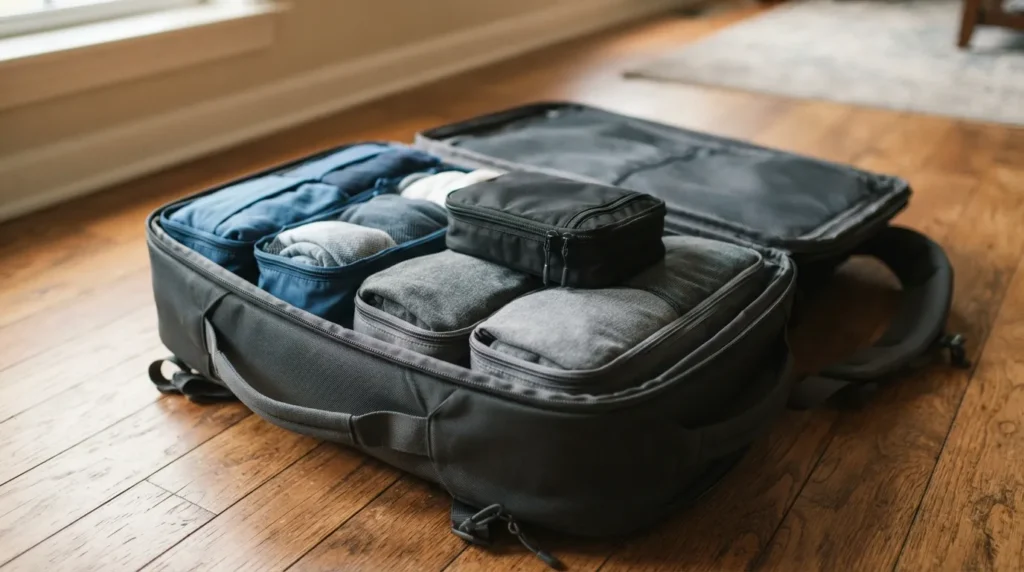
Packing cubes and garment sleeves turn a chaotic main compartment into an organized grid. Compression bags do the same for bulky items like jackets or hoodies, squeezing out excess air to save space.
A laundry bag (even a simple mesh sack) keeps worn clothes separate from clean ones — small detail, big difference on multi-week trips.
Essential Men’s Travel Clothing
Clothing is where most overpacking happens. The fix is building a small, mixable wardrobe instead of packing a full outfit for every day.
Core Wardrobe Basics
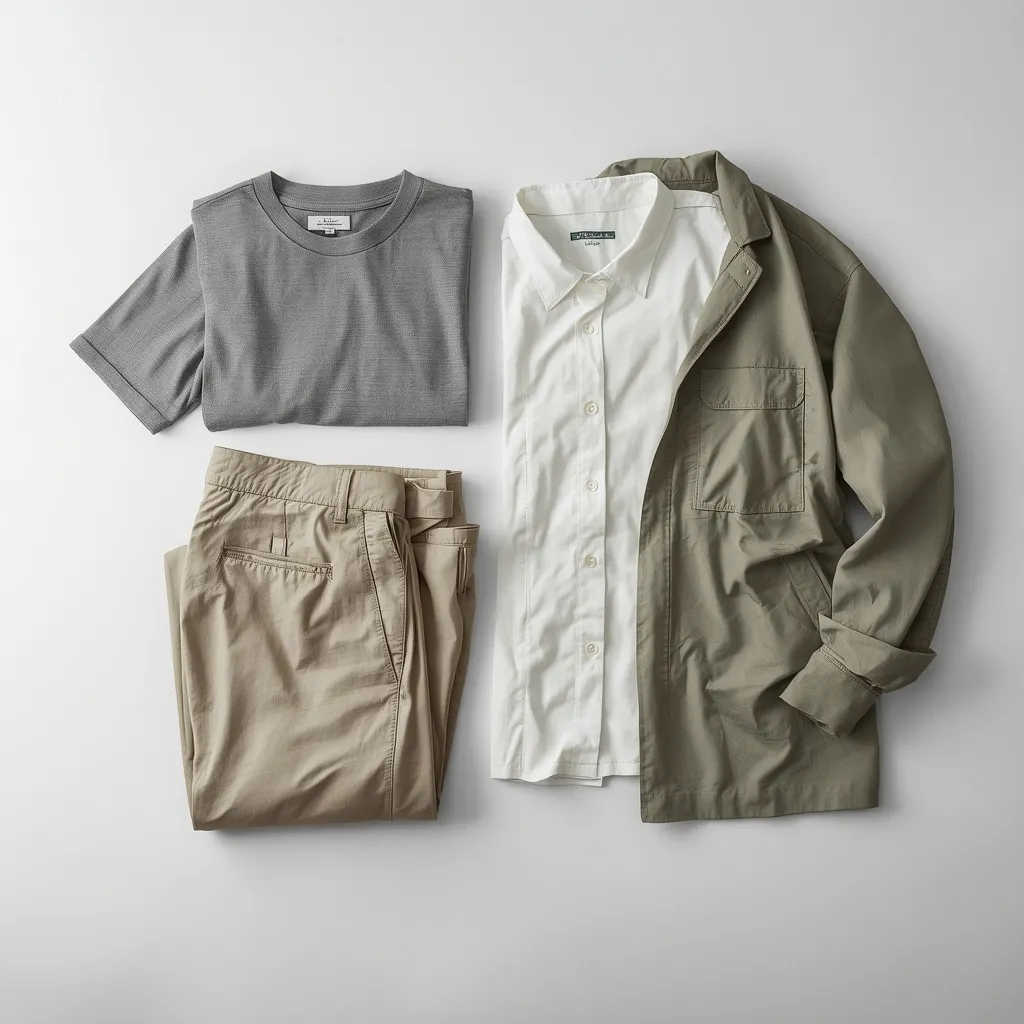
A strong core includes versatile pants (one neutral pair that works for both casual and slightly dressy settings), everyday and sport shorts, a handful of plain t-shirts, one button-up collared shirt for dinners or meetings, a long-sleeved layer, and a lightweight hoodie or sweatshirt for cool evenings.
Round this out with washable underwear, socks, a belt, sleepwear, and — if the trip calls for it — a polo shirt or two for smart-casual settings.
Footwear and Outerwear
Two pairs of shoes usually cover it: one pair of comfortable running or walking shoes, and one pair of sandals or casual shoes for downtime. Essential outerwear depends on climate — a packable waterproof shell handles rain and wind without adding bulk, while a proper insulated jacket is only necessary for cold-weather destinations.
Smart Fabrics: Merino Wool and Quick-Dry Materials
Merino wool base layers and quick-dry travel clothing are worth the investment for longer trips. Merino resists odor for multiple wears without washing, regulates temperature in both heat and cold, and packs down small — three merino t-shirts can often replace six cotton ones.
Example scenario: A traveler packing for a 10-day trip through both warm coastal cities and cooler mountain towns can rely on two merino tees, one quick-dry hoodie, and a packable shell instead of five separate cotton shirts and a bulky sweater — cutting volume by nearly half.
Men’s Travel Grooming and Toiletries Essentials
A functional toiletry bag keeps hygiene simple without eating into your luggage allowance.Stick to TSA liquid rules — containers under 3.4oz in a clear quart bag.
Biodegradable and TSA-Friendly Toiletries
Stick to travel-sized, leak-proof containers for shampoo, body wash, and toothpaste. Biodegradable toiletries are a smart upgrade for eco-conscious travelers, especially on trips involving hiking, camping, or off-grid stays where runoff matters.
Oral hygiene essentials (toothbrush, toothpaste, floss), a razor or trimmer, and deodorant round out the daily basics.
Grooming Tools and Skincare
A compact grooming kit typically includes nail clippers, tweezers, a comb, and a small trimmer. Skincare essentials should be minimal — sunscreen, moisturizer, and lip balm cover most climates. Add cologne or fragrance only if checked-bag space allows, since liquids add weight fast.
Contact lens wearers should pack a spare pair, solution, and backup glasses — an easy item to forget until day three of a trip.
Essential Travel Gadgets and Electronics
Modern travel runs on a handful of key devices, and the right accessories keep them charged and usable anywhere.
Power, Connectivity, and Entertainment
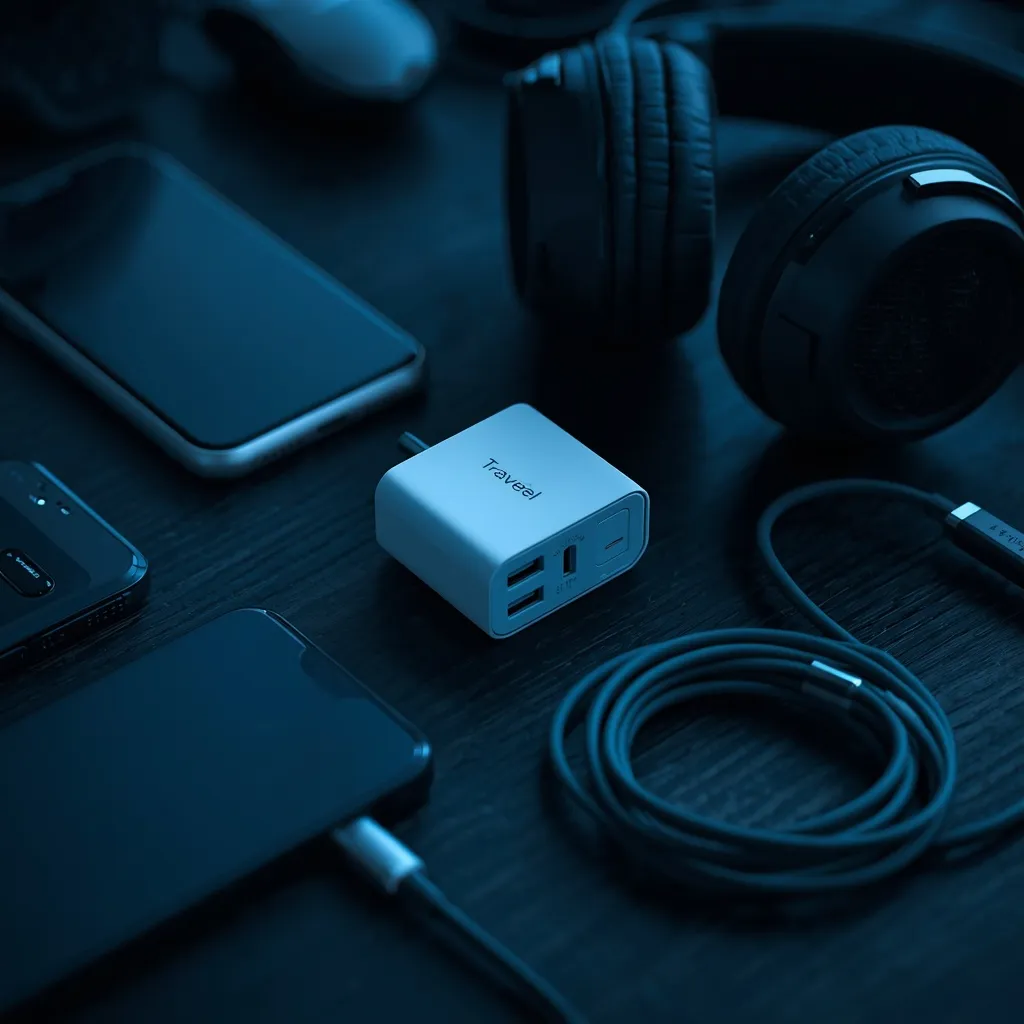
A smartphone loaded with travel apps (maps, translation, eSIM, currency conversion) is the hub of most trips. Pair it with a portable charger or power bank rated for at least one full phone charge, plus a USB charging cube and a universal adapter for international outlets.
Noise-canceling headphones make long-haul flights dramatically more comfortable, and a Bluetooth transmitter is a nice add-on for older in-flight entertainment systems without Bluetooth support.
| Gadget | Why You Need It | Skip If… |
|---|---|---|
| Power bank (10,000mAh+) | Keeps phone/headphones charged on travel days | Traveling with easy hotel access all day |
| Universal adapter | Fits foreign outlets, often with USB ports built in | Staying within your home country |
| Noise-canceling headphones | Blocks engine noise on long flights | Trip is under 2 hours |
| eSIM app | Instant data without a physical SIM swap | Destination has reliable free wifi |
| E-reader | Lightweight entertainment for flights/downtime | You prefer offline entertainment via phone |
| Portable power station | Backup power for multi-day outdoor trips | Staying in hotels with outlets |
A travel-sized laptop or tablet, a laptop bag with padding, and (for content creators) camera or GoPro accessories round out the tech kit. Download offline entertainment and set up a VPN before departure — both are far easier to sort out at home than in an airport lounge.
Travel Documents and Valuables
Nothing derails a trip faster than a missing passport or an expired driver’s license. Keep documents in a dedicated, waterproof travel pouch — ideally one that also holds a spare credit card and cash.
Essentials here include your passport, driver’s license, any required visas, printed hotel reservations (a backup for wifi outages), travel insurance contact card, and a business card if you’re traveling for work. An RFID wallet blocks unauthorized scans of chipped cards and passports, which matters more in crowded tourist areas.
Example scenario: A traveler transiting through three countries in one trip keeps physical copies of their passport photo page and visa pages in a separate bag from the originals — so a lost passport doesn’t mean a lost identity mid-trip.
Health, Safety, and First-Aid Essentials
A compact first-aid kit covers blisters, headaches, and minor cuts — think adhesive bandages, pain relievers, antiseptic wipes, and any personal prescriptions in their original labeled containers.
For long-haul flights, melatonin and compression socks help manage jet lag and circulation on overnight flights. A portable travel safe or a TSA-approved lock adds a layer of security for valuables left in hotel rooms.
Miscellaneous Travel Essentials
These small travel accessories make a big difference on the road.The small stuff adds up. A luggage tracker (Bluetooth tag) gives peace of mind on checked bags. A handheld luggage scale prevents overweight-bag fees at check-in. A sewing kit fixes a popped button in minutes instead of ruining an outfit.
Other worthwhile extras: a reusable water bottle, a travel towel, a carabiner for clipping gear to a bag, ziploc bags for wet items or liquids, a handkerchief, a bamboo cutlery set for flights or takeout, an ergonomic eye mask, a leak-proof travel mug, and a local SIM if an eSIM isn’t an option at your destination.
Men’s Travel Kit Essentials by Trip Type
Not every trip needs the full list. Adjust based on purpose.
Business Travel Essentials
Prioritize wrinkle-resistant clothing, a laptop bag, a washbag with compact grooming tools, and one dressier outfit. A garment sleeve for a blazer or dress shirt prevents wrinkles better than folding.
Long-Haul Flight Essentials
Focus on comfort: noise-canceling headphones, compression socks, melatonin, an eye mask, a travel pillow, and offline entertainment loaded before boarding.
International Travel Essentials
Add a travel adapter, eSIM or local SIM, a copy of travel insurance details, and any destination-specific items like a VPN for restricted regions.
Seasonal and Occasion Adjustments
Cold climates call for thermal layers and a proper coat; hot climates call for more shorts, sandals, and stronger sunscreen. Beach trips need swimwear and a quick-dry towel; formal occasions need at least one collared shirt or blazer.
Packing Frameworks: The 5-4-3-2-1, 3-3-3, and 3-5-7 Methods
Packing frameworks turn “how much should I bring” into a repeatable formula.
| Framework | Formula | Best For |
|---|---|---|
| 5-4-3-2-1 | 5 shirts, 4 bottoms, 3 pairs of shoes, 2 bags, 1 hat | Trips of 1–2 weeks |
| 3-3-3 | 3 tops, 3 bottoms, 3 pairs of shoes (one worn) | Minimalist carry-on trips |
| 3-5-7 | 3 pairs of shoes, 5 tops, 7 bottoms (or reverse) | Longer multi-climate trips |
Each framework works because it forces mix-and-match thinking. A minimalist packing list built around 3 bottoms and 5 tops can produce 15 unique outfit combinations from just 8 pieces of clothing.
Smart Packing Strategies and Tips
Roll clothing instead of folding to reduce wrinkles and save space. Use packing cubes to separate categories (tops, bottoms, underwear) rather than tossing everything into one compartment.
Keep essentials — passport, phone, charger, medication — in a bag you can access without opening your main luggage. Pack heavier items near the wheels or bottom of a suitcase for better balance, and use every dead space (inside shoes, inside a hat) for socks or small items.
Example scenario: A traveler packing a 45L backpack for two weeks uses four packing cubes — one for tops, one for bottoms, one for underwear/socks, one for toiletries — cutting search time at security and hotel check-ins to seconds instead of minutes of digging.
What Not to Pack: Items to Leave Behind
Skip full-size toiletries — nearly every destination sells replacements. Leave behind more than two pairs of jeans (heavy and slow to dry), excess “just in case” outfits, and non-essential electronics like a second camera body for casual trips.
Condoms, printed maps when offline apps exist, and multiple guidebooks are also easy cuts for most modern trips. If an item hasn’t been used in the last two trips, it probably doesn’t need to come on this one.
Men’s Travel Essentials Checklist (Quick Reference Table)
| Category | Key Items |
|---|---|
| Documents | Passport, driver’s license, visas, travel insurance card, printed reservations |
| Bags | Backpack or suitcase, day pack, packing cubes, toiletry pouch |
| Clothing | Pants, shorts, t-shirts, collared shirt, hoodie, underwear, socks |
| Footwear/Outerwear | Running shoes, sandals, waterproof shell |
| Toiletries | Toothbrush, toothpaste, razor, deodorant, sunscreen, skincare |
| Electronics | Phone, power bank, adapter, headphones, laptop/tablet |
| Health/Safety | First-aid kit, melatonin, compression socks, portable lock |
| Extras | Water bottle, travel towel, luggage tracker, sewing kit, carabiner |
FAQ: Men’s Travel Essentials
What are the top 5 travel essentials for men?
Passport and documents, a reliable travel bag, versatile clothing, a compact toiletry kit, and a charged phone with a power bank cover the majority of trip needs.
What should I not pack for international travel?
Skip full-size liquids, excess “backup” outfits, and non-essential electronics. Most items are replaceable at your destination if truly needed.
How many outfits should a man pack for a week-long trip?
Following the 3-3-3 or 5-4-3-2-1 method, 4–5 tops and 3–4 bottoms are usually enough, since pieces mix and match into multiple outfits.
Do I need a portable charger for international travel?
Yes — outlet access on travel days is unpredictable, and a power bank keeps your phone and headphones usable during flights, layovers, and sightseeing.
What’s the best bag for men’s travel essentials?
A 40–45L carry-on backpack works for most trips; choose a hard-shell suitcase instead if wrinkle-free business clothing is a priority.
Q: Why do men’s travel essentials matter for every trip?
A solid men’s travel essentials list saves time, money, and stress — whether you’re on a weekend trip or a month abroad.
Final Thoughts
The best men’s travel essentials list isn’t the longest one — it’s the one built around your specific trip. Start with documents, bags, and clothing, layer in toiletries and electronics, then adjust for climate and trip length. Get the system right once, and every future trip gets easier to pack.That’s the complete list of men’s travel essentials you need.