
Table of Contents
Packing well is the difference between a trip that flows and one where you’re buying a phone charger at an airport kiosk for triple the price. The right travel essentials cover five categories every time: clothing, toiletries, electronics, documents, and health items. Miss one, and you feel it the moment you land.
This guide breaks down exactly what to pack, how to pack it, and how the list changes based on where you’re going and how you’re getting there. Whether you’re a minimalist with one carry-on or someone who checks a bag for a two-week trip, you’ll find a system here that works.
Quick-Reference: Travel Essentials by Category
| Category | Top Priority Items |
|---|---|
| Clothing | Layering pieces, comfortable shoes, sleepwear |
| Toiletries | Toothbrush, sunscreen, TSA-compliant liquids bag |
| Electronics | Phone charger, power bank, universal adapter |
| Documents | Passport, visas, insurance, payment cards |
| Health | Prescription medication, basic first-aid kit |
What Counts as a Travel Essential?
A travel essential is anything that solves a problem you’d otherwise face on the road: nowhere to charge your phone, no way to treat a blister, no proof of vaccination at a border crossing. Essentials aren’t about packing more — they’re about packing the right things.
Most travelers overpack clothes and underpack documentation, chargers, and health items. A useful gut check: if losing this item would derail a day of your trip, it’s essential. If it would just be nice to have, it’s optional.
Think about this: A business traveler packing for a two-day conference doesn’t need five outfit changes, but forgetting a laptop charger or the hotel confirmation email can turn a smooth trip into a stressful one before the first meeting even starts.
The Ultimate Travel Essentials Checklist
This is the core packing checklist — the list to work from no matter the trip type. Adjust quantities based on trip length, then layer in the trip-specific lists further down.
Clothing Essentials to Pack
Clothing should be planned around layering, not volume. A capsule wardrobe — a small set of interchangeable pieces — beats packing a separate outfit for every day.
- Underwear and socks (one per day, plus two spares)
- Sleepwear
- 2–3 tops per week of travel, mixed and matched
- 1–2 bottoms (jeans, trousers, or a skirt)
- A packable jacket or layering piece
- Comfortable walking shoes plus one dressier pair
- Swimwear (if relevant to the destination)
- A hat or sun protection item
The 5-4-3-2-1 packing method is a popular shortcut for a one-week trip: 5 tops, 4 bottoms, 3 pairs of shoes, 2 bags, and 1 hat. It forces discipline without leaving gaps in your clothing checklist.
Toiletries and Personal Care Checklist
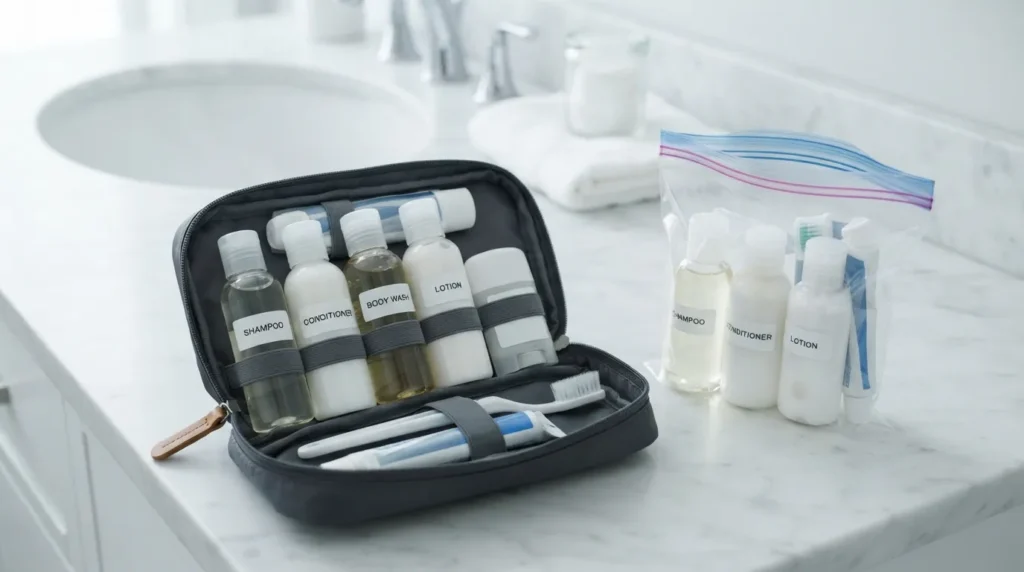
Toiletries are where the TSA 3-1-1 rule matters most for carry-on travel: liquids, gels, and aerosols must be in containers of 3.4 oz (100ml) or less, all fitting into a single quart-sized bag, one bag per passenger.
| Category | Items |
|---|---|
| Hygiene | Toothbrush, toothpaste, floss, deodorant |
| Hair & skin | Shampoo, conditioner, body wash, moisturizer, sunscreen |
| Grooming | Razor, hairbrush, small mirror |
| Extras | Contact lenses/solution, feminine hygiene products, hand sanitizer |
A dedicated laundry kit — travel-size detergent packets and a portable clothesline — is worth adding for any trip over a week, letting you pack fewer clothes overall.
Electronics Checklist
Tech is now as essential as clothing for most travelers, especially digital nomads and business travelers.
- Phone and charger
- Portable power bank
- Universal electronic adapter (critical for international travel)
- Headphones
- Laptop or tablet, if needed for work
- E-reader or offline entertainment
- Camera and spare memory cards, for anyone prioritizing photography gear
Here’s a common scenario: A digital nomad working from Lisbon for a month needs a universal adapter rated for European sockets, a surge-safe power strip, and a offline-capable VPN app set up before departure — not after arriving to spotty airport Wi-Fi.
Travel Documents and Financial Items
Documentation gaps cause more trip disruptions than anything else on this list. Build a dedicated folder — physical or digital — for these before you pack anything else.
- Passport (check expiration — many countries require 6 months’ validity)
- Visas, if required for your destination
- Driver’s license or REAL ID-compliant ID for domestic flights
- Travel insurance policy details and emergency contact numbers
- Printed and digital copies of hotel and flight confirmations
- Two payment cards from different networks, plus some local currency
- A copy of your itinerary shared with someone at home
Scan and store copies of every travel document in a secure cloud folder. If your bag is lost, you can still prove who you are and what you booked.
Health, Medication, and First-Aid Kit
A basic medical kit closes the gap between “minor inconvenience” and “trip-ending problem.”
- Prescription medication in original packaging, with a copy of the prescription
- Pain relievers and anti-diarrheal medication
- Bandages, antiseptic wipes, and blister treatment
- Motion sickness tablets, if relevant
- Any destination-specific items (insect repellent, altitude sickness tablets, water purification tablets)
Carry medication in your personal item, not checked luggage. If your bag is delayed, you still have what you need for at least a day or two.
Miscellaneous and Personal Item Essentials
Your personal item — the bag that goes under the seat — should hold everything you’d need if your main bag never showed up.
- Reusable water bottle
- Snacks
- A change of clothes and clean underwear
- Travel pillow and eye mask
- Pen (for customs forms)
- Reusable tote or packable day bag for use at the destination
Carry-On vs. Checked Luggage: What Goes Where
The split between carry-on and checked luggage isn’t just about size limits — it’s about risk management. Anything irreplaceable or urgently needed goes in the carry-on.
| Pack in Carry-On | Pack in Checked Luggage |
|---|---|
| Medication, documents, valuables | Bulk clothing, shoes |
| Electronics and chargers | Toiletries over 3.4 oz |
| One change of clothes | Liquids, sharp items, tools |
| Chargers and power banks | Beach or sports gear |
Consider this situation:A traveler flying internationally with a connecting flight packs a full change of clothes, phone charger, and toiletry essentials in the carry-on. When the checked bag is misrouted on the layover, the trip continues without a scramble.
How to Choose the Right Travel Bag
The right travel bag depends on trip length, destination terrain, and how much you’re checking versus carrying on.
- Weekend trips (1–3 nights): A 30–40L backpack or soft-sided duffel that fits carry-on sizing.
- Week-long trips: A 40–65L wheeled suitcase or backpack, depending on whether you’ll be navigating stairs, trains, or cobblestones.
- Extended or international trips: A larger checked bag plus a daypack, ideally with an anti-theft backpack design (lockable zippers, slash-resistant fabric) for city travel.
- Business travel: A structured carry-on with a laptop compartment that meets airline sizing rules, so you’re never forced to gate-check it.
Compression packing cubes are worth the investment across almost every bag type — they organize clothing by category and shrink volume by 20–30%, which matters whether you’re checking a bag or living out of a carry-on for two weeks.
Smart Packing Methods That Save Space and Time
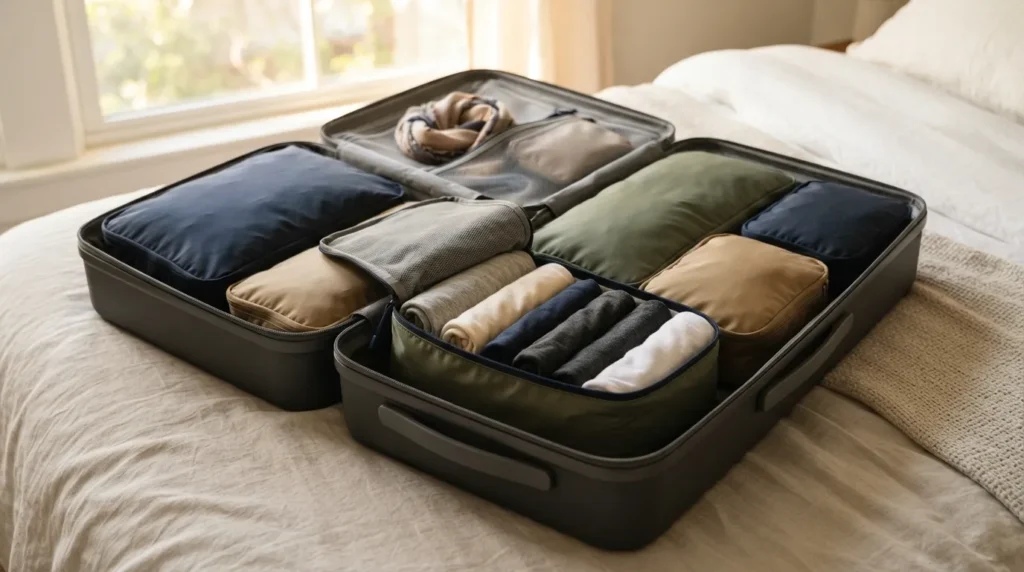
Good packing is a system, not a pile. These methods consistently outperform “just throw it all in.”
- Roll, don’t fold. Rolled clothing takes up less space and wrinkles less than folded stacks.
- Use packing cubes by category — one for tops, one for bottoms, one for toiletries — so you’re never unpacking the whole bag to find one item.
- Layer heavy items at the bottom, near the wheels, to keep the bag balanced and protect fragile items on top.
- Wear your bulkiest item (jacket, boots) on travel days instead of packing it.
- Build in layering options rather than single-purpose outfits, so five tops can create ten combinations.
For instance, A traveler packing for a 10-day trip in one carry-on uses three packing cubes (tops, bottoms, underwear) plus a compression cube for a jacket, fitting what would normally require a checked bag into airline carry-on limits.
Must-Have Travel Gear and Accessories
Beyond the core checklist, a handful of standalone accessories consistently earn their spot in a bag, regardless of trip type.
- Standalone bags and organizers: A packable daypack, a toiletry hanging organizer, and a dedicated cable pouch keep small items from scattering across your main bag.
- Productivity and tech gear: A lightweight laptop stand, a compact mouse, and noise-canceling headphones matter for anyone working while traveling — not just full-time digital nomads.
- Photography gear: A mirrorless camera, an extra battery, and a phone-mountable tripod cover most travel photography needs without the bulk of a full kit.
- Toiletries and beauty extras: A dual-voltage hair tool and a small skincare set round out the personal care checklist for longer trips.
Minimalist travel takes this further: the goal is a single carry-on that covers every category above without excess. It works best when every item serves more than one purpose — a scarf that doubles as a blanket, a phone that doubles as a camera and a boarding pass.
Imagine this: A digital nomad essentials kit for a three-month stint abroad typically includes a laptop, a compact power strip with surge protection, a portable Wi-Fi hotspot, noise-canceling headphones, and a daypack built for daily commutes to co-working spaces — a very different loadout than a two-week vacationer’s bag, even though both start from the same base checklist.
Trip-Type Packing Lists
Base essentials stay constant. What changes is the add-on layer specific to the trip.
Beach and All-Inclusive Resort Packing List
- Swimsuits (2, so one can dry while the other’s worn)
- Beach cover-up and sandals
- Reef-safe sunscreen
- After-sun lotion
- Beach bag and a dry bag for electronics
- Light, breathable resort wear for evenings
Cruise Vacation Packing List
- Formal or semi-formal outfit for dinner nights
- Motion sickness remedies
- Lanyard or crossbody bag for the ship key card
- Reusable water bottle (many ships restrict bottled liquids at boarding)
- Power strip without a surge protector (most cruise lines allow these, not surge-protected ones — check your line’s policy)
Road Trip Packing List
- Phone mount and car charger
- Physical map or offline navigation download
- Cooler with snacks and water
- Roadside emergency kit (jumper cables, flashlight, basic tools)
- Entertainment for passengers (podcasts, playlists downloaded offline)
International Travel Packing List
- Passport and any required visas
- Electronic adapters matched to the destination’s plug type and voltage
- Photocopies of documents stored separately from the originals
- A basic phrasebook or offline translation app
- Awareness of customs rules for medication and food items
Business Travel Packing List
- One structured bag that meets carry-on limits for quick boarding
- Wrinkle-resistant business attire
- Laptop, charger, and any presentation materials backed up to the cloud
- Business cards and a portfolio or notepad
- A backup outfit in the carry-on in case checked luggage is delayed before a meeting
Traveling With Kids
- Snacks and a refillable water bottle per child
- A change of clothes per child in the carry-on
- Entertainment: tablets, books, or travel-sized games
- Copies of any required documentation (birth certificates for some international trips)
- A basic kit of children’s medication and comfort items
Seasonal and Destination-Specific Packing Advice
Climate and culture both shape a packing list, and skipping this step is the most common packing mistake.
- Warm-weather packing: Breathable fabrics, sun protection, sandals, and a light layer for air-conditioned spaces.
- Cold-weather or snow trips: Thermal base layers, waterproof outerwear, insulated boots, and hand warmers.
- Mountain or outdoor adventure trips: Moisture-wicking layers, a rain shell, sturdy footwear, and any land or water gear specific to the activity (hiking poles, dry bags, climbing gear).
- City breaks: Comfortable walking shoes, a daypack, and versatile outfits that transition from sightseeing to dinner.
- Culturally conservative destinations: Modest clothing that covers shoulders and knees, and a scarf or wrap for religious sites.
Let’s say: A traveler heading from a summer climate to a mountain destination in the same trip packs a base layer and packable rain shell rather than a bulky coat, keeping the bag flexible for both legs of the trip.
Travel Security and Safety Essentials
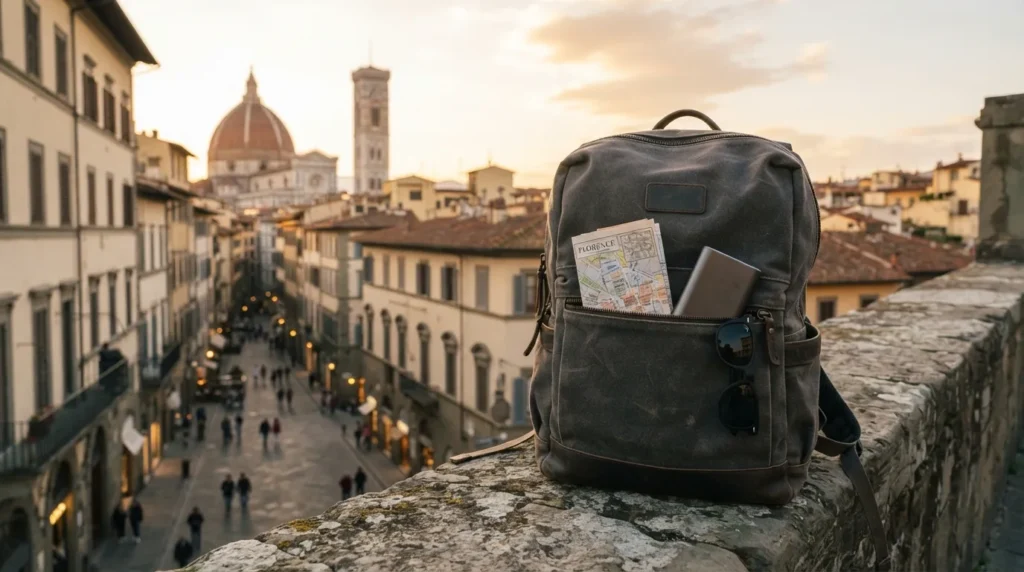
Security is a packing category, not an afterthought.
- A money belt or hidden pouch for passports and cash
- Luggage locks (TSA-approved for U.S. flights)
- An anti-theft backpack with lockable zippers for city exploring
- A portable door lock or door stop alarm for hotel stays
- Travel insurance documentation, including emergency contact numbers
- A backup payment card stored separately from your main wallet
Preparing Your Home Before You Leave
Packing isn’t finished until the home you’re leaving is squared away.
- Stop mail and packages, or arrange for a neighbor to collect them
- Unplug non-essential electronics
- Set timers on lights for security
- Confirm pet care or plant care arrangements
- Share your itinerary with someone you trust
- Double-check that doors, windows, and the garage are locked
Frequently Asked Questions
What are the most important travel essentials to never forget?
Passport or ID, phone charger, medication, and payment cards top the list — these are the hardest to replace on short notice at your destination.
What is the TSA 3-1-1 rule?
If you’re only taking a carry-on, the TSA 3-1-1 rule is worth knowing. It limits liquids to 100 ml (3.4 oz) containers that fit inside a single clear quart-size bag.
How do I pack light for a long trip?
Use a capsule wardrobe, pack layering pieces instead of bulky single-use items, and do laundry mid-trip rather than packing enough for every day.
What should go in a carry-on versus checked luggage?
Documents, medication, electronics, and one change of clothes belong in the carry-on. Bulk clothing, shoes, and full-size toiletries can go in checked luggage.
Do I need travel insurance for every trip?
It’s most valuable for international trips, expensive bookings, or any trip where medical care abroad or trip cancellation would be costly — check policy details against your specific itinerary.
What’s the difference between a capsule wardrobe and normal packing?
A capsule wardrobe uses a small set of coordinated, interchangeable pieces so every top pairs with every bottom, cutting overall clothing volume while still offering multiple outfit combinations.
How many electronic adapters do I actually need for international travel?
One universal adapter usually covers an entire trip, but pack a second if you’re traveling with a group or relying on multiple devices that need to charge at the same time, since hotel outlets are often limited.
Final Thoughts
A strong travel essentials checklist isn’t about packing everything you own — it’s about covering five categories (clothing, toiletries, electronics, documents, and health) so nothing derails your trip. Build the base list once, layer in the trip-specific extras, and packing stops being a source of stress.
Save this checklist, adapt it to your next destination, and you’ll spend less time repacking at the airport and more time actually enjoying the trip.