
Table of Contents
Packing for a trip with an infant can feel like moving apartments for a 48-hour stay. Between feeding gear, sleep setups, and enough diapers to survive a delayed flight, it’s easy to either overpack everything or forget the one item you actually need at 2 a.m. in a hotel room.
This guide breaks down baby travel essentials into categories you can actually use — a build-your-own packing list, gear comparisons, trip-specific advice, and a printable-style checklist at the end. Whether you’re flying cross-country or driving two hours to grandma’s house, this list covers what to pack and, just as importantly, what to skip.
What Counts as Baby Travel Essentials?
Not every baby item needs to make the suitcase. True travel essentials fall into six buckets: diapering, feeding, clothing, sleep, health and hygiene, and comfort. Everything else — the swing, the bouncer, the full toy bin — stays home.
The goal isn’t to replicate the nursery. It’s to cover your baby’s basic needs for the length of the trip, plus a reasonable buffer for delays, blowouts, and the inevitable “we forgot one bottle” moment. A well-built list also accounts for where you’re going: a beach week needs a different baby travel essentials list than a winter visit to relatives.
How to Build Your Baby Travel Packing List
Think of your baby travel essentials packing list as six smaller lists stacked together. Tackle one category at a time instead of trying to pack “everything baby” in one pass — it’s the fastest way to miss something.
Diapering Essentials
Pack more diapers than you think you’ll need, then add a few more. A good rule: one diaper per hour of travel time, plus two to three extra per day of the trip.
- Diapers (sized correctly, including a few in the next size up)
- Wipes, plus a small pack of pacifier and bottle wipes
- Disposable diaper bags or a dedicated wet/dry bag
- Portable changing mat or travel changing pad
- Diaper cream and nappy rash cream
- Nitrile gloves for messy changeovers on planes or trains
A quick example: on a five-hour flight with a layover, most parents pack 8–10 diapers, a full pack of wipes, and two disposable bag rolls — enough to handle a blowout without rationing.
Feeding Supplies
Feeding gear depends heavily on your baby’s age and feeding method, but a few items apply to almost everyone.
- Formula, pre-measured in travel containers, or milk storage bags for pumped breast milk.If you’re flying, check the TSA guidance for baby formula and breast milk before packing your carry-on.
- Bottles, plus a bottle brush and a small drying rack
- Nursing pillow or sling, and a nursing cover if needed
- Breast pump wipes and a portable, travel-size sterilizer (microwave sterilizer bags pack flat and work in most hotel microwaves)
- Silicone bibs and a portable feeding bowl with spoon
- Travel cutlery, a sippy cup, and a water flask
- Baby food pouches and travel-friendly snacks for older infants
- A travel bottle washing system and sterilising tablets for trips without daily access to boiling water
Clothing and Sleepwear
Pack in outfit sets rather than separate tops and bottoms — it’s faster to grab a full change at 3 a.m.
- Onesies, sleepers, and rompers (pack one extra per day, minimum)
- Swaddles or a sleep sack appropriate for the destination’s climate
- Soft shoes or socks, plus a hat
- A lightweight baby blanket and a couple of muslin cloths, which double as burp cloths, sun covers, or emergency swaddles
Sleep Essentials
Disrupted sleep is often the hardest part of traveling with a baby, so this category deserves extra thought.
- Travel crib or playard (the Guava Lotus is a popular pick for parents who want something lightweight but sturdy)
- Crib sheet — ideally one that already smells like home, which can ease the transition to an unfamiliar sleep space
- Sound machine or white noise machine
- Blackout curtain or a portable blackout tent for hotel rooms with thin curtains
- Baby monitor or a compact monitor camera if you’ll be in a separate room
Toiletries and First Aid
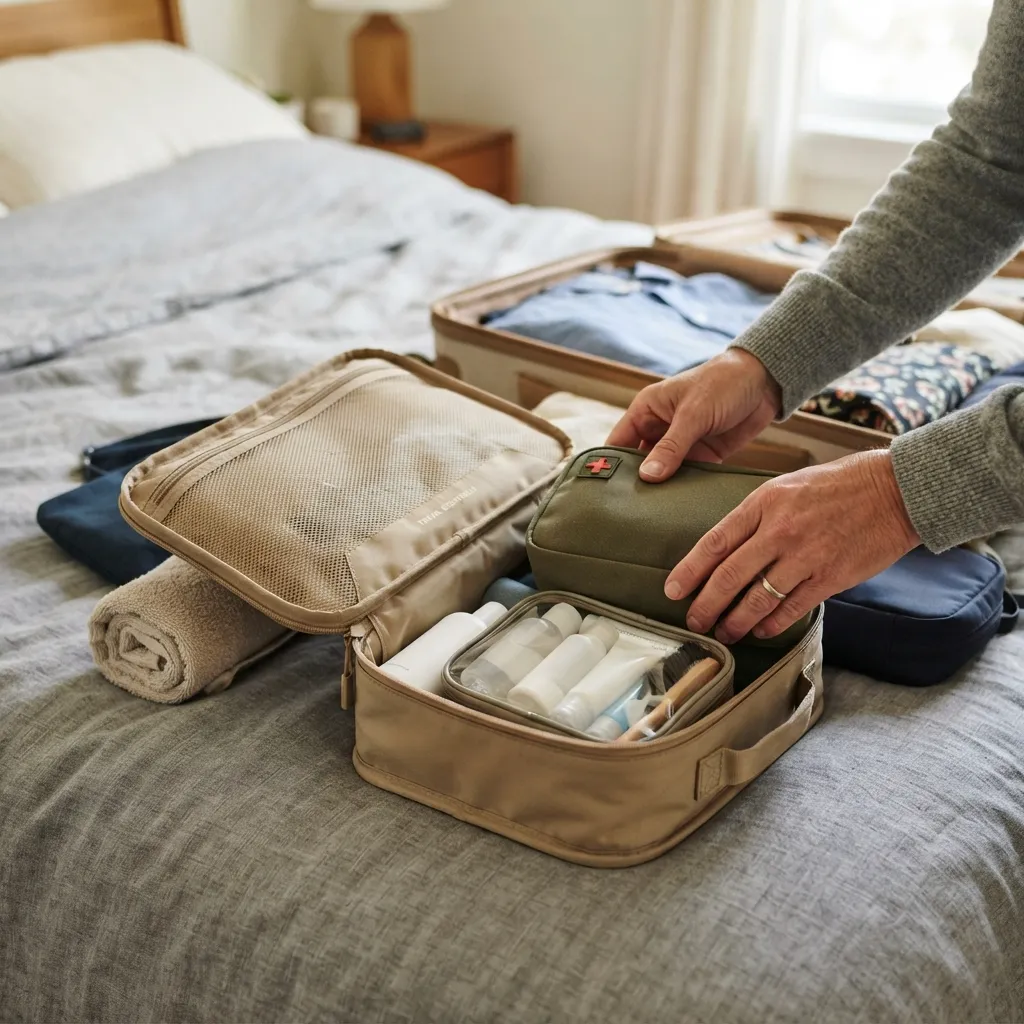
Keep this kit compact but complete — travel-size toiletry bottles save serious suitcase space.For destination-specific health and safety advice, parents can also check the CDC’s guidance on travelling with children.
- Baby shampoo, baby wash, wash cloths, and a small bath towel
- Vitamin D drops and, if applicable, sensitive-skin or eczema cream
- Baby lotion, sunscreen, and insect repellent
- Baby toothbrush and toothpaste, plus a nail clipper or nail file
- Travel-size first aid kit: infant fever reducer, digital thermometer, nasal aspirator, teething gel, and disinfectant or sanitizing wipes
- Hand sanitizer and a stain remover spray for on-the-go cleanups
Toys and Comfort Items
Limit this category deliberately. Two or three well-chosen items beat a bag full of toys that never get played with.
- One favorite toy, teether, or pacifier — never leave home without a backup
- A lovie or comfort object
- A muslin book or soft rattle for sensory play
- Baby headphones or noise-canceling earmuffs for flights and loud events
Baby Travel Gear for Getting Around: Comparing Your Options
Choosing the right baby travel essentials can make a big difference in how much space your suitcase takes up.. Here’s how the major categories stack up.
Travel Stroller vs. Full Travel System
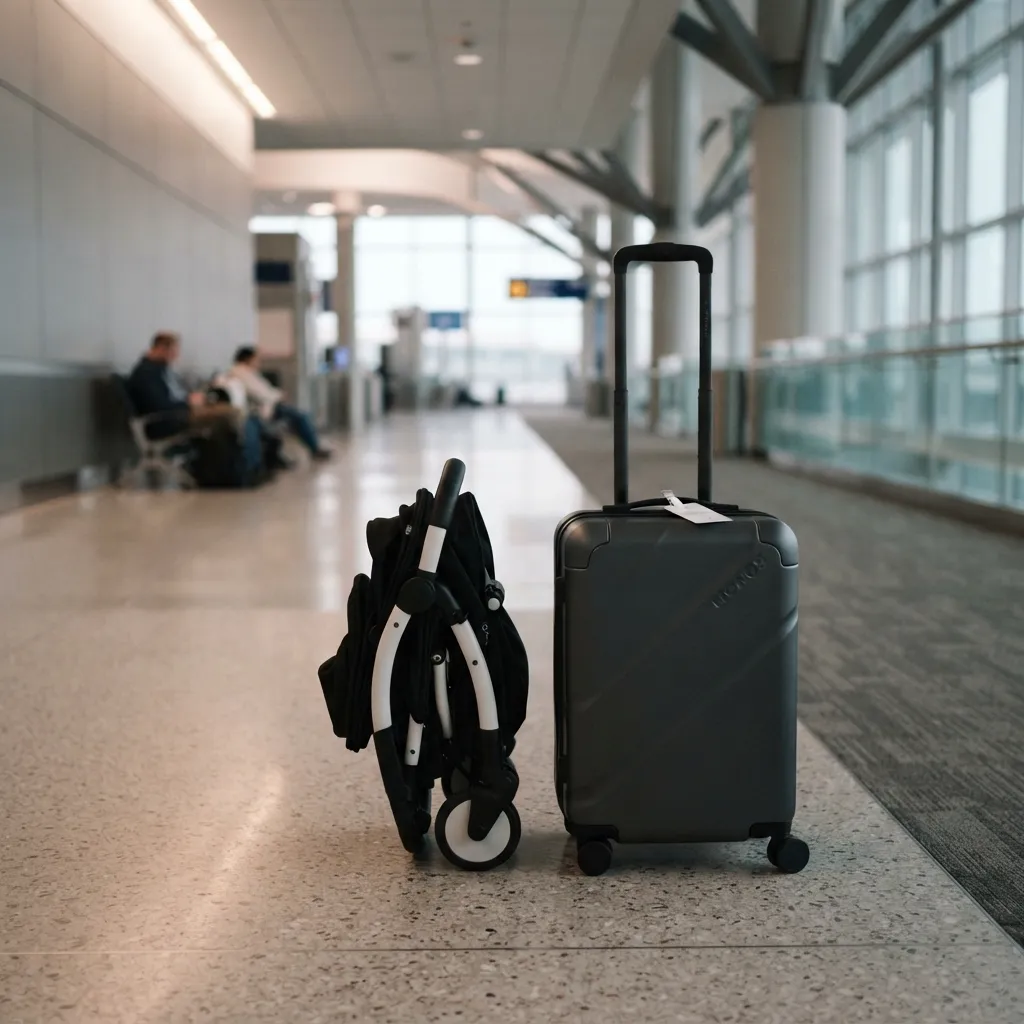
A dedicated travel stroller, like the Joolz Aer, is built for one job: folding small and staying light. A full travel system — stroller plus car seat — offers more functionality but adds bulk and weight.
If you’re mostly navigating airports and city sidewalks, a lightweight or double stroller with a compact fold usually wins. If you’re renting a car and need the car seat anyway, a travel system saves you from buying two separate pieces of gear.
Car Seat Options for Air and Road Travel
Any car seat you bring on a plane needs to be FAA-approved. Convertible and infant car seats both qualify, but infant seats are easier to carry through security since they detach from the base.
The Clek Liingo and the Doona car seat stroller are two approaches to the same problem: reducing the number of separate items you’re hauling. A car seat cover also protects the seat from gate-checking damage.
Baby Carrier vs. Toddler Carrier
A baby carrier (like an Ergobaby carrier or a wrap-style carrier) keeps hands free through security lines and crowded terminals, and it doubles as a place for baby to nap. Toddler carriers are built for older, heavier riders and prioritize hip support over compact folding.
For infants under six months, a soft wrap or structured infant carrier is usually more comfortable for both parent and baby than a toddler-rated model.
Packing for Specific Trip Types
Flying with a Baby: What Goes in the Diaper Bag
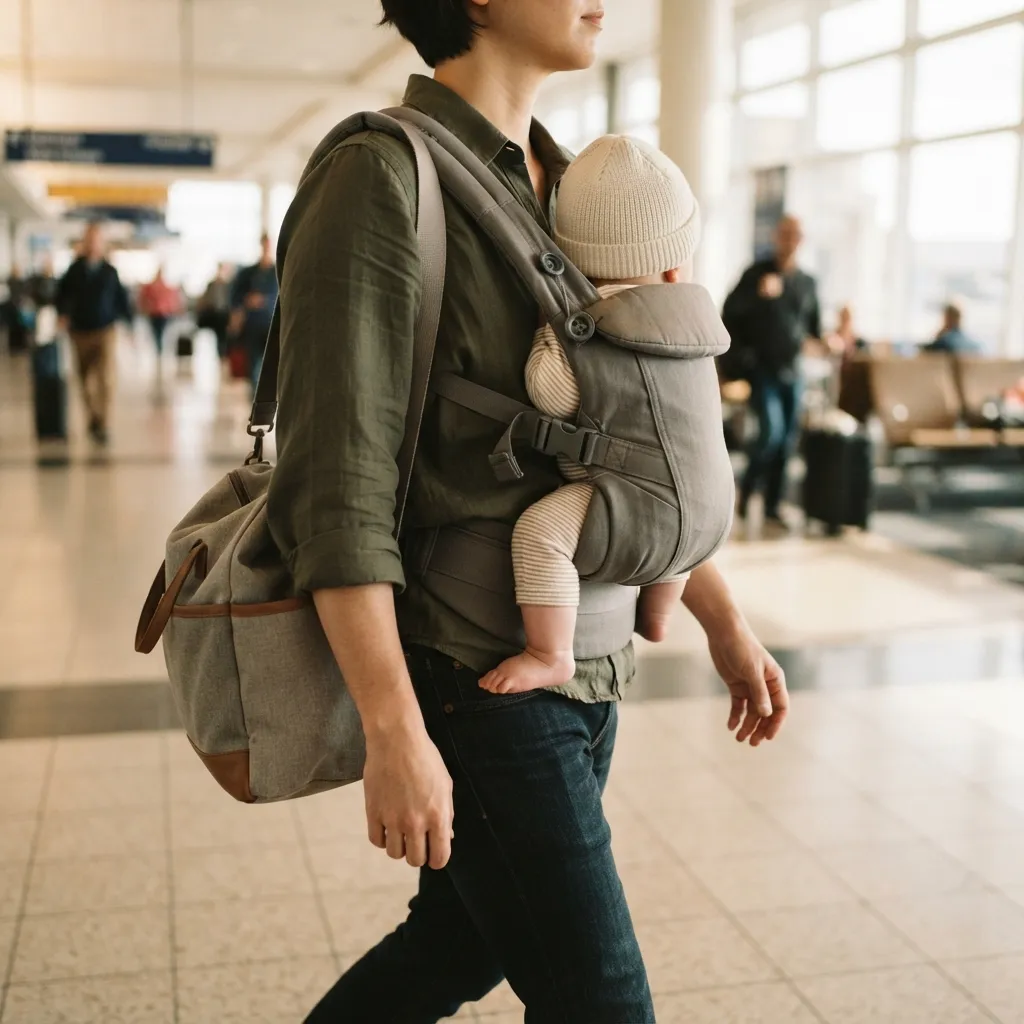
When you’re flying, your baby travel essentials need to be easy to reach a dedicated diaper backpack, a dopp-kit-style sidekick, or a hideaway duffel — should carry everything you’d need for a four-hour delay, not just the flight itself.
Example: a family flying with a six-month-old typically packs diapers and wipes for double the flight time, two full outfit changes, a sealed formula supply, a pacifier with a spare, plane window spinners or a small toy, and a portable charger for phones doubling as entertainment devices.
Painters tape (for securing loose items or blocking light gaps) and your baby’s passport and birth certificate round out the flight-day essentials.
Road Trips with a Baby
For road trips, your baby travel essentials should be organized so the items you need most are easy to reach. Pack a car window shade, a stroller blanket for rest stops, and a sick kit — a small bag with a spare outfit, plastic bags, and wipes — within arm’s reach of the front seat, not buried in the trunk.
Hot Weather and Beach Travel Essentials
Summer trips add a layer of sun and water protection on top of the standard list.
- UPF 50+ swimwear and swim diapers
- A hat with a neck flap, sunglasses, and mineral sunscreen
- A beach tent or sun and sleep cover for the stroller
- A stroller fan for hot climates
- Mosquito net and mosquito protection for evenings outdoors
What You Can Leave at Home
Skip anything that duplicates what your destination already has, or that solves a problem you’re unlikely to hit on this specific trip.
- Full-size bathtubs (use a fold-flat baby bathtub or the sink instead)
- Bulky baby monitors if you’re room-sharing the whole trip
- A full toy bin — one favorite plus one novelty item is plenty
- Multiple sets of bedding when a single travel crib sheet will do
- Non-essential furniture like a full-size high chair (a portable high chair or booster seat covers most restaurant and Airbnb situations)
Expert Tips for Traveling with a Baby
- Pack by day, not by category, for carry-ons. A single labeled bag per travel day makes grabbing supplies mid-trip much faster than digging through one giant sack.
- Use packing cubes to separate clean clothes from worn ones and keep the diaper bag from turning into chaos by day two.
- Bring a scent of home. A crib sheet or lovie that smells familiar can meaningfully ease sleep in a new environment.
- Overpack diapers and wipes, underpack toys. Diapers are hard to replace mid-trip; entertainment is easy to improvise with household objects.
- Test new products before you travel. New sunscreen, detergent, or formula brands should be trialed at home first to rule out reactions before you’re far from a pharmacy.
Quick-Reference Baby Travel Essentials Checklist
Use this baby travel essentials checklist before leaving home so you can quickly confirm that the basics are packed.
| Category | Must-Pack Items |
|---|---|
| Diapering | Diapers, wipes, changing pad, diaper cream, disposable bags |
| Feeding | Bottles, formula/milk, bibs, sippy cup, travel utensils |
| Clothing | Onesies/sleepers, swaddle or sleep sack, hat, extra outfits |
| Sleep | Travel crib, sound machine, blackout cover, crib sheet |
| Health | First aid kit, thermometer, sunscreen, saline/nasal aspirator |
| Comfort | Favorite toy, pacifier, lovie, muslin blanket |
| Gear | Stroller, car seat (if driving/flying), carrier |
Frequently Asked Questions
What are the most important baby travel essentials?
Diapers, wipes, feeding supplies, a change of clothes, and your baby’s usual sleep and comfort items top the list. These cover the basics no trip can go without, regardless of destination.
How many diapers should I pack for a flight?
Plan for roughly one diaper per hour of total travel time — including layovers and delays — plus two or three extra as a buffer.
Do I need a travel crib for a short trip?
For trips under two or three nights at a familiar location (like a relative’s house with existing baby gear), you may be able to skip it. For hotels or unfamiliar spaces, a travel crib or playard is worth the extra bag.
Can I bring a car seat through airport security?
Yes, as long as it’s FAA-approved. Many parents check it at the gate rather than carrying it through security, using a car seat cover to protect it from damage.
What baby travel gear is worth buying versus renting?
Strollers and carriers you’ll use repeatedly are usually worth owning. Travel cribs and car seats are good rental or borrow candidates if you only need them for occasional trips.
Final Thoughts
A great baby travel essentials checklist isn’t about bringing everything — it’s about bringing the right things in the right amounts. Build your list by category, lean on a checklist instead of memory, and pack a little more of the essentials you can’t easily replace on the road. The rest sorts itself out once you’re there.
Pingback: Japan Travel Essentials: 15 Best Packing Tips for Every Trip