
Table of Contents
Packing for Japan is different from packing for most other destinations. The country runs on precision — trains leave on the second, hotel rooms are compact, and laundry facilities are everywhere. That changes what belongs in your suitcase.
This guide covers every category of Japan travel essentials, from documents and money to seasonal clothing, electronics, and what to leave at home. Whether you’re backpacking Kyoto for two weeks or flying in with a toddler and a stroller, you’ll find a packing approach that fits.
Things to Consider Before You Pack
Before you fill a single packing cube, think through the shape of your trip. Japan’s climate, culture, and infrastructure all affect what you actually need versus what just adds weight.
Type of Trip and Destinations
A trip built around Tokyo and Osaka city centers needs less than a trip that includes rural onsen towns or mountain hikes near Nagano. Urban Japan has convenience stores, pharmacies, and coin laundromats on nearly every block, so you can pack lighter and buy as you go.
If your itinerary includes a ryokan stay, you’ll be issued a yukata (a cotton robe) for lounging and short outings, so you don’t need to bring loungewear for that leg of the trip. Rural stops, by contrast, may have limited pharmacy access, so carry more of your regular medication than you think you’ll need.
Restricted Items Awareness
Japan enforces stricter customs rules than many travelers expect. Certain over-the-counter cold and allergy medicines containing pseudoephedrine, and some prescription stimulants, are restricted or banned entirely. If you take prescription medications, carry the original packaging along with prescription medications documentation from your doctor, ideally translated or accompanied by an English-language note.
Vaping devices and some knives (including certain multi-tools) are also tightly regulated. When in doubt, check Japan’s customs website before you fly rather than at the airport.
Special Needs and Dress Code Awareness
Japan is generally very accepting of visible tattoos, but traditional onsen (hot springs), some gyms, and a handful of pools still ban them. Packing tattoo coverage clothing — a rash guard or long-sleeve swim layer — solves this without limiting your itinerary.
If you’re visiting shrines or temples, avoid overly casual beachwear, and note that some restaurants and traditional inns expect shoes to come off at the entrance, so slip-on/off shoes make daily life noticeably easier.
Japan Travel Essentials: Documents, Transport Passes, and Money
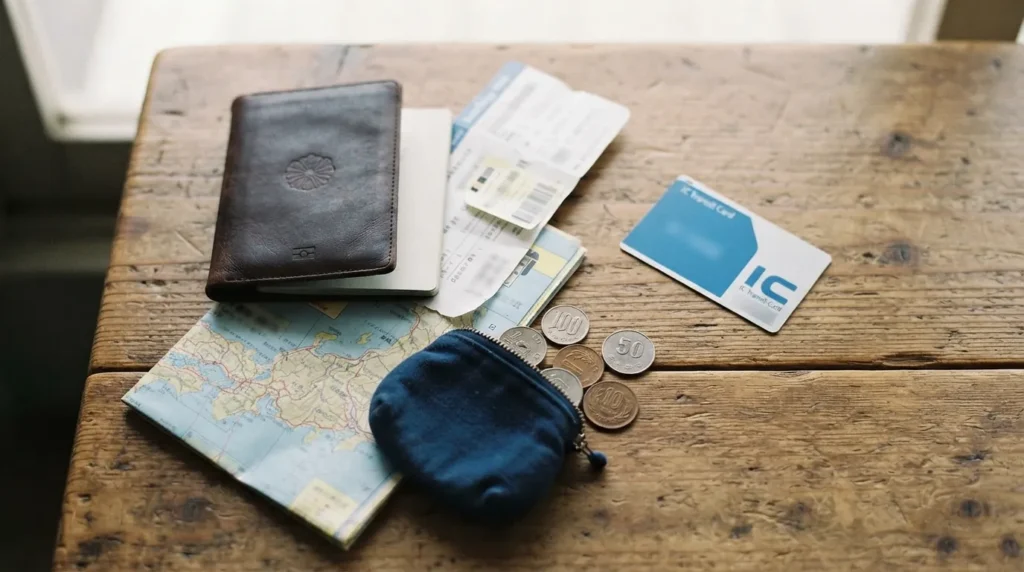
This is the category that can genuinely derail a trip if forgotten, so start here. These items aren’t glamorous, but a missing passport or an empty IC card causes more stress than a forgotten sweater ever will.
Passport, Visa, and Booking Documents
Check your passport validity well before departure — Japan generally requires it to be valid for the duration of your stay, and many airlines will deny boarding if the expiry date looks too close. Confirm your visa requirements based on your nationality and trip length; many travelers qualify for visa-free short stays, but it’s worth a direct check against your passport’s country.
Carry both physical and digital copies of the essentials: flight tickets and boarding passes, hotel reservations printouts, the Japanese address of your hotel (written in Japanese characters helps enormously with taxi drivers), and your onward ticket or visa information if requested at immigration. Keep digital copies of documents stored in cloud storage as a backup, and pack physical photocopies of documents separately from the originals in case your bag is lost.
Worked example: A traveler flying into Narita realizes at check-in that their passport expires in five months. Because Japan doesn’t require six months’ validity like some countries, the airline clears them — but they still needed to have already checked JVRO, the Japan visa requirements database, before booking to avoid a canceled trip.
Japan Rail Pass, IC Cards, and Transit Planning
For multi-city itineraries, the Japan Rail Pass can pay for itself within a single Tokyo–Kyoto–Hiroshima loop. Buy it before you leave home if your itinerary qualifies, since pricing and availability rules have changed in recent years. For day-to-day metro, bus, and convenience store payments, load an IC card such as Suica, Pasmo, or ICOCA onto your phone or a physical card — it removes the need to buy paper tickets at every station.
International Driving License holders planning to rent a car outside major cities (common in Hokkaido or rural Kyushu) should arrange this through their home country before departure; it typically can’t be issued on arrival in Japan.
Cash, Cards, and Coin Purse
Japan is more cash-friendly than its reputation suggests. Many small restaurants, temples, and rural shops still don’t accept credit and debit cards. Carry a mix of yen cash and coins alongside a card that has low foreign transaction fees, and bring a proper coin purse — Japan’s coin denominations (1, 5, 10, 50, 100, 500 yen) accumulate fast.
Smartphone Apps and Connectivity
Staying connected in Japan is easier than most first-timers expect, but it requires a small amount of prep before landing.
Pocket WiFi, eSIM, and SIM Card Options
Three main options cover connectivity: a Japan travel eSIM installed before you fly, a physical Japanese SIM card picked up at the airport, or a rented pocket WiFi device that multiple people in your group can share. A data-only SIM card is usually the cheapest option for solo travelers who don’t need a local phone number. Whichever route you choose, bring a universal adapter and a portable power bank, since transit days can drain a phone fast between navigation, translation, and photos.
Essential Apps for Japan
Download key smartphone apps before departure rather than relying on airport WiFi: Google Maps (paired with train times), a currency converter, and a transport app such as Japan Transit Planner for platform numbers and transfer timing. A Japanese phrasebook app or Duolingo helps with basic interactions, and a dedicated translation app with camera-based menu translation is genuinely useful in smaller towns.
What to Pack: Clothing by Season
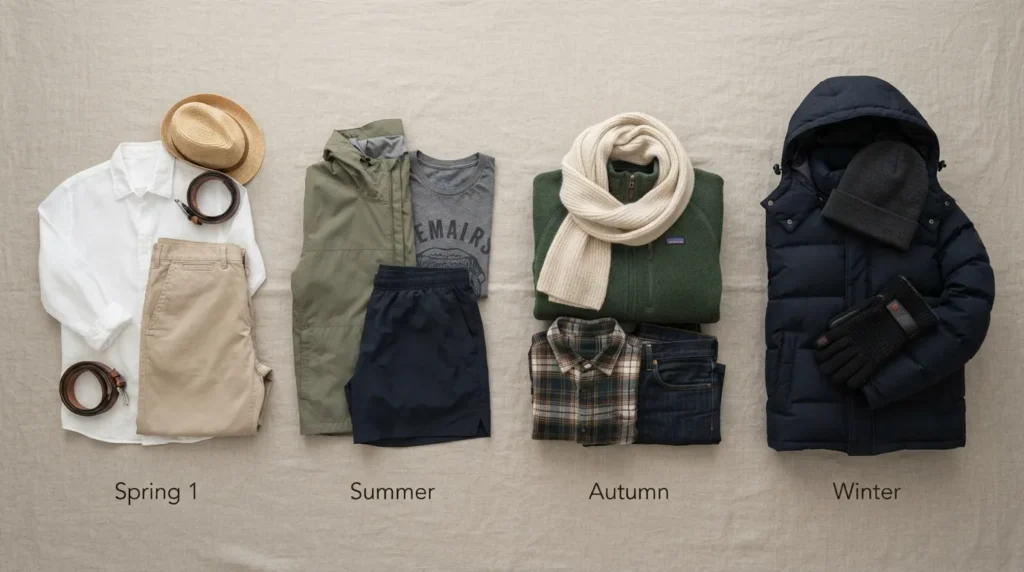
Japan’s seasons are distinct, and packing the wrong layer for the wrong month is one of the most common mistakes travelers make.
Spring (March–May)
Spring temperatures swing widely, especially in March. Layering clothing is essential — a lightweight fleece over a breathable base layer handles cool mornings, while a light travel umbrella covers the occasional spring shower. Cherry blossom season (typically late March to early April) draws crowds, so comfortable, lightweight walking shoes matter more than fashion.
Summer (June–August)
Summer in most of Japan is hot and humid, with a distinct rainy season in June. Pack breathable fabrics, a portable fan or cooling towel, sunscreen and sunglasses, and a light umbrella that doubles as sun protection. Deodorant and a quick-drying towel earn their keep here — humidity means more laundry stops.
Fall (September–November)
Fall brings crisp air and, later in the season, genuinely cold evenings. A scarf for warmth and a packable fleece cover most of the season; by November, treat it closer to early winter.
Winter (December–February)
Winter calls for real cold-weather gear: a puffer jacket, beanie and gloves, thermal layers, ankle boots, and long trousers. Northern regions like Hokkaido demand serious insulation, while Tokyo and Osaka winters are milder but still cold enough for layering.
Quick-reference seasonal packing chart:
| Season | Key Items | Watch Out For |
|---|---|---|
| Spring (Mar–May) | Fleece, layers, light umbrella, walking shoes | Sudden temperature drops, crowds |
| Summer (Jun–Aug) | Breathable fabrics, sunscreen, cooling towel | Humidity, rainy season in June |
| Fall (Sep–Nov) | Scarf, light layers, fleece | Cold snaps in late November |
| Winter (Dec–Feb) | Puffer jacket, thermals, gloves, ankle boots | Regional cold varies sharply |
The Onion Principle
Regardless of season, the onion principle — several thin layers rather than one thick garment — works best in Japan. Indoor heating and air conditioning run strong, so you’ll often shed a layer indoors and add it back outside. This approach also keeps your suitcase lighter than packing bulky single-purpose garments.
Luggage, Bags, and Shoes
Japan’s train platforms, narrow ryokan stairways, and cobblestone streets in cities like Kyoto make luggage choice genuinely important.
A wheelie suitcase works well for city-to-city travel via bullet train, but if your itinerary includes stairs-only stations or gravel paths, a backpack-style bag is easier to manage. Bring a compact day backpack for daily sightseeing, separate from your main luggage, and TSA-approved luggage locks for peace of mind on trains and in shared hostel spaces.
Shoes deserve real thought. Japan involves more walking than most itineraries account for, so lightweight walking shoes are non-negotiable. Pack a second pair of slip-on/off shoes for restaurants, temples, and homes where footwear comes off at the door — fumbling with laces at every threshold gets old fast.
Worked example: A traveler doing a 10-day Tokyo-to-Kyoto trip packs a 22-inch wheelie suitcase for hotel-to-hotel transfers plus a 20-liter day pack for daily use. The wheelie bag stays at the hotel; the day pack carries a water bottle, phone charger, and light umbrella on sightseeing days — a split that keeps both bags manageable on crowded trains.
Toiletries and Health Essentials
Japanese convenience stores and drugstores (like Matsumoto Kiyoshi) stock excellent toiletries, so you don’t need to overpack this category — but a few items are worth bringing from home.
Toiletry Bag Basics
Pack a toiletry bag with shower gel, shampoo, toothpaste, deodorant, moisturizer, and a razor in leak-proof travel cubes. Sunscreen is easy to buy locally but bring your preferred formula if you’re particular about it. Feminine hygiene products, including tampons, are available in Japan but brand and size selection is more limited than in the US or UK, so pack what you know works.
Travel First Aid and Medication
A compact travel first aid kit should include diarrhea or upset stomach medicine, painkillers, cold or flu medicine and antihistamines, and blister plasters — genuinely useful given how much walking Japan involves. Anti-histamine tablets help with seasonal allergies, particularly cedar pollen in spring. Fibre supplements are a less obvious addition, but travel and diet changes disrupt digestion more than people expect.
Carry travel insurance documentation alongside your health kit, and keep a digital copy accessible in case you need to visit a clinic.
Electronics and Entertainment for Long-Haul Flights
Long flights to Japan from North America, Europe, or Australia benefit from real entertainment prep. Noise-cancelling headphones make the biggest single difference in comfort, followed by an eye mask and earplugs for sleeping on overnight legs.
Bring a Kindle or e-reader, or download audiobooks and TV shows or movies in advance — airline WiFi is inconsistent and streaming eats through data. A travel pillow and a passport cover with a hidden card slot round out the flight kit. If you’re bringing camera equipment — a DSLR or travel camera with an add-on lens — pack extra memory cards or set up automatic cloud storage backup, since photo opportunities pile up fast in Japan.
For power, a chargers and international adapters kit covering Type A/B plugs (Japan’s standard) keeps every device running, and a protective phone case is worth the small extra weight given how much you’ll rely on your phone for maps and payments.
Travelling to Japan with Kids and Babies
Japan is an exceptionally family-friendly destination — clean public facilities, quiet trains, and widespread nursing rooms — but packing for kids adds real complexity.
Documents and Baby Transport
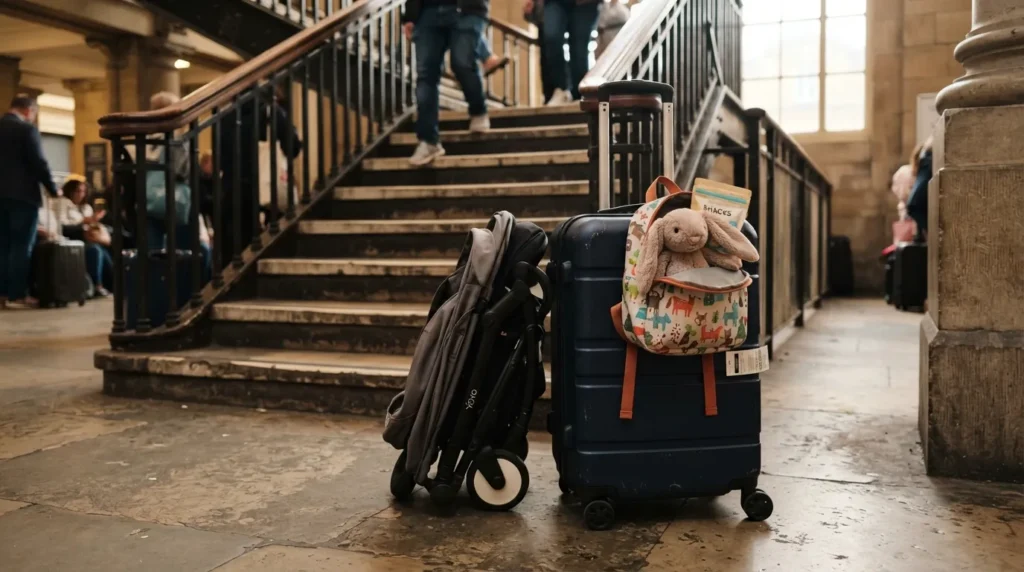
Beyond your own documents and travel essentials, confirm each child’s passport validity separately, and check whether your airline and Japan Rail require separate tickets for infants. A lightweight, collapsible stroller (or carrier, for younger babies) handles Japan’s train stations far better than a bulky travel system; car seats are only necessary if you’re renting a car.
Feeding, Diapering, and Sleep Essentials
Pack baby food and snacks for transit days, since finding familiar brands can take time once you land. Nappies or diapers are easy to buy locally, but bring enough for your first 24–48 hours. A breastfeeding cover, ziplock bags for soiled items, and a small diapering kit round out this category.
For sleep, a portable blanket or thin sleep sack helps kids adjust to unfamiliar hotel rooms, and some families find a white noise machine app useful for jet lag recovery.
Entertainment and Comfort for Kids
Long transit days go smoother with stickers and colouring books, a favorite small toy, and kids’ clothing built around the same layering and quick-dry principles as adult clothing. A collapsible laundry hamper helps manage the higher volume of small-kid laundry that builds up over a trip.
Worked example: A family of four traveling with a two-year-old packs a lightweight umbrella stroller instead of their usual full-size model, specifically because it folds flat enough to carry up station stairs when elevators are out of service or crowded — a common scenario at smaller stations.
What Not to Pack for Japan
Overpacking is the most common mistake, and a few categories are almost always dead weight.
- Excess clothing “just in case.” Coin laundry and self-service laundromats are common even in mid-size hotels, so pack for 5–7 days maximum and do laundry mid-trip.
- Heavy guidebooks. A slim guidebook or downloaded PDF beats a full print edition; physical Japan maps are nice for offline backup but not essential given app coverage.
- Full-size toiletries. Drugstores are everywhere; bring travel-size only.
- Multiple pairs of “nice” shoes. One pair of walking shoes and one slip-on pair covers nearly every scenario.
- A cosplay outfit, unless you’re specifically attending an event like a themed café or Akihabara meetup — otherwise it’s dead weight for the whole trip.
What to Buy in Japan Instead of Packing
Some categories are genuinely better sourced locally. Japanese pharmacies stock excellent sunscreen, skincare, and cold medicine (bring your prescriptions, but skip stocking up on OTC basics). SIM cards and pocket WiFi rentals are easy to arrange at the airport if you didn’t pre-book. Dry shampoo, travel-size toiletries, and even seasonal clothing like a cheap umbrella or gloves are simple to pick up if weather surprises you.
Quick-Reference Japan Packing Checklist
| Category | Core Items |
|---|---|
| Documents | Passport, visa info, boarding passes, hotel printouts, travel insurance |
| Money | Cash, coin purse, low-fee debit/credit cards |
| Transport | IC card, JR Pass (if applicable), transit app |
| Connectivity | eSIM or SIM card, pocket WiFi, power bank, adapter |
| Clothing | Season-appropriate layers, walking shoes, slip-on shoes |
| Toiletries | Travel-size basics, first aid kit, prescription meds |
| Electronics | Phone, camera, headphones, chargers |
| Extras | Day pack, laundry kit, notepad, phrasebook app |
Tips for Packing Light and Smart
Use travel cubes to compress clothing by category rather than by outfit — it makes mid-trip laundry sorting far easier. Aim for a carry-on-only setup if your trip is under three weeks; Japan’s train system makes hauling checked luggage between cities genuinely tedious.
Keep a small notepad and pen or a notes app for jotting down station names and addresses when you’re offline. And build in laundry days rather than packing for the full trip length — it consistently shaves several kilograms off your bag.
FAQ
What are the most important Japan travel essentials to never forget?
Passport, travel insurance, your IC card or transit app, a portable power bank, and prescription medications documentation. Everything else can be bought locally if forgotten.
Do I need a Japan Rail Pass for every trip?
No. It’s worth it for multi-city trips covering long-distance bullet trains, but single-city stays are usually cheaper on pay-as-you-go IC cards.
Is it hard to find toiletries and baby supplies in Japan?
Not in cities — convenience stores and drugstores are everywhere. Rural areas have less selection, so stock up before leaving major hubs.
What should I pack differently for winter versus summer?
Winter needs real insulation — a puffer jacket, thermals, and gloves — while summer prioritizes breathable fabrics, sun protection, and moisture management. Spring and fall sit between the two and reward flexible layering.
Can I use my regular SIM card in Japan?
Only if it supports international roaming, which is usually expensive. A Japan travel eSIM or local data-only SIM card is almost always cheaper for a full trip.
Final Thoughts
The right Japan travel essentials list isn’t about packing more — it’s about packing precisely. Cover your documents, transport, and connectivity first, layer your clothing for the season, and trust that Japan’s convenience stores and drugstores will fill in the gaps. Get those fundamentals right, and the rest of the trip takes care of itself.