
Table of Contents
Understanding European Travel: Key Considerations Before You Pack
A good Europe packing list starts before you touch your suitcase. Europe spans deserts, glaciers, cobblestone old towns, and glass-and-steel capitals — often all on the same trip. What works for Rome in July will not work for a weekend in Reykjavik.
Before you pack a single item, answer three questions: which countries and regions, what season, and how long you’re gone. A ten-day loop through Italy in August calls for breathable fabrics and dressy sandals. A two-week rail trip through Germany and Austria in January calls for a completely different kit.
Cobblestone roads are a factor most first-time visitors underestimate. Wheeled suitcases and stiletto heels both struggle on centuries-old streets in cities like Prague, Bruges, and Florence. European style also leans toward polished, neutral dressing rather than branded athletic wear — something worth keeping in mind as you build your wardrobe.
Finally, check visa regulations early. UK and EU entry rules, ETA (Electronic Travel Authorization) requirements, and passport validity windows vary by nationality and destination, so confirm requirements at least a month before departure.
Essential Clothing for Europe: Layering and Versatility
Layering is the single most useful packing strategy for Europe, regardless of season. Weather can shift from sunny to rainy to cold within a single day, especially in Western and Northern Europe.
Build a capsule wardrobe of versatile clothing that mixes and matches easily. Stick to two or three neutral base colors — navy, black, olive, or beige — so every top pairs with every bottom. This keeps your suitcase small and your outfit options large.
A useful starting formula: 5 tops, 4 bottoms, 3 mid-layers, 2 pairs of shoes, and 1 outerwear piece for roughly a week of travel. Add a blazer or structured jacket and you can move from a museum morning to a nice dinner without changing your whole outfit.
Summer Capsule Wardrobe (5-4-3-2-1 Method)
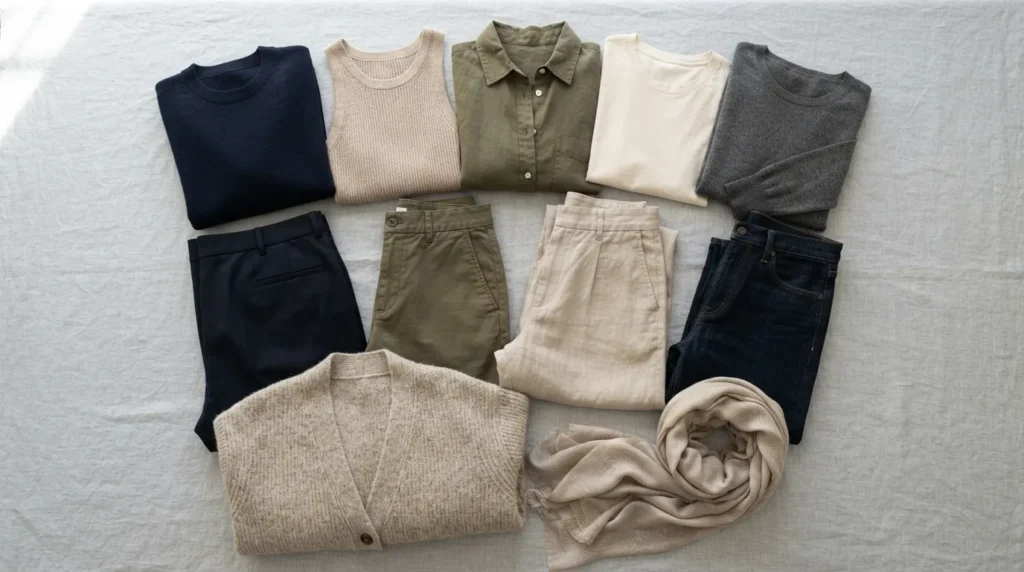
For warm-weather Europe trips, the 5-4-3-2-1 method keeps packing tight:
- 5 tops (quick-dry t-shirts, a blouse, a linen shirt)
- 4 bottoms (shorts, a skirt, wrinkle-resistant travel pants, one dress)
- 3 mid-layers (a cardigan, a light sweater, a denim jacket)
- 2 pairs of shoes (walking shoes, dressy sandals or loafers)
- 1 outerwear piece (a packable rain jacket or windbreaker)
Add a swimsuit and a sun hat if your route includes coastal or lake destinations.
Winter Uniform (Base / Mid / Outer Layer)
Cold-weather trips follow a three-layer system instead:
- Base layer — thermal tops and leggings that wick moisture
- Mid layer — a fleece jacket or wool sweater for insulation
- Outer layer — an insulated coat or packable puffer, plus a waterproof shell if you expect rain or snow
Round this out with wool socks, a scarf, and gloves. A cashmere scarf works double duty as both an accessory and an extra layer on a cold train platform.
Worked example: A traveler doing ten days across Paris, Amsterdam, and Berlin in November packs a thermal base layer, one fleece, an insulated waterproof coat, two pairs of wrinkle-resistant trousers, five tops, wool socks, and a cashmere scarf — six items that combine into more than a dozen outfits.
Footwear: Comfort and Style for Every Adventure
Comfortable walking shoes are non-negotiable. Europe is a walking continent — expect 15,000+ steps a day between transit stations, plazas, and museum wings. Choose broken-in, supportive sneakers or lifestyle walking shoes over stilettos or brand-new shoes.
Pack two to three pairs total:
| Shoe Type | Best For | Skip If |
|---|---|---|
| White sneakers / supportive flats | Daily sightseeing | You’re doing a beach-only trip |
| Dressy shoes or loafers | Dinners, city nightlife | You have limited luggage space |
| Sandals or flip-flops | Beach or shower use | Traveling in winter |
| Micro spikes / hiking boots | Alps, glaciers, winter trails | Sticking to major cities |
A lightweight pair of flip-flops also earns its place in a hostel shower kit, even on a city-only itinerary.
Toiletries and Personal Care: Staying Fresh on the Road
Stick to travel-sized toiletries and multi-use personal care products to save weight and clear airport liquid checks quickly. The TSA liquids rule (and EU equivalent) limits containers to 100ml/3.4oz in a clear quart-sized bag for carry-ons.
Core toiletry bag checklist:
- Solid shampoo bar or solid deodorant (skips the liquid limit entirely)
- Moisturizer with SPF
- Hand sanitizer and tissues
- Travel bottles for any liquid products you can’t buy in solid form
- A compact make-up bag and portable razor
- Contacts or glasses, plus a spare pair if you wear correction lenses daily
Worked example: A traveler packing only a carry-on backpack swaps liquid shampoo, conditioner, and body wash for three solid bars, freeing an entire toiletry bag pocket for a first aid kit instead.
Sun protection deserves its own line item outside the general toiletry bag: SPF cream, an after-sun product for beach or ski destinations, and a wide-brim sun hat for southern Europe in summer.
Medications and First Aid: Be Prepared for Anything
Pack a small travel first aid kit even for a short trip. At minimum, include:
- Prescription medications (in original packaging, in your carry-on — never checked luggage)
- Over-the-counter medications for pain, allergies, and stomach upset
- Bandages and antiseptic wipes
- Motion sickness tablets, useful for ferries, mountain roads, and turbulence
- Melatonin, to help manage jet lag on the flight over
- Electrolytes for long travel days or hot climates
If you take regular prescriptions, bring a printed copy of the prescription or a doctor’s note, since some medications legal at home require documentation — or are restricted outright — in certain European countries.
Travel Documents and Money: What You Really Need in Europe
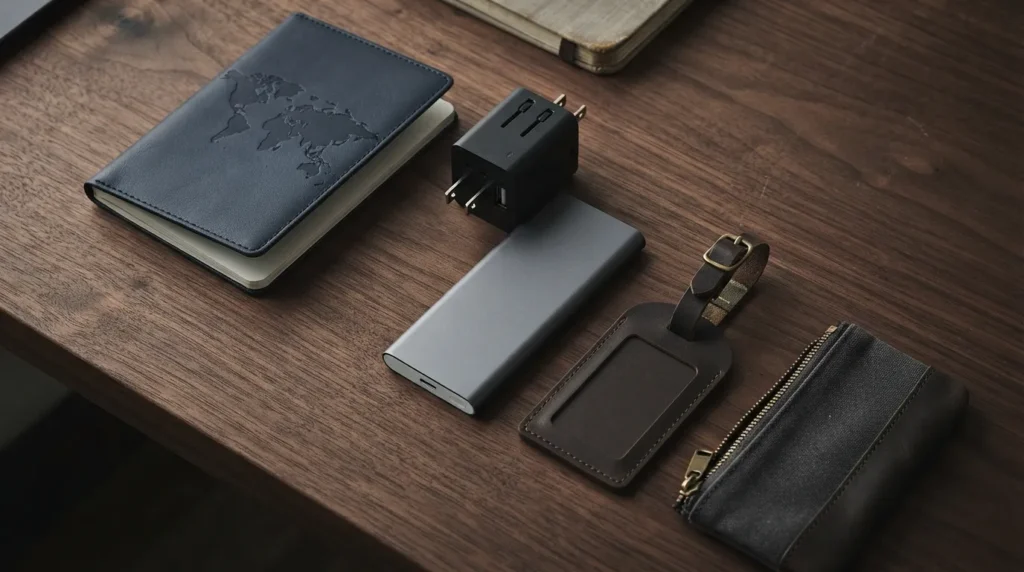
This category causes the most last-minute stress, so build it early and keep everything in one dedicated pouch.
Documents to gather:
- Passport (with 6+ months validity, and any required visas or ETA approval)
- Travel insurance papers
- Printed or downloaded transport tickets and accommodation confirmations
- Driver’s license or international driving permit if renting a car
- Alternate ID, such as a student card or hostel membership card, for discounts
Money to carry:
- A primary debit or credit card, plus a backup card stored separately
- Some converted local currency for cash-only vendors, tips, and small towns
- A money belt or crossbody bag with a zip closer to your body, to reduce pickpocket risk
A password-protected digital backup of every document (photographed or scanned into cloud storage) is worth five minutes before you leave.
Electronics and Accessories: Staying Connected and Powered Up
European wall sockets differ by region — Type C and Type E/F cover most of mainland Europe, while the UK and Ireland use Type G. Pack a universal travel adapter with USB ports rather than country-specific plugs, since most trips cross borders.
| Item | Why You Need It |
|---|---|
| Universal travel adapter | Covers voltage/electrical adapter differences (UK vs. EU) |
| Portable power bank | Keeps devices charged on long travel days |
| E-SIM or international data plan | Avoids roaming charges, works instantly on arrival |
| Noise-cancelling headphones or earbuds | Long flights and train rides |
| Phone lanyard | Keeps your phone secure in crowded plazas |
| AirTags | Tracks checked luggage or a stolen bag |
Most European outlets run 220–240V, so check that any hair tools or non-dual-voltage electronics are rated for it before plugging in — a hairdryer built for North American 110V can burn out or start smoking on European current.
A laptop or tablet is optional; many travelers get by with just a phone and a portable solar power bank for backup charging on multi-day hikes.
Bags and Luggage: Choosing the Right Travel Companions

Choose luggage based on your itinerary, not just your wardrobe. A single-city stay tolerates a larger checked bag; a multi-city rail trip does not.
- Lightweight suitcase or backpack as your main bag — durable, with wheels that handle cobblestones if wheeled
- Carry-on backpack or weekender tote for overnight or short regional trips
- Daypack or crossbody bag for daily sightseeing, small enough to deter pickpockets
- Packing cubes or compression bags to organize and compress clothing by category
- Luggage lock and luggage tag for security and quick identification at baggage claim
- Collapsible duffle for bringing home souvenirs
Worked example: A traveler with a 7kg carry-on limit uses packing cubes to compress a 10-day wardrobe into a 40L backpack, freeing the daypack for a camera, water bottle, and a light jacket during flights.
Europe Packing List by Season and Region
Climate varies enormously across the continent, so adjust your base wardrobe by where — and when — you’re going.
Northern Europe
Expect cool temperatures even in summer. Pack a thermal base layer, a waterproof jacket, wool socks, and a packable puffer for evenings, plus a sleep mask for long summer daylight hours.
Western Europe
Unpredictable rain calls for a rain jacket or trench coat and a travel umbrella year-round, layered over a standard capsule wardrobe.
Southern Europe
Hot, dry summers favor lightweight, breathable fabrics, sandals, a sun hat, and swimwear. Evenings can still cool down, so pack one light layer.
The Alps and Ski Destinations
Insulated coats, thermal base layers, wool socks, and micro spikes or waterproof boots are essential. Add ski-specific gear (goggles, gloves, thermal socks) if you’re hitting the slopes rather than just sightseeing in the mountains.
Sample Packing List for a Two-Week Trip to Europe
| Category | Items |
|---|---|
| Clothing | 7 tops, 4 bottoms, 1 dress, 2 mid-layers, 1 outerwear piece, sleepwear, underwear/socks for 7 days |
| Footwear | Walking shoes, dressy loafers, sandals or flip-flops |
| Toiletries | Solid shampoo/deodorant, SPF moisturizer, travel bottles, first aid kit |
| Documents | Passport, visas/ETA, insurance papers, printed tickets |
| Electronics | Adapter, power bank, e-SIM, headphones |
| Bags | Carry-on suitcase or backpack, daypack, packing cubes |
| Extras | Reusable water bottle, quick-dry towel, travel pillow, guidebook or travel app |
Laundry every 5–7 days lets a two-week trip run on a one-week wardrobe — pack a small bag of detergent sheets if your accommodation has a washer.
Packing Tips for Solo and Retired Travelers: Comfort and Safety
Comfort and security matter more the longer and more independent the trip. A few adjustments help:
- Prioritize compression socks and a travel pillow for long flights or train rides, especially on trips with several transit days
- Carry a portable door lock for hostels or budget accommodations
- Use a money belt instead of a visible wallet in crowded tourist areas
- A fake wedding ring is a low-effort deterrent some solo travelers use in certain regions
- Keep a physical, offline copy of key addresses and phone numbers in case a phone dies or gets lost
Pickpocket awareness is worth a five-minute read before any trip to a major European city — crowded metro cars and tourist landmarks are the most common targets.
Optional Extras: Personal Touches and Special Interests
Not everything on a packing list is strictly necessary — a few extras make a trip more enjoyable without adding much weight:
- A sketchbook or journal for slow travel days
- A mini tripod for solo photography
- A small seasoning kit for self-catering apartments
- A reusable, compact shopping bag for markets and grocery runs
- A formal outfit if your trip includes a wedding, opera, or upscale dinner reservation
- Traveling with an infant adds its own category of gear
Leave real space in your suitcase for souvenirs — packing at 80% capacity outbound avoids a scramble to buy an extra bag home.
Mistakes to Avoid When Packing for Europe
The most common packing regrets are almost always about excess, not deficiency:
- Overpacking shoes. Two to three pairs cover nearly every itinerary; a fourth pair rarely gets worn.
- New, unbroken-in shoes. Cobblestones and 15,000-step days expose blisters fast.
- Full-size toiletries. They eat luggage space and rarely clear the 100ml carry-on limit.
- Checked-only medication. Lost luggage means lost medication; keep it in your carry-on.
- Skipping travel insurance. Medical costs abroad can be steep without it.
- Overpacking “just in case” outfits. Laundry access and mix-and-match layering solve most wardrobe gaps.
What to Wear on the Long Flight Over
Comfort on the flight sets the tone for the whole trip, especially on overnight transatlantic routes. Choose stretchy, wrinkle-resistant travel pants or leggings over anything structured, and layer a t-shirt, a light sweater, and a scarf so you can adjust to cabin temperature swings without digging through your carry-on.
Slip-on shoes make security lines faster, and compression socks reduce swelling on flights over six hours. Pack a travel pillow, a sleep mask, and noise-cancelling headphones in your daypack rather than checked luggage — you’ll want all three within arm’s reach before takeoff.
A few practical touches make a real difference too: a reusable water bottle you can fill after security, melatonin timed to your destination’s bedtime, and a phone loaded with an offline map or guidebook app for the moment you land jet-lagged and disoriented in a new airport.
Worked example: A traveler on an overnight flight to Lisbon wears leggings, a t-shirt, and a cardigan, packs a scarf and compression socks in their daypack, and takes melatonin two hours before landing — arriving groggy but not fully jet-lagged, and ready for a short first-day walk instead of a lost afternoon.
Carry-On Essentials and the TSA Liquids Rule
Whatever else gets checked, keep these items in your carry-on: passport and documents, prescription medications, one change of clothes, chargers and a power bank, and any valuables like a laptop or camera.
Liquids over 100ml must go in checked luggage or get replaced with solid alternatives. Pack a portable phone charger and headphones within easy reach — security lines and long layovers go faster with both on hand.
Frequently Asked Questions
What are the top travel essentials for Europe?
A versatile capsule wardrobe, comfortable walking shoes, a universal adapter, travel documents, and a money belt cover the essentials for nearly any European itinerary.
What should I not pack for a Europe trip?
Skip full-size toiletries, more than three pairs of shoes, unbroken-in footwear, and bulky “just in case” outfits you’re unlikely to wear.
How do I pack light for a two-week Europe trip?
Build a capsule wardrobe around 2–3 neutral colors, plan to do laundry once mid-trip, and use packing cubes to compress everything into one carry-on-sized bag.
Do I need a visa for Europe?
It depends on your nationality and destination — many travelers now need an ETA for UK entry and will eventually need one for the EU (ETIAS), so check current requirements before booking.
What voltage do European outlets use?
Most of mainland Europe runs on 220–240V with Type C or Type E/F plugs; the UK and Ireland use Type G plugs at the same voltage — confirm your electronics are dual-voltage before packing them.
How much money do I need to travel Europe?
Budgets vary widely by region and travel style, but carrying some local cash alongside a primary and backup card covers both cash-only vendors and larger purchases.
Final Thoughts
A strong Europe packing list isn’t about bringing more — it’s about bringing the right layers, the right documents, and enough flexibility to handle whatever the trip throws at you. Pack with intention, leave room for souvenirs, and let the rest of the planning go.