
Table of Contents
Getting your Spain travel essentials right before you leave home saves you money, stress, and suitcase space once you land. Spain’s regions swing from scorching Andalusian summers to damp Basque winters, so a single generic packing list rarely works. This guide breaks down exactly what to bring — clothing, documents, electronics, and health items — based on season, region, and activity, so you land ready instead of scrambling to buy a jacket in Madrid.
Whether you’re headed to the beaches of Costa Brava, the cobblestone streets of Seville, or a hiking stretch of the Camino de Santiago, the right prep makes the difference between a smooth trip and a stressful one. Explore our travel essentials blog for more practical packing and travel guides.
Spain Travel Essentials at a Glance
Before diving into specifics, here’s the short version. Your Spain travel essentials checklist should always include:
- A valid passport (six months’ validity beyond your travel dates)
- Travel insurance
- A universal travel adapter (Spain uses Type C and Type F plugs)
- Comfortable walking shoes
- Sun protection: sunscreen, sunglasses, a sun hat
- A daypack or crossbody bag for daily excursions
- A basic first-aid kit with painkillers and any prescription medication
Everything below expands on these fundamentals and adds the details that depend on when and where you’re traveling.
What to Consider Before Packing for Spain
Three questions shape almost every packing decision for Spain:
- Which region are you visiting? Northern Spain (Basque Country, Galicia) is cooler and rainier year-round. Southern Spain (Andalusia) runs hot even in shoulder seasons.
- What time of year is it? Summer temperatures in the south regularly hit 100°F (38°C), while Madrid winters can dip near freezing.
- What will you actually be doing? A beach holiday in Mallorca requires a completely different bag than a walking tour through Toledo or a hiking trip in the Pyrenees.
Worked example: A traveler splitting two weeks between Bilbao and Seville in April needs a rain jacket and light sweater for the north, then shorts and sun protection for the south — all in the same suitcase. Layering pieces that work in both climates (a breathable long-sleeve shirt, a packable rain shell) solve this without overpacking.
Clothing Checklist for Spain
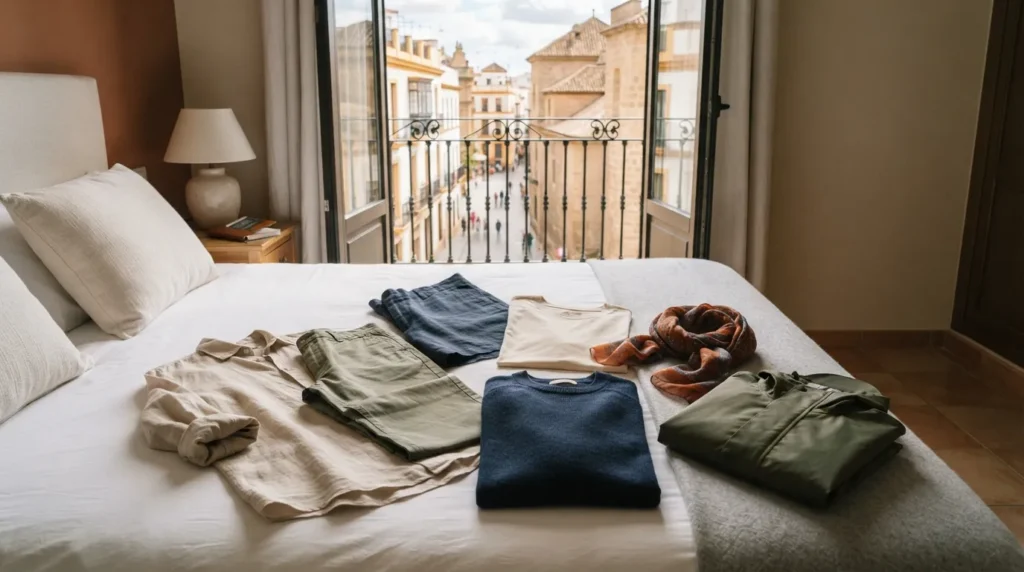
Pack lightweight, breathable fabrics as your base layer, then adjust for season. Underwear, socks, and sleepwear should cover the length of your trip, or fewer if you plan to do laundry along the way.
| Season | Avg. Temp | Key Clothing Items |
|---|---|---|
| Summer (Jun–Aug) | 82–95°F (28–35°C) | Tank tops, shorts, sundresses, linen pants, swimwear |
| Winter (Dec–Feb) | 45–55°F (7–13°C) | Waterproof jacket, sweater, jeans, scarf, warm socks |
| Fall/Spring (Mar–May, Sep–Nov) | 58–70°F (14–21°C) | Light jacket, long-sleeve shirts, a mix of long pants and shorts |
Packing for Spain in Summer
Summer calls for breathable fabrics over cotton, which holds moisture and dries slowly. Tank tops, shorts, and flowy dresses handle the heat in Andalusia, while a light cardigan covers cooler evenings on the coast. Pack at least one swimsuit even for city-only trips — hotel pools are common, and beach days often happen spontaneously.
Packing for Spain in Winter
Madrid and inland cities get genuinely cold in winter, so bring a proper coat, not just a light jacket. Layers — a base tee, sweater, and waterproof outer shell — handle the shift between heated interiors and damp streets. The south stays milder, so if you’re only visiting Andalusia or the Canary Islands, you can scale back to a light jacket and jeans.
Packing for Fall and Spring in Spain
Shoulder season is Spain’s best-kept secret for weather, but it’s also unpredictable. Rain gear, a lightweight scarf, and a mix of shorts and long pants cover most scenarios without overloading your bag.
The Best Luggage to Bring to Spain
A carry-on backpack (35–45L) works well for most Spain itineraries, especially ones involving trains, cobblestone streets, or hostel stays without elevators. If you prefer wheels, a hard-shell carry-on suitcase handles smoother city terrain fine.
Either way, add:
- Packing cubes to compress clothing and separate clean from worn items
- A daypack or small crossbody bag for daily sightseeing — bag-snatching is one of Spain’s most common petty crimes, so cross-body styles with zippers beat open totes
- Luggage tags and TSA-approved luggage locks for checked bags
- A packable duffel if you plan to bring souvenirs home
Worked example: A solo traveler doing a 10-day Spain loop (Madrid → Toledo → Seville → Barcelona) found a 40L backpack easier to manage on Renfe trains than a rolling suitcase, since not every station has elevator access to platforms.
Footwear: What to Wear in Spain
Blisters ruin trips faster than almost anything else. Spain’s historic centers are paved in centuries-old cobblestones, so footwear needs real support, not just style.
- Walking shoes or lightweight sneakers for daily city exploring
- Sandals for beach days and warm evenings
- Hiking boots only if your itinerary includes trails like the Camino de Santiago or the Picos de Europa
- Avoid thin-soled flats or heels on uneven stone streets — they’re genuinely uncomfortable after an hour of walking
Limit yourself to two or three pairs total. Anything more adds unnecessary weight for marginal benefit.
Toiletries and Health Items to Pack for Spain
Most toiletries are easy to buy locally in Spain — pharmacies (farmacias) and supermarkets like Mercadona stock everything from shampoo to sunscreen at reasonable prices. Bring travel-size versions of your essentials and restock once you land if you’re short on carry-on liquid space.
Health and Grooming Items
- Toothbrush and toothpaste
- Deodorant and razor
- Shampoo and conditioner (travel-size)
- Menstrual cup or preferred period products
- Face moisturizer with SPF
Medications and First-Aid Essentials
- Prescription medication, in original packaging, with a copy of the prescription
- Over-the-counter painkillers (ibuprofen, acetaminophen)
- Anti-diarrheal medication (Imodium)
- Antihistamines for allergies
- Band-aids and antiseptic wipes
- Insect repellent, especially for rural or hiking areas
Note that pharmacies in Spain close for the afternoon siesta and are typically shut on Sundays, so don’t wait until you need something urgently to look for one.
Electronics and Gadgets to Pack for Spain
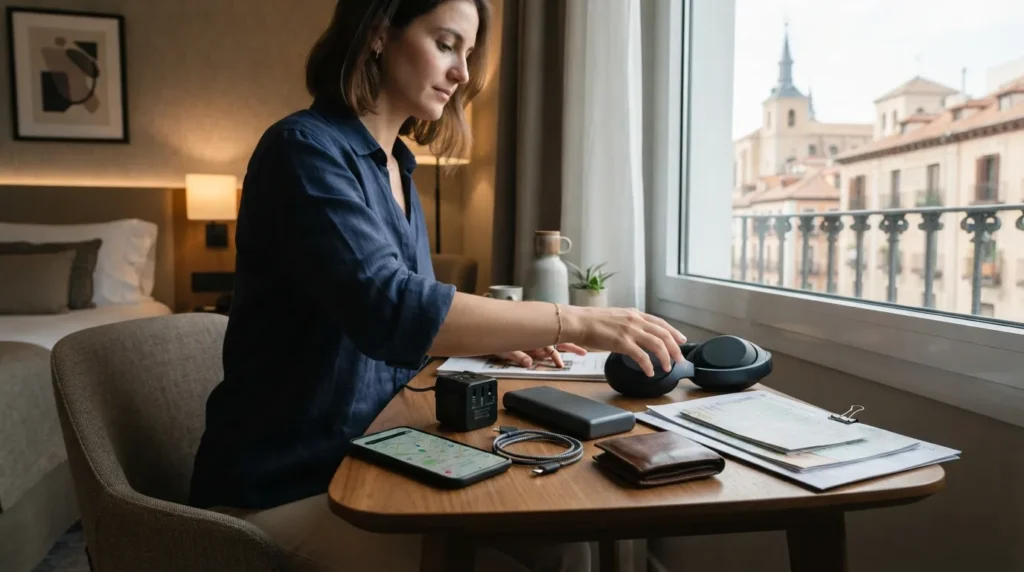
Spain uses Type C and Type F plugs at 230V, so travelers from the US, UK, and most of Asia need a travel adapter. Bring:
- A universal travel adapter (with surge protection if charging a laptop)
- A power bank (10,000mAh or higher) for long sightseeing days
- Your smartphone plus charger
- A camera or GoPro if you want dedicated photo/video quality
- Noise-cancelling headphones for flights and train journeys
- A Kindle or e-reader for downtime
- An eSIM or local SIM card for data — providers like Vodafone and Orange offer short-term tourist plans
If you’re an EU resident, your existing mobile plan should work in Spain at no extra roaming cost under EU regulations. Everyone else should confirm their phone is unlocked before buying a local SIM.
Important Documents and Money for Spain
These are the non-negotiables — the items that end a trip before it starts if forgotten.
- Passport, valid for at least six months past your return date
- Visa, if required for your nationality (most EU, US, UK, Canadian, and Australian citizens can stay up to 90 days visa-free under the Schengen rules — verify current requirements on your government’s travel advisory site)
- Travel insurance covering medical emergencies, cancellations, and lost luggage
- Driver’s license and International Driving Permit, if renting a car
- Document scans of your passport, insurance policy, and cards, saved to cloud storage
- A student card (ISIC) if eligible, for museum and attraction discounts
For money, carry a mix of a chip-and-PIN debit card, a backup credit card, and roughly €100–200 in cash. Notify your bank before departure, and use ATMs rather than currency exchange counters for better rates.
Packing for Specific Activities and Destinations
Beach and Island Packing List
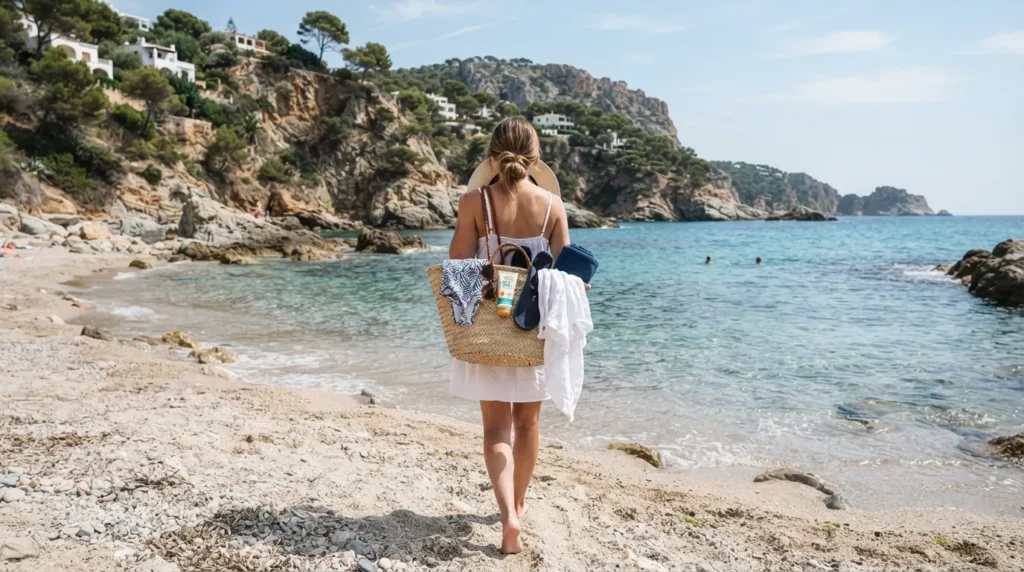
If your trip includes the Balearic or Canary Islands, add:
- Swimsuit and a spare
- Beach cover-up
- Water shoes (many island beaches are rocky)
- A dry bag to protect electronics and valuables near water
- A quick-dry microfiber towel
- Reef-safe sunscreen
Hiking and Walking Tour Gear
For the Camino de Santiago, Picos de Europa, or Sierra Nevada trails:
- Hiking boots, broken in before the trip
- Moisture-wicking layers
- A hiking backpack with a rain cover
- Trekking poles
- A refillable water bottle and a compact water filter if doing multi-day routes
City Breaks: Barcelona, Madrid, Seville, and Granada
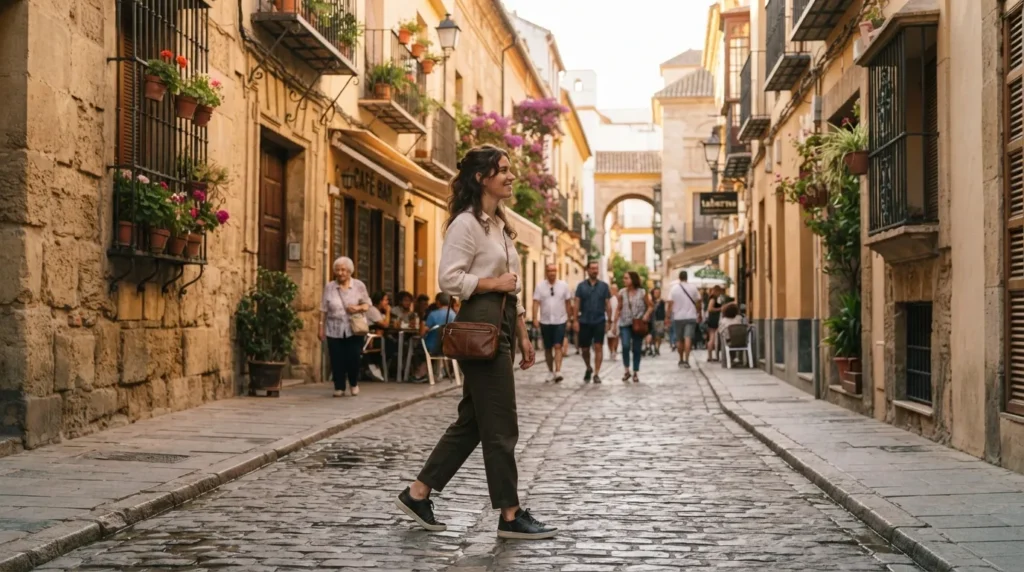
City-focused trips prioritize comfort and versatility over technical gear:
- Comfortable walking shoes as the anchor item
- One dressier outfit for evening dinners or flamenco shows
- A crossbody bag that zips closed
- A light scarf — useful both for style and for covering shoulders in cathedrals like Sagrada Família or Seville Cathedral
Cultural Dress Code in Spain
Spaniards generally dress smart-casual, even for errands, so activewear worn outside the gym can stand out. A few specific rules matter more than general style:
- Cathedrals and religious sites often require covered shoulders and knees — pack a lightweight scarf or a longer skirt for these visits
- Beachwear stays on the beach — walking into town in a swimsuit is considered poor etiquette
- Restaurants lean smart-casual for dinner, especially at higher-end spots
What Not to Pack for Spain
Skip these to save space and hassle:
- A heavy winter coat, unless you’re visiting only in deep winter up north
- Multiple “dressy” outfits — one smart-casual piece covers most evenings out
- A full-size towel — hotels provide one, and a microfiber towel covers the beach
- A money belt — many experienced travelers find them uncomfortable and no more secure than a zipped crossbody bag
- Excess toiletries — pharmacies and supermarkets stock nearly everything you’d need
Packing Tips and Tricks
- Roll, don’t fold — it saves space and reduces wrinkles
- Use packing cubes to separate clean clothes, dirty laundry, and electronics
- Weigh your bag before leaving for the airport to avoid fees
- Photocopy your documents and store copies separately from the originals
- Download offline maps in case data access is unreliable
- Pack one light layer even in summer — air-conditioned interiors and train cars run cold
Laundry Strategy for Your Trip
Self-service laundries (lavanderías) are common in Spanish cities and typically cost $5–9 per load, with a turnaround of a few hours. This makes packing for 7–10 days of clothing sufficient even on a three-week trip — you can simply do laundry mid-trip rather than overpacking. Hotels also offer laundry service, usually at a higher price point than local laundromats.
Frequently Asked Questions
Is it okay to wear jeans in Spain?
Yes. Jeans are a everyday staple across the country. Pair them with a nicer top to blend in with the generally smart-casual local style.
What do you need to pack for Spain?
At minimum: passport, travel insurance, weather-appropriate clothing, comfortable walking shoes, sun protection, a travel adapter, and any prescription medication.
Do you need a power adapter in Spain?
Yes, unless you’re traveling from a country that already uses Type C or Type F plugs (most of continental Europe). Travelers from the US, UK, Australia, and much of Asia will need one.
How many outfits should I pack?
Around 7–10 mix-and-match outfits works for most trips, since laundry is widely available and affordable.
Can I do laundry while traveling in Spain?
Yes. Self-service laundromats are common in most cities, and many hotels and hostels offer laundry service as well.
What should I avoid bringing to Spain?
Skip a heavy winter coat outside of deep winter travel, excess toiletries, multiple dressy outfits, and a money belt.
Final Thoughts
Packing for Spain comes down to matching your bag to your actual itinerary — region, season, and activities — rather than following one generic list. Get the fundamentals right (documents, weather-appropriate layers, sun protection, and a solid pair of walking shoes), and everything else can be adjusted or bought locally if needed. Pack light, plan for laundry, and you’ll have room in your suitcase for the things that actually matter: a few Spanish souvenirs on the way home.