
Table of Contents
Packing for a trip always feels simple until you’re standing in your bedroom at midnight, suitcase half-zipped, wondering if you remembered your charger. An ultimate packing list solves that problem before it starts. It turns a stressful scramble into a five-minute review, whether you’re heading to a beach resort, a mountain trail, or a weekend with family across the country.
This guide walks through every category worth packing — clothing, toiletries, medication, electronics, documents, and gear for specific trip types — plus the tips that separate frequent travelers from first-timers. Use it as a printable packing checklist or adapt it into your own travel essentials list.
The Ultimate Packing List: Why a Checklist Beats Last-Minute Packing
A checklist does two things a memory can’t: it accounts for items you only need once or twice a year, and it forces you to think about the trip itself — climate, activities, length of stay — before you open a drawer.
Travel writers who pack for a living rarely start from scratch. They keep a core travel essentials list and adjust it for the destination. That’s the model this guide follows: a dependable base list, plus seasonal and activity-specific additions.
Worked example: A five-day business trip to Chicago in October needs a very different list than a two-week backpacking trip through Southeast Asia. The base categories — clothing, toiletries, documents, electronics — stay the same. What changes is quantity, fabric weight, and a handful of destination-specific items.
Preparation matters as much as the packing itself. Before closing the suitcase, take a few minutes to prepare your home: stop mail, set lights on a timer, unplug anything unnecessary, and confirm someone can check in if the trip runs long. None of that goes in a bag, but skipping it turns a relaxing trip into a stressful homecoming.
Clothing Essentials: What to Pack
Clothing is the bulkiest part of any suitcase, so it’s the category where a plan saves the most space. The goal is a small number of pieces that combine into many outfits, not a full wardrobe.
Layering and Mix-and-Match Outfits
Layering beats bulk. A base layer, a mid layer, and one weatherproof outer layer handle a wider temperature range than three heavy sweaters. Stick to two or three base colors so every top pairs with every bottom.
- Underwear and socks (one pair per day, plus two extra)
- Compression socks for long flights
- Sleepwear
- 3–5 tops, mix-and-match
- 2–3 bottoms (pants, shorts, or skirts depending on climate)
- One layering piece (fleece, cardigan, or light sweater)
- Waterproof jacket
- Swimwear, if relevant
Footwear
Shoes eat suitcase space fast, so limit yourself to what the trip actually requires. Broken-in walking shoes are non-negotiable — new shoes and long travel days don’t mix.
- One pair of broken-in walking shoes
- One pair of sandals or flip-flops
- One dressier option, if the trip calls for it
- Activity-specific footwear (hiking boots, water shoes) only when needed
| Trip Length | Tops | Bottoms | Shoes |
|---|---|---|---|
| Weekend (2–3 days) | 3 | 2 | 2 pairs |
| One week | 5–6 | 3 | 2–3 pairs |
| Two weeks+ | 7–8 (plan laundry) | 4 | 3 pairs |
Toiletries and Personal Care
Toiletries should fit airline liquid rules without leaving anything essential behind. A dedicated toiletries kit keeps everything in one place and makes airport screening faster.
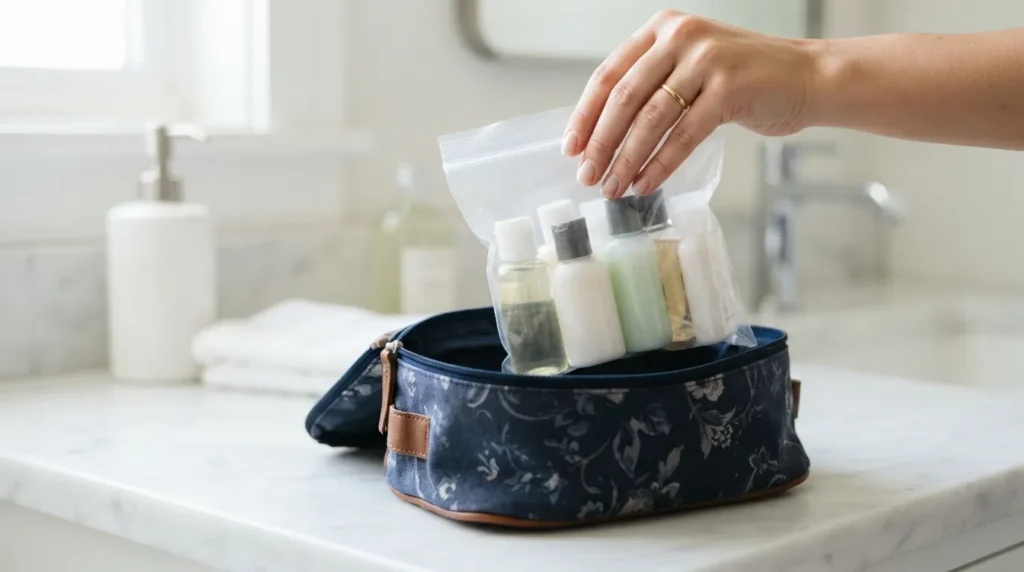
TSA-Approved Toiletry Bag and the 3-1-1 Rule
The TSA 3-1-1 rule allows containers of 3.4 ounces (100ml) or less, all fitting into a single quart-size liquids bag, one bag per passenger. Pack a TSA-approved toiletry bag with travel-size versions of your regular products, and check any full-size bottles.
- Travel-size shampoo, conditioner, body wash
- Toothbrush, toothpaste, floss
- Deodorant
- Sunscreen
- Hand sanitizer and disinfecting wipes
- Small towel or washcloth
- Retainer cleaning tablets, if applicable
- Universal drain stopper for hand-washing clothes
Make-Up and Skincare Essentials
Keep this section minimal — decant favorites into small containers rather than packing full-size palettes.
- Basic makeup essentials (foundation, mascara, one lip product)
- Makeup remover wipes
- Moisturizer and any daily skincare
- Glasses, contacts, or sunglasses
Medication and Health Items
Health items are the one category where forgetting something can derail a trip, so build this list first and pack it in your carry-on, not checked luggage.
Prescription Medication Labeling
Keep prescription medication in its original, labeled packaging, especially for international travel — some countries restrict specific medications, and unlabeled pills can cause problems at customs. Bring a few days’ extra supply in case of delays.
- Prescription medications, in original bottles
- Multivitamins and any daily supplements
- Hydration tablets
- Pain relievers and allergy medication
- Motion sickness remedies, if needed
First-Aid Kit Basics
A compact first-aid kit covers the small injuries that would otherwise mean a pharmacy run in an unfamiliar city.
- Adhesive bandages
- Anti-blister or anti-chafe balm
- Antiseptic wipes
- Insect repellent
- Face masks, for crowded transit
Worked example: A traveler with a CPAP machine should pack a CPAP extension cord and confirm the destination’s plug voltage in advance — medical devices are exempt from the standard liquids rule but still need to clear security separately.
Electronics and Gadgets
Electronics multiply fast — phone, laptop, camera, each with its own charger. Consolidate cables into one pouch so nothing gets left behind in a hotel outlet.
Chargers, Adapters, and Batteries
International plug adapters are essential for any trip outside your home country’s outlet standard; a universal adapter covers most destinations in one device.
- Phone and charger
- Laptop or tablet, if needed for work
- Headphones or earbuds
- Camera gear, for photography-focused trips
- International plug adapters
- Portable battery pack
- Car phone charger and mount, for road trips
Documents, Money, and Travel Security
Documents are the smallest items on this list and the hardest to replace if lost. Keep physical copies separate from digital backups.
Passports, Visas, and Travel Documents
For international travel, check passport expiration and visa requirements well ahead of departure — many countries require six months of validity remaining. Keep a photo of your passport’s information page stored separately from the physical document.
- Passport (check expiration date)
- Visas, if required for the destination
- Driver’s license or REAL ID
- Boarding passes and hotel confirmations
- Travel insurance details
- Copies of documents, physical and digital
Money Belts and Financial Items
Travel security starts with not carrying everything in one place. A money belt or hidden pouch protects cash and cards from pickpocketing in crowded tourist areas.
- Credit and debit cards (notify your bank before international travel)
- Local currency, if available in advance
- Money belt or anti-theft pouch
- Emergency contact list
Travel security also covers digital habits, not just physical items. Frequent international travelers and digital nomads often rely on a VPN to protect data on public Wi-Fi, and a mobile passport app can shorten re-entry lines at many major airports. Neither replaces the physical passport, but both cut down on friction at borders and in transit.
Worked example: A traveler crossing three countries in two weeks split their cash and cards between a money belt and a zipped inner pocket, so losing one wallet wouldn’t mean losing every form of payment at once.
What to Pack in Your Carry-On and Personal Item
Carry-on essentials should cover a worst-case scenario: a delayed or lost checked bag. Pack at least one change of clothes and all medications in the cabin, not checked luggage.
Your personal item — a smaller bag that fits under the seat — should hold what you’ll want mid-flight:
- Travel documents and wallet
- Phone, headphones, and chargers
- A change of clothes and clean underwear
- Medications and a small first-aid kit
- Snacks and an empty water bottle to fill after security
- Inflatable pillow or neck rest
- Reading material, journal, or notepad and pen
- Earplugs and a sleep mask
Choosing the Right Travel Bag
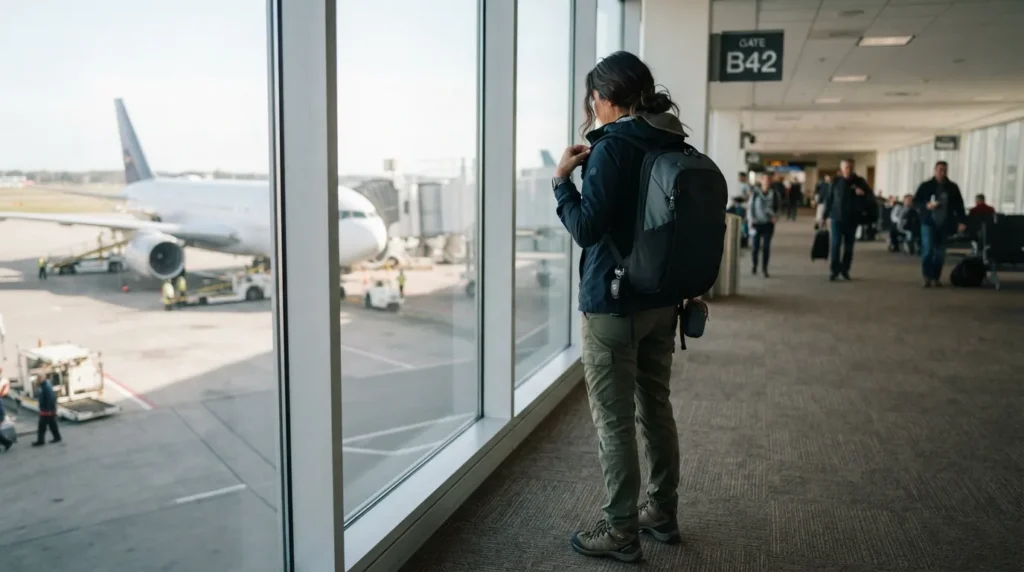
The right travel bag depends more on trip style than trip length. A carry-on suitcase suits city trips; a backpack suits anywhere with stairs, cobblestones, or multiple transit changes.
Backpacks, Daypacks, and Anti-Theft Bags
Digital nomads and long-term travelers often prefer an anti-theft backpack with lockable zippers for their main pack, paired with a smaller day bag or camera bag for daily outings.
- Main travel bag (suitcase or backpack)
- Small day pack for daily excursions
- Anti-theft backpack, for higher-risk destinations
- Fold-up tote bag for souvenirs or laundry
- Tiny lock for zippers
Waterproof fabric is worth prioritizing on the main bag and day pack alike — a sudden downpour shouldn’t mean soaked electronics or a ruined passport. Hardshell suitcases resist crushing better on checked flights, while soft-sided bags and backpacks flex into overhead bins and car trunks more easily. Neither is universally better; the choice depends on whether the trip involves more flying or more ground transport.
Seasonal and Destination-Specific Packing
Base packing lists only go so far — climate and activity should shape at least a quarter of what actually goes in the bag.
Hot-Weather and Beach/Resort Packing
All-inclusive vacations and beach/resort trips call for lightweight, breathable fabrics and minimal layering.
- Swimwear (two suits, so one can dry while the other’s worn)
- Beach/resort clothing: sundresses, linen shirts, shorts
- Wide-brim hat and extra sunscreen
- Sandals and water shoes
- Waterproof phone pouch
Cold-Weather Packing
Cold-weather trips are about layering, not bulk. A good base layer and insulated outer layer beat three sweaters every time.
- Thermal base layers
- Insulated jacket
- Gloves, hat, and scarf
- Wool socks
- Waterproof boots
Packing for Special Activities: Hiking, Kayaking, and Snorkeling
Activity-specific trips need gear the base list doesn’t cover.
- Hiking gear: broken-in boots, trekking poles, a hydration pack, moisture-wicking layers
- Kayaking gear: quick-dry clothing, a waterproof bag, water shoes
- Snorkeling/diving gear: mask, snorkel, rash guard (or rent locally to save luggage space)
Road Trip Packing List
Road trips shift the packing problem — instead of weight limits, the constraint is organization across a vehicle with multiple storage zones.
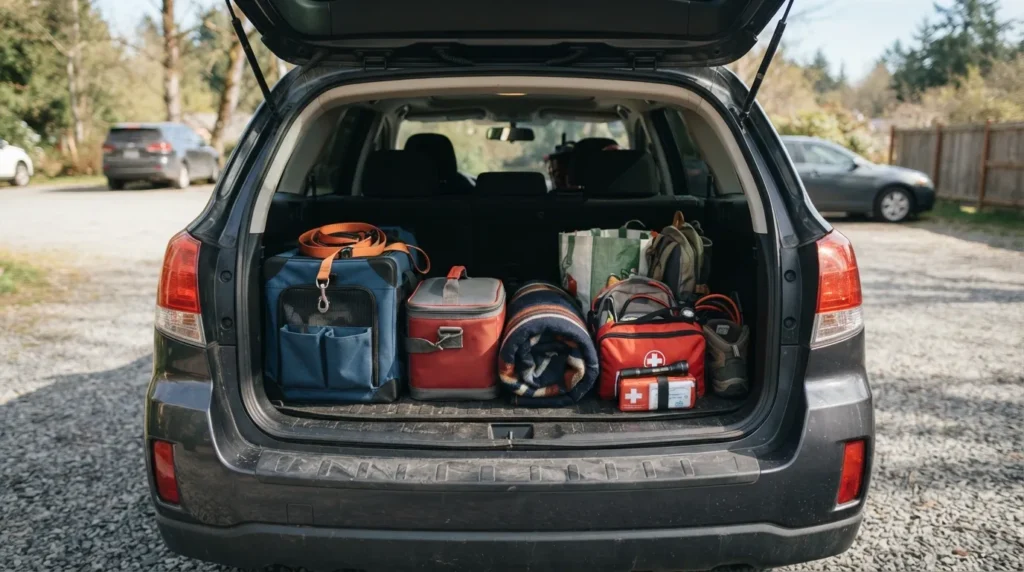
Car Emergency Kit and Glove Compartment Items
| Location | Items |
|---|---|
| Glove Compartment | Registration, insurance card, flashlight, tire gauge |
| Middle Console | Phone mount, sunglasses, hand sanitizer, spare cash |
| Trunk | Car emergency kit, jumper cables, first-aid kit, blanket |
A car emergency kit should include jumper cables, a flashlight, a basic tool kit, and a first-aid kit sized for the length of the trip.
Entertainment, Snacks, and Pet Travel Items
- Playlists or podcasts downloaded offline
- Snacks and a cooler for drinks
- Pet travel items: leash, bowl, food, waste bags, and a favorite toy
- Personal items: neck pillow, blanket, familiar bed item for kids
Worked example: A family driving eight hours with young kids packed a familiar bed item and a small basket of entertainment (books, a tablet loaded with downloaded shows, snacks in individual bags) in the middle console, so nothing required digging through the trunk at a rest stop.
Holiday and Family-Visit Packing
Staying with family or traveling during the holidays adds categories a hotel trip wouldn’t need — gifts, contributions to shared meals, and personal products you can’t assume your host will have.
- Gifts and gear for the visit
- Contribution for a shared meal, if hosting norms call for it
- Personal products you rely on daily
- A guidebook or notepad if exploring a new area nearby
Packing Cubes vs. Rolling vs. Folding: Which Method Wins?
The debate between rolling clothes, folding, and packing cubes comes down to organization versus raw space savings.
| Method | Space Efficiency | Organization | Best For |
|---|---|---|---|
| Rolling clothes | High | Low | Casual, short trips |
| Folding | Medium | Medium | Structured suitcases |
| Packing cubes | High | High | Long trips, multiple stops |
Packing cubes win for longer or multi-destination trips because they compress clothing and keep categories separate — one cube for tops, one for bottoms, one for laundry. For a single weekend trip, rolling clothes by hand works just as well without buying extra gear.
Expert Packing Tips for Efficient Travel
Frequent travelers rely on habits more than gear. These are the ones that make the biggest difference.
Making a Packing List and Choosing the Right Luggage
Start with a packing list before choosing luggage size — it’s easier to right-size a bag to your actual items than to fill whatever bag you already own. A printable packing checklist, saved and reused for every trip, cuts prep time to a few minutes.
Laundry Planning and Minimizing Toiletries
For trips longer than a week, plan for laundry instead of packing more clothes. A small laundry kit — travel detergent sheets and a sink stopper — replaces several days’ worth of outfits. Minimizing toiletries to travel-size containers and limiting shoes to two or three pairs are the two easiest ways to shrink a suitcase.
Worked example: A traveler packing for three weeks in Europe swapped eight outfits for five, added a laundry kit, and freed up enough space to skip checking a bag entirely.
Frequently Asked Questions
What is the TSA 3-1-1 rule?
It limits carry-on liquids to containers of 3.4 ounces or less, all placed in a single quart-size resealable bag, one bag per traveler.
How many outfits should I pack for a week-long trip?
Five to six tops and three bottoms, mixed and matched, plus a laundry plan for trips longer than that.
What should always go in a carry-on?
Medications, travel documents, one change of clothes, and any valuable electronics — anything you can’t afford to lose if checked luggage is delayed.
Do I need a visa for international travel?
It depends on your destination and passport. Check your destination country’s entry requirements at least a month before departure, since processing times vary widely.
What’s the best way to pack toiletries for a flight?
Use travel-size containers in a TSA-approved toiletry bag, and pack any medically necessary liquids separately since they’re exempt from the standard limit.
Are packing cubes worth it?
For trips over a week or with multiple stops, yes — they compress clothing and keep categories organized. For short weekend trips, they’re a nice-to-have rather than a necessity.
How do I pack for a trip with unpredictable weather?
Build around layers instead of committing to one climate. A base layer, a mid layer, and one waterproof jacket handle a wider swing in temperature than several single-purpose items, and they take up less space than packing for both extremes separately.
What should I do with a printable packing checklist once I have one?
Save it and reuse it for every trip, adjusting only the seasonal and activity sections. A saved checklist turns future packing into a five-minute review instead of a from-scratch process each time.
Final Thoughts
A packing list only works if it gets used before the bag gets packed, not after. Save this checklist, adjust the seasonal and activity sections for each destination, and packing turns from a source of stress into a five-minute task before every trip.
Pingback: 20 Amazing Hawaii Travel Essentials to Pack
Pingback: Ireland Travel Essentials: Smart Packing Tips
Pingback: Greece Travel Essentials: 15 Ultimate Picks