
Table of Contents
The right travel accessories don’t just fill space in a bag — they solve specific problems. A tangled cable pouch, a passport that won’t stay dry, a neck that aches after eight hours in economy: each has a small, purpose-built fix, and packing the right one changes the whole trip.
This guide separates the accessories worth buying from the ones that just add weight. You’ll find a core checklist, gadget picks for tech-heavy trips, and use-case lists for flying, adventure travel, and cruising — plus how to organize it all so you can actually find what you packed.
What Makes a Travel Accessory Worth Packing?
An accessory earns a spot in your bag if it solves a recurring annoyance, not a hypothetical one. A luggage scale that stops you from paying overweight fees at check-in is worth it. A gadget you’ll use once is not.
The best test: would you buy this again if it broke on day two of a three-week trip? If yes, it’s a real travel essential. If you’d shrug and leave it behind, skip it.
Weight and multi-purpose value matter just as much as usefulness. A buff that works as neckwear, a dust mask, and a hair tie earns its spot faster than three separate single-purpose items that each do one job. The best travel gear lists tend to favor items that solve two or three problems at once, which is why compact, multi-use accessories dominate almost every “best travel accessories” roundup.
Example: A frequent flyer switched from a bulky charging brick to a single ultralight power bank that charges a phone and a pair of earbuds simultaneously — one item replacing three, with less weight in the bag.
The Best Travel Accessories Checklist
This is the core list — grab from each category based on your trip length and travel style.
Travel Organizers and Toiletry Kits
Packing cubes and a dedicated toiletry bag do more for a bag’s usability than any single gadget.
| Organizer | Best For |
|---|---|
| Packing cubes | Separating clean vs. worn clothing, compressing bulk |
| Dopp kit / wash bag | Keeping liquids contained and leak-proof |
| Tech pouch | Cables, adapters, and small electronics in one place |
| Key organizer | Preventing jangling keys from scratching other items |
| Compression socks | Reducing swelling and fatigue on long flights |
A soap dry bag — a small vented pouch for a used bar of soap — is a small addition that keeps a toiletry bag from smelling like a locker room by day three.
Travel Tech and Gadgets
Travel tech has quietly become as essential as clothing for most travelers, especially anyone working remotely.
- Universal travel adaptor with USB-C and USB-A ports built in
- Ultralight power bank (10,000mAh is enough for most trips without adding real weight)
- Bluetooth tracker (Chipolo, Apple AirTag, or similar) clipped to a bag or passport wallet
- Noise-cancelling earplugs or headphones for flights and shared accommodations
- E-reader, which replaces several paperbacks at a fraction of the weight
- Portable gaming console for long-haul flights or layovers
- USB-C to USB-A converter for older accessories
Example: A digital nomad packing a tech kit for a six-month trip carries one universal adaptor, one power strip, a compact power bank, and a single set of cables rated for both a laptop and a phone — avoiding the tangle of chargers most travelers accumulate.
Flying Comfort Essentials
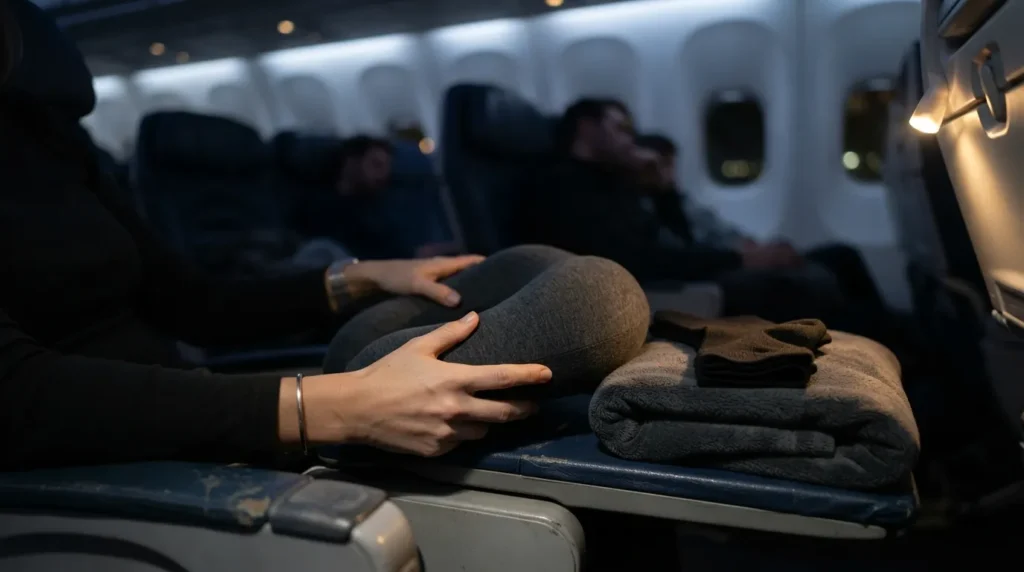
Long flights reward a small, specific set of comfort accessories.
- Travel neck pillow (memory foam packs down smaller than inflatable versions)
- Silk eye mask or a basic sleep mask
- Compression socks for circulation on flights over four hours
- Travel blanket, especially on airlines that no longer provide them
- Noise-cancelling earplugs, a lighter alternative to full headphones for sleeping
Clothing Accessories
Small clothing add-ons extend the life of a packed outfit without adding bulk.
- Buff or lightweight scarf, doubling as neckwear, a dust mask, or a hair tie
- Base layer in merino wool, which resists odor across multiple wears
- Packable raincoat that compresses into its own pocket
- Travel sunglasses with a hard case to prevent crushing
Eco-Friendly and Sustainable Travel Products
Sustainable swaps reduce single-use waste without adding extra steps to a routine.
- Reusable water bottle, ideally insulated or collapsible for packing flat
- Reusable silicone bags instead of single-use toiletry bags
- Bar soap or other multi-use toiletries instead of separate bottled products
- Laundry sheets in place of liquid detergent, which cuts both weight and spill risk
Carry-On-Only Travel Accessories
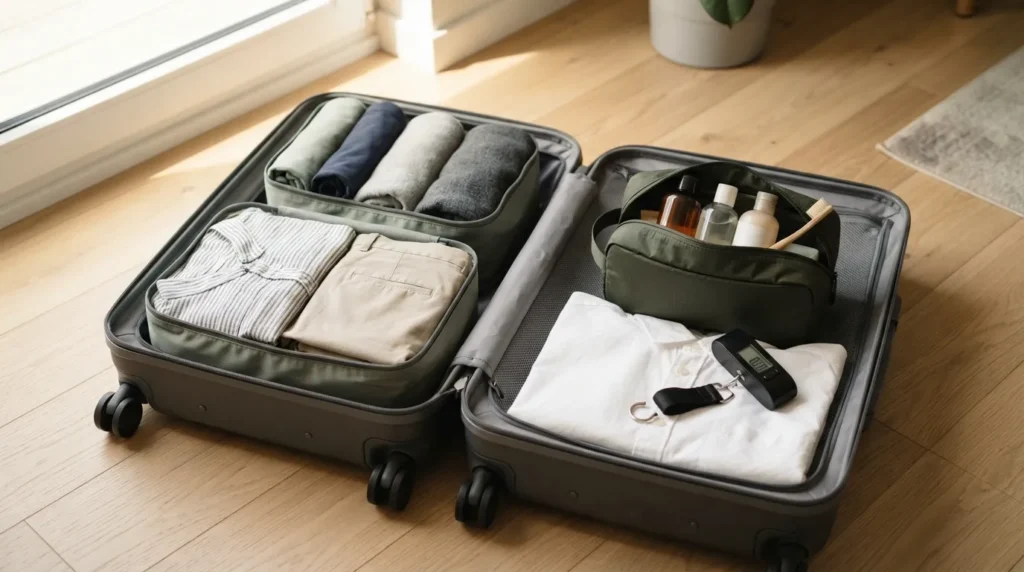
Carry-on-only travel rewards accessories that punch above their size.
| Accessory | Why It Matters for Carry-On Travel |
|---|---|
| Digital luggage scale | Confirms your bag is under the limit before you leave home |
| Compression packing cubes | Shrinks clothing volume by 20–30% |
| Collapsible utensils | Avoids checking a bag just for reusable cutlery |
| Foldable tote | Expands storage for souvenirs without a second bag |
| TSA-approved liquid containers | Keeps toiletries compliant without repackaging at the gate |
Example: A traveler committed to a single carry-on for a 10-day European trip relies on compression cubes, a collapsible tote for the return flight, and laundry sheets to wash clothing mid-trip instead of packing double the outfits.
Unique and Adventure Travel Gadgets
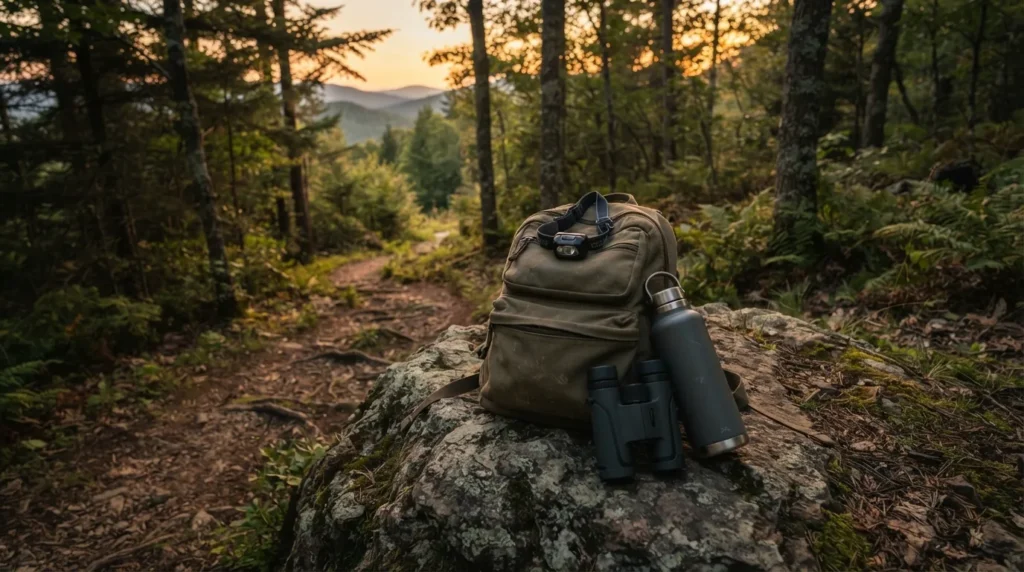
Adventure and outdoor trips call for accessory choices well outside a standard packing list.
- Headlamp for campsites, night hikes, or unreliable hotel lighting
- Travel binoculars for wildlife viewing or scenic overlooks
- Multi-tool (a credit-card-sized version covers most basic needs without TSA issues in checked luggage)
- Carabiner clip for attaching gear to the outside of a bag
- Insulated water bottle that keeps water cold on multi-hour hikes
- Portable door lock for added security in remote or budget accommodations
Example: A traveler heading into a multi-day trekking trip packs a headlamp, a multi-tool, and an insulated water bottle instead of a standard day bag setup, prioritizing durability over the lighter gear used for a city trip.
Digital Nomad Tech and Remote Work Accessories
Remote work has created its own accessory category, separate from standard travel tech. These items solve problems that only show up when you’re working from a different location every few weeks.
- Ultralight laptop: A Windows 11 ultralight laptop or comparable lightweight machine reduces daypack weight without sacrificing the processing power needed for video calls and file-heavy work.
- Power strip with surge protection: Useful in shared accommodations or co-working spaces with limited outlets, letting one adaptor charge several devices from a single socket.
- Portable Wi-Fi hotspot: A backup connection matters more than most digital nomads expect, especially in destinations with unreliable accommodation Wi-Fi.
- EDC sling bag: A single-strap sling bag keeps a laptop, charger, and passport wallet accessible without the bulk of a full backpack for short co-working commutes.
- Noise-cancelling headphones: Doubles as flight comfort gear and a way to work from noisy cafés or shared spaces.
Example: A remote worker based in three cities over two months carries a power strip, one universal adaptor, and a single set of cables rated for both a laptop and phone — the same tech kit works in every location, so nothing needs to be repurchased destination to destination.
Use-Case Packing: Accessories by Trip Type
The core checklist stays the same. What shifts is which accessories move to the top of the bag.
Long-Haul Flight Essentials
- Travel neck pillow and blanket
- Noise-cancelling earplugs or headphones
- Compression socks
- E-reader or portable gaming console
- Reusable water bottle to refill after security
International Travel Accessories
- Universal travel adaptor matched to the destination’s plug type
- Passport wallet or passport cover with RFID protectors
- Travel folio for boarding passes, visas, and currency
- Instant coffee or tea packets, useful where hotel options are limited
- Bluetooth transmitter, for connecting wireless headphones to older in-flight or hotel TV systems without Bluetooth
Nature and Adventure Travel Gear
- Headlamp and multi-tool
- Travel binoculars
- Insulated or collapsible water bottle
- Wool buff for sun and wind protection
- Packable raincoat
Nature travel gear differs from standard packing in one key way: durability outweighs weight. A slightly heavier insulated bottle that survives a drop on a rocky trail beats an ultralight one that cracks on day one. The same logic applies to headlamps — a mid-range model with a reliable battery life beats the cheapest option every time on a multi-day trip away from outlets.
Cruising Accessories
- Magnetic hat clip and lanyard for windy deck days
- Power strip without a surge protector (check the cruise line’s specific policy)
- Small tote bag for daily excursions
- Travel journal or notebook for logging ports of call
- Reusable toiletry bottles to avoid oversized packaging in a small cabin
Cruise cabins run small, which makes compact, multi-use accessories more valuable than on a standard hotel-based trip. A single power strip solves the common one-outlet-per-cabin problem, and reusable toiletry bottles cut down on bulky, half-used bottles cluttering a tiny bathroom counter for a week.
Example: A first-time cruiser packed a full-size toiletry kit and ran out of counter space by day two. On the next cruise, the same traveler switched to three reusable bottles and a hanging toiletry organizer, freeing up the entire counter for daily use.
Travel Accessories vs. General Packing Items: What’s the Difference?
Not everything in a suitcase is a “travel accessory.” Clothing, toiletries, and documents are packing essentials — the baseline. Accessories are the smaller, often gadget-like additions that improve comfort, organization, or convenience on top of that baseline.
| Category | Examples | Purpose |
|---|---|---|
| Packing essentials | Clothing, toiletries, documents | Cover the trip’s basic needs |
| Travel accessories | Packing cubes, power bank, neck pillow | Improve comfort and organization |
| Travel gadgets | Bluetooth tracker, e-reader, tech kit | Add convenience or entertainment |
Suitcases and camera gear sit in a gray zone — most travelers treat the bag itself and any dedicated camera equipment as a separate purchase decision, evaluated on trip type rather than bundled into a standard accessory list.
Understanding this split matters when you’re deciding where to spend a packing budget. A traveler with a limited budget gets more value upgrading a worn-out toiletry bag or adding a first power bank than buying a fourth pair of travel pants — the accessory closes a functional gap the clothing already covers. Prioritize accessories that solve a problem your current setup doesn’t, rather than duplicating something you already own.
How to Organize and Pack Your Accessories
Good accessory organization prevents the “everything dumped in one pocket” problem that makes small items hard to find.
- Group by function, not size — all cables and adapters in one tech pouch, all toiletries in one wash bag.
- Use a sling bag or EDC sling bag for the items you’ll want mid-flight or mid-day: phone, passport wallet, earplugs, a portable charger.
- Attach a luggage tracker (Bluetooth luggage tags or an AirTag) to checked bags, so a delay doesn’t mean total uncertainty about your bag’s location.
- Keep cables tidy with cable ties rather than letting them tangle loose in a tech pouch.
- Label similar bags with a distinct luggage tag or ribbon, especially useful for group travel where suitcases look identical on a carousel.
- Assign each accessory a permanent pocket in your bag. If the neck pillow always lives in the same outer pocket, you stop unpacking the whole bag to find it at the gate.
- Do a weekly reset on longer trips. Every few days, empty the tech pouch and toiletry bag, wipe them out, and repack — loose items migrate to the bottom of a bag faster than most travelers expect.
A well-organized bag isn’t about owning more organizers — it’s about giving every accessory one home so packing and unpacking take minutes instead of a full search.
Example: A traveler who previously spent ten minutes searching for a passport wallet buried under clothing switched to a single dedicated front pocket for documents and a sling bag for daily essentials — cutting security-line fumbling down to seconds.
Women’s Travel Essentials and Accessory Add-Ons
A few accessories consistently show up on women’s travel essentials lists specifically because they solve gaps the standard checklist misses.
- A crossbody phone lanyard for hands-free security in crowded areas
- A scarf or buff that doubles as a modesty layer for religious or cultural sites
- A compact silk eye mask that won’t crease hair or makeup
- A foldable tote for daily use that packs flat when empty
- RFID-protected passport wallet, often sized to also hold a phone
These additions aren’t about a separate packing philosophy — they solve the same core problems (security, comfort, versatility) with a slightly different set of tools. A crossbody lanyard, for example, addresses the same pickpocket risk a money belt solves for other travelers, just in a format that’s easier to access quickly in a crowded market or train station.
Frequently Asked Questions
What are the most useful travel accessories for a carry-on-only trip?
Compression packing cubes, a digital luggage scale, and a foldable tote consistently deliver the most space and weight savings for carry-on-only travelers.
What travel gadgets are actually worth buying?
A universal travel adaptor, a reliable power bank, and a Bluetooth tracker solve recurring problems on nearly every trip, which makes them worth the investment over novelty gadgets used once.
Do I need a separate toiletry bag if I already have packing cubes?
Yes — toiletries need a leak-proof, TSA-compliant bag separate from clothing cubes, since a single leaked bottle can ruin an entire cube of clothes.
What should be in a long-haul flight essentials kit?
A neck pillow, eye mask, compression socks, noise-cancelling earplugs, and a refillable water bottle cover the most common long-haul discomforts.
Are eco-friendly travel products worth the extra cost?
For frequent travelers, reusable bottles, silicone bags, and bar soap pay for themselves within a few trips by cutting recurring purchases of single-use items.
What’s the difference between a travel gadget and a travel accessory?
Gadgets are typically electronic — power banks, trackers, e-readers — while accessories cover a broader range including organizers, clothing add-ons, and comfort items; most packing lists blend both under one “accessories” umbrella.
How many packing cubes do I actually need?
Three to four cubes covers most trips: one for tops, one for bottoms, one for underwear and socks, and an optional compression cube for bulkier items like a jacket.
Final Thoughts
The best travel accessories are the ones that quietly remove friction — a bag that stays organized, a phone that stays charged, a neck that doesn’t ache on landing. Build your kit around real recurring problems, not gadgets you’ll use once, and every trip after this one gets a little easier to pack.
Start with the core checklist, add the use-case extras for your specific trip, and let the accessories that don’t earn their weight fall out of rotation naturally.