
Table of Contents
Packing for Greece is different from packing for most European trips. One day you’re climbing marble steps in Athens; two days later you’re stepping off a ferry onto a dusty island road. Getting your Greece travel essentials right means planning for both climates, all in one carry-on.
This guide breaks down exactly what to bring, why each item matters, and how to adjust your list by season, destination, and travel style — whether you’re island-hopping the Cyclades or basing yourself in Athens for a week. If you haven’t finalized your route yet, pair this list with our Greek Islands vs. Athens Itinerary guide to plan stops before you pack.
My Greece Packing Philosophy
Good packing starts with a mindset, not a checklist. The goal in Greece is to travel light enough to move easily between ferries, taxis, and cobblestone streets, while still having the right gear for sun, water, and the occasional cool evening.
A useful rule: if an item can’t do at least two jobs, question whether it earns a spot in your bag. A sarong doubles as a beach coverup and a shawl for a church visit. A cardigan works on a breezy ferry deck and in an over-air-conditioned taxi.
Worked example: A traveler spending five days in Santorini and three in Athens doesn’t need two separate wardrobes. She packs three versatile dresses that work for dinner in Oia and for wandering the Acropolis Museum, then layers accessories to change the look for each setting.
This approach keeps luggage manageable and avoids the classic mistake of overpacking “just in case” items that never leave the suitcase.
The Complete Greece Travel Essentials Checklist
Whether you’re headed to the islands, the mainland, or both, this is the core list to build from. Each category below covers what most travelers genuinely use — not padding for the sake of a longer list.
Clothing Essentials
Greek summers are hot and dry; spring and shoulder-season evenings can turn cool fast. Pack for both.
- Versatile dresses and jumpsuits — the easiest way to look put-together with minimal effort
- Lightweight tops and breathable shirts, ideally in natural fabrics like cotton or linen
- Breathable trousers or shorts for walking tours and hiking
- Loose-fitting, light-colored clothing that handles heat and sun better than tight synthetic fabrics
- Coverups and sarongs for the beach and for modesty at religious sites
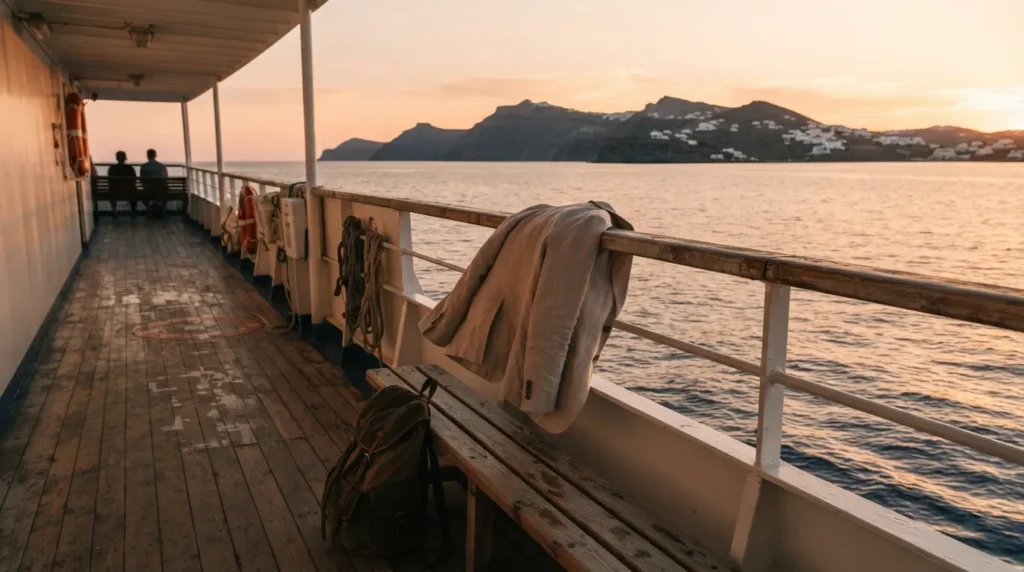
- A light jacket, windbreaker, or cardigan for cooler evenings and ferry crossings
- Evening attire in the smart-casual range for dinners in island towns
Worked example: A couple packing for a September trip bring one lightweight windbreaker each. They don’t expect rain, but a windy ferry crossing between islands makes those jackets the most-used item in the bag by day three.
Footwear for Cobblestones, Boats, and Beaches
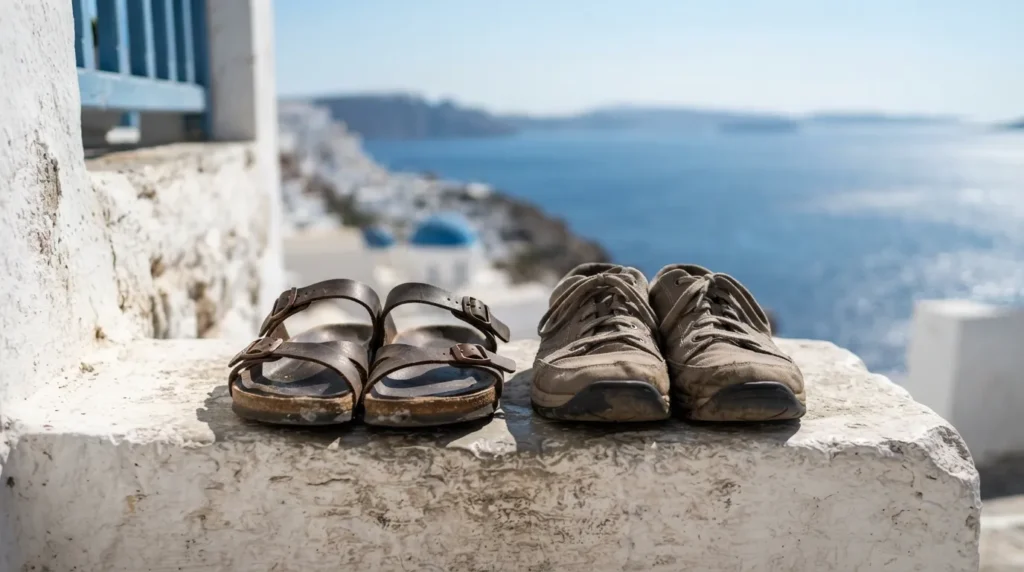
Greece is hard on shoes. Marble streets in Athens are slippery when worn smooth, island paths are uneven and rocky, and beaches alternate between sand and pebbles.
- Closed-toe walking shoes with real traction for uneven terrain and archaeological sites
- Water shoes for rocky beaches and snorkeling
- Flip-flops or fancy sandals for casual days and warm evenings
- One pair of dressier sandals for nicer dinners
Skip heavy hiking boots unless you’re doing a serious trek — they’re overkill for most itineraries and take up valuable space.
Toiletries and Skincare
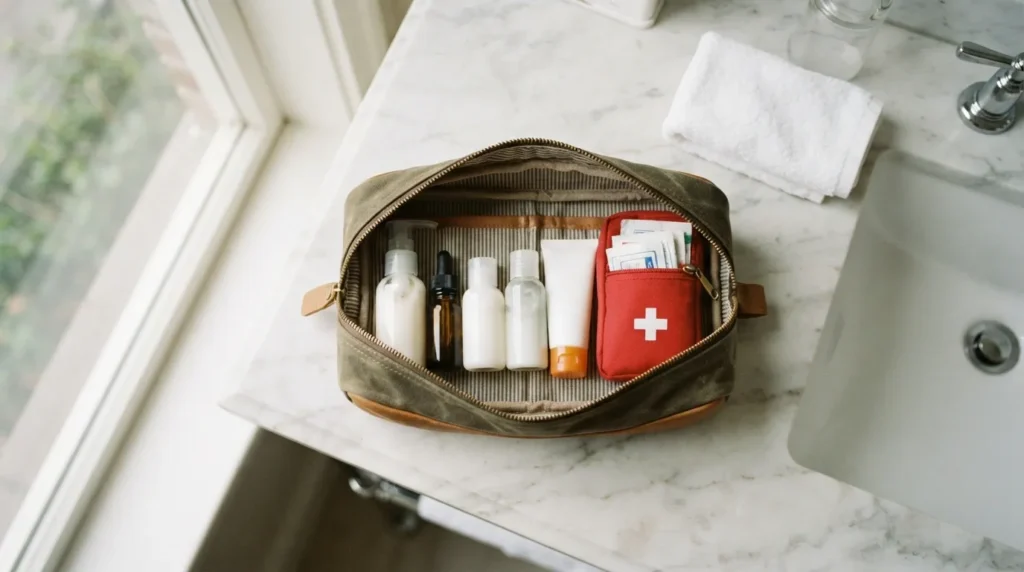
Pharmacies are widely available in Greek cities and larger islands, so you don’t need to over-pack, but smaller islands can have limited stock.
- Basic toiletries in travel-size liquid containers
- Skincare basics — cleanser, moisturizer, toner, and exfoliator — kept to a minimal routine
- After-sun lotion or extra moisturizer for sun-exposed skin
- Deodorant and a quality sunscreen, since the Greek sun is stronger than most travelers expect
- Travel-size dry shampoo and makeup remover wipes for long ferry or bus days
- Detergent sachets if you plan to hand-wash light layers mid-trip
Worked example: A solo traveler on a 12-day island-hopping trip skips checked luggage entirely by packing toiletries into a single quart-size toiletry bag and refilling sunscreen at a local pharmacy on Naxos rather than carrying a full-size bottle from home.
Electronics and Gadgets
Greece uses Type C and Type F plugs, so a universal or Europe-specific adapter is non-negotiable.
- A universal power adapter (Type C/F)
- A portable power bank — solar-charging versions are useful for long beach or hiking days
- A waterproof phone case or pouch for boats, beaches, and unexpected rain
- A durable travel backpack or day bag for daily excursions
Optional extras include a lightweight camera for island scenery and a dedicated e-reader for ferry downtime — nice to have, not essential.
Travel Documents and Money
- Passport, valid for at least six months beyond your travel dates — confirm current requirements on the official Greek Ministry of Foreign Affairs entry page
- Printed hotel bookings and ferry tickets as backup for spotty signal on smaller islands
- A list of emergency contacts, stored both digitally and on paper
- A mix of currency and payment methods — cards are widely accepted, but small tavernas and island shops often prefer cash
Health and Safety Items
- A small first-aid kit with basics: pain relievers, blister plasters, antiseptic wipes
- Prescription medication in its original packaging, with extra in case of delays
- Mosquito repellent or bug spray — DEET-based products last longer, plant-based options suit sensitive skin
- A reusable or insulated water bottle to stay hydrated in the heat
What to Wear in Greece by Setting
Greece isn’t one climate or one dress code. What works on a beach in Mykonos won’t work inside a monastery on Patmos.
Island and Beach Life
Island style leans relaxed and colorful. Think flowy, breathable fabrics, swimwear you’re comfortable wearing most of the day, and a wide-brimmed hat for sun protection during long beach stretches.
- Dark-colored swimwear (it hides sand and salt stains better than light colors)
- A quick-dry microfiber beach towel that packs down small
- A waterproof dry bag for boat trips, snorkeling gear, and phone protection
- Snorkeling or light hiking gear if your itinerary includes coastal trails
City and Mainland Exploring
Athens and mainland cities call for slightly more polished, neutral clothing — comfortable enough for walking, presentable enough for museums and city dinners.
- Comfortable, non-heel shoes for long days on foot
- Blend-in, neutral-toned clothing that works across markets, museums, and restaurants
- A small crossbody bag or day bag to keep valuables secure in busier tourist areas
Worked example: A traveler spending two days in Athens before island-hopping wears the same neutral linen trousers and sun shirt for both the Acropolis and a later ferry departure, simply swapping sandals for water shoes once she reaches the coast.
Modest Dressing for Churches and Monasteries
Many churches and monasteries — especially on islands like Patmos and in Meteora — require covered shoulders and knees.
- A light scarf or wrap that converts a tank top into modest coverage in seconds
- Loose trousers or a midi/maxi dress that doesn’t need last-minute layering
- Avoid overly casual gym or beachwear when visiting active religious sites
Packing for Different Seasons in Greece
Weather determination should drive your packing list more than the calendar month alone — Greece’s climate varies noticeably by region and by year.
Spring Packing List
Spring (March–May) brings mild days, cooler nights, and occasional rain, especially in March and April.
- A rain jacket and compact umbrella
- A scarf and cardigan for temperature swings between midday sun and cool evenings
- Comfortable walking shoes, since spring is ideal for mainland sightseeing before island season ramps up
Summer Packing List
Summer (June–August) is hot, dry, and the peak of Greek tourist season.
- Extra swimwear, since one suit rarely dries in time between beach days
- Strong sun protection: sunglasses with UV protection, a wide-brimmed hat, and high-SPF sunscreen
- Lightweight, breathable fabrics throughout — this is not the season for anything heavy or synthetic
Off-Peak vs. Peak Season Differences
| Factor | Peak Season (Jun–Aug) | Off-Peak (Mar–May, Sep–Oct) |
|---|---|---|
| Crowds | Heavy at major sites and beaches | Noticeably lighter |
| Clothing | Maximum sun protection, extra swimwear | Layering pieces, light jacket needed |
| Ferry schedules | Frequent, book early | Reduced, check in advance |
| Packing priority | Cooling, hydration, sun gear | Versatility for temperature swings |
Peak season crowd considerations matter for packing too — comfortable, non-heel shoes and a compact day bag make a real difference when navigating packed sites in July heat.
Choosing the Best Backpack and Luggage for Greece
Greece’s mix of ferries, tight island streets, and stone staircases makes easy-to-maneuver luggage more important than in most destinations.
- A soft-sided, durable travel backpack beats a large hard-shell suitcase for island transfers
- Packing cubes keep inner wear and accessories organized and make ferry-to-hotel transitions faster
- A small daypack or crossbody bag handles daily excursions without hauling your main bag around
Worked example: A backpacker moving between four islands in ten days finds that a 40-liter backpack with packing cubes clears ferry boarding lines faster than travelers wrestling rolling suitcases up gangplanks.
Top Packing Tips for Greece
- Pack a light jacket or cardigan even in summer — air-conditioned interiors and breezy ferry decks get cold.
- Bring one extra swimsuit if you’re island-hopping; salt water and sun make quick drying unreliable.
- Choose an inflatable travel pillow for long ferry rides between islands.
- Keep a toiletry bag pre-packed with travel-size liquid containers so re-packing between hotels takes minutes.
- Bring hand sanitizer and hair ties/clips — small items that are easy to forget and mildly annoying to buy last-minute.
- Test your power adapter before you leave; Greece’s Type C/F plugs differ from UK and US standards.
Quick-Reference Packing Chart
| Category | Must-Pack Items |
|---|---|
| Clothing | Dresses/jumpsuits, breathable tops, shorts/trousers, cardigan, coverup |
| Footwear | Walking shoes, water shoes, sandals, dressier evening shoes |
| Electronics | Power adapter, power bank, waterproof phone case |
| Toiletries | Skincare basics, sunscreen, after-sun lotion, toiletry bag |
| Health & Safety | First-aid kit, medication, insect repellent, water bottle |
| Documents | Passport, printed bookings, emergency contacts, cash and cards |
Greece Packing FAQs
What’s the weather like in Greece?
Hot and dry in summer, mild with occasional rain in spring and autumn, and cooler on the mainland than the islands during shoulder season.
Do I need a special adapter for Greece?
Yes — Greece uses Type C and Type F plugs, so bring a universal adapter or one rated for continental Europe.
What should I pack differently for the Greek islands versus Athens?
Islands call for more swimwear, water shoes, and sun protection; Athens calls for comfortable walking shoes and slightly more polished, neutral clothing.
What if I forget something?
Pharmacies, supermarkets, and clothing shops are widely available in Athens and larger islands, so most forgotten basics are easy to replace — smaller islands have more limited stock.
Is a rain jacket necessary in summer?
Generally no. Summer in Greece is dry; save the rain jacket for spring trips instead.
Final Thoughts
Packing for Greece comes down to versatility: clothing that moves between beach and city, shoes that survive marble and gravel, and a bag light enough to carry up a ferry gangplank. Get those pieces right, and everything else on this list falls into place.