
Table of Contents
Packing for Ireland is less about bringing a huge suitcase and more about choosing versatile items that can handle changing conditions. The right Ireland travel essentials should prepare you for rain, wind, cool mornings, brighter afternoons, long walks, and casual evenings without filling every inch of your luggage.
Ireland is known for changeable weather, so a flexible travel wardrobe is usually more useful than heavy clothing for every possible condition. Tourism Ireland recommends layers, a waterproof jacket, and comfortable walking footwear, while its travel checklist also highlights an adapter, payment cards, and a portable power bank.
The goal is simple: pack light, prepare for rain, wear comfortable shoes, and keep your important documents and electronics accessible.
If you are planning your first Ireland trip, this guide covers clothing, footwear, toiletries, luggage, money, technology, road-trip gear, and seasonal considerations in one practical checklist.
Ireland Travel Essentials: What You Actually Need
A good packing list should start with the activities you actually plan to do. A city break in Dublin requires a different combination of items from a road trip around the coast or a hiking-focused itinerary.
The most useful essentials fall into a few categories:
- Weather-ready clothing
- Comfortable walking shoes
- Waterproof outerwear
- Toiletries and medication
- Passport and travel documents
- Payment cards and some cash
- Power adapter and chargers
- Phone and portable power bank
- Day bag
- Reusable water bottle
- Travel documents and reservations
- Activity-specific equipment
The official Ireland travel checklist similarly emphasizes adaptable clothing, walking footwear, currency, cards, and electrical adapters.
Quick Ireland Packing Checklist
| Category | Essential items |
|---|---|
| Clothing | T-shirts, shirts, trousers, sweater, lightweight layers |
| Rain protection | Waterproof jacket, raincoat, optional umbrella |
| Shoes | Walking shoes or trainers, waterproof footwear if needed |
| Documents | Passport, driver’s license, insurance information, reservations |
| Money | Cards, euros for the Republic of Ireland, appropriate currency for Northern Ireland |
| Toiletries | Toothbrush, toothpaste, deodorant, shampoo, moisturizer |
| Health | Prescription medication, painkillers, Band-Aids, personal medication |
| Electronics | Phone, charger, Type G adapter, power bank |
| Day trips | Backpack, water bottle, snacks, camera |
| Organization | Packing cubes, laundry bag, travel pouch |
The exact amount depends on the length and style of your trip.
For example, someone spending five days in Dublin may only need a compact suitcase and one day bag. Someone spending two weeks driving around Ireland may want additional layers, hiking footwear, and space for laundry.
How Much Should You Pack?
Avoid packing one complete outfit for every day.
A better approach is to choose clothing that works together. Three or four bottoms can be combined with several tops, while one sweater and one waterproof jacket can cover multiple weather situations.
For a seven-day trip, you could pack:
- 3–4 bottoms
- 5–7 tops
- 1–2 sweaters or fleeces
- 1 waterproof jacket
- 7 pairs of underwear
- 7 pairs of socks
- 1 pair of everyday walking shoes
- 1 optional second pair
- Sleepwear
- One small selection of accessories
This approach keeps your suitcase manageable and leaves room for souvenirs.
What to Wear in Ireland
The best Ireland travel wardrobe is based on layers rather than bulky clothing.
Ireland.com recommends several layers because weather conditions can change during the day. Its current travel checklist specifically recommends T-shirts, light sweaters, a waterproof jacket, and comfortable walking footwear.
The Four Seasons in One Day Wardrobe
You may start a morning wearing a sweater, remove it when the sun comes out, and need a waterproof jacket later.
That is why lightweight layers work so well.
Start with a comfortable base layer such as a T-shirt or long-sleeved shirt. Add a cardigan, fleece, or wool sweater when temperatures drop. Keep a waterproof outer layer accessible rather than buried at the bottom of your suitcase.
A practical combination looks like this:
T-shirt → lightweight sweater → waterproof jacket
This system is easier to adjust than carrying one extremely heavy coat.
Practical scenario: Imagine leaving your accommodation at 8 a.m. for a walking tour. It feels cool, so you wear a long-sleeved shirt and sweater. By lunchtime, the temperature rises and you remove the sweater. Later, rain arrives, so the waterproof jacket goes back on. Three lightweight pieces handle all three situations.
Essential Layers
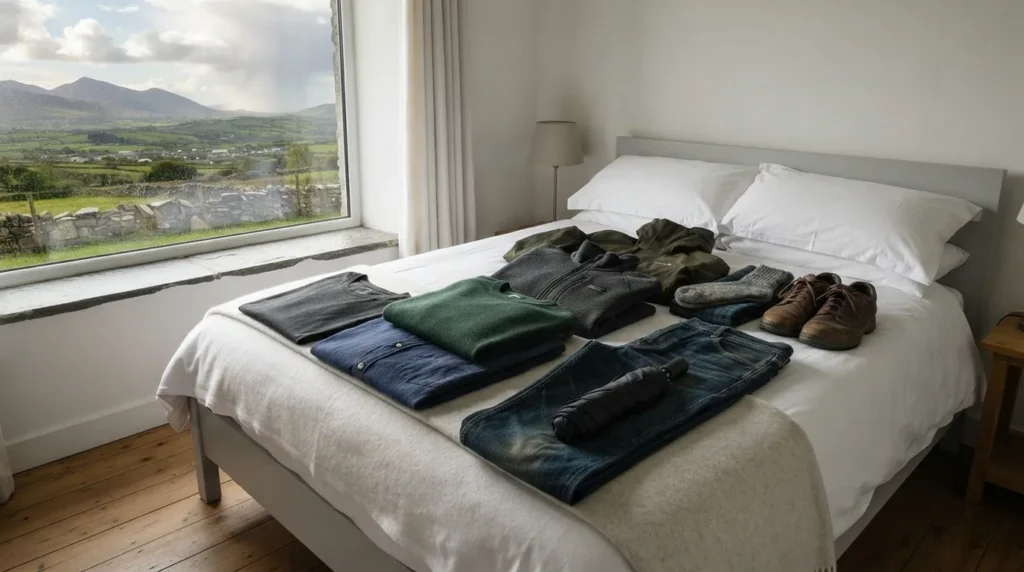
A versatile Ireland packing list can include:
- T-shirts
- Long-sleeved shirts
- Lightweight sweaters
- Cardigan
- Fleece
- Merino wool layer
- Jeans or lightweight pants
- Leggings
- Scarf
- Hat
- Gloves for colder months
Merino wool can be particularly useful because it provides warmth without requiring a very bulky garment.
You do not need every type of layer. Choose two or three that work together.
Waterproof Outerwear
A waterproof jacket is one of the most useful items you can bring.
A regular fashion jacket may look good but offer little protection during a sudden shower. A lightweight waterproof jacket with a hood gives you much more flexibility.
A raincoat or waterproof shell can also double as protection against wind when you are visiting exposed coastal locations.
Condé Nast Traveler’s Ireland packing guide similarly places waterproof outerwear among the key pieces for Ireland’s damp and changeable conditions.
Comfortable Shoes for Ireland
Walking is a major part of many Ireland trips. You may spend hours exploring city streets, castles, villages, cliffs, gardens, or coastal paths.
Choose footwear based on your itinerary rather than appearance alone.
Good options include:
- Comfortable trainers
- Walking shoes
- Walking boots
- Hiking boots for actual trails
- Waterproof shoes
- Rain boots when conditions and activities justify them
You do not necessarily need hiking boots for a normal sightseeing trip.
If your itinerary consists mostly of Dublin, Galway, Cork, museums, restaurants, and paved attractions, comfortable trainers may be enough.
If you plan to hike, walk muddy trails, or spend significant time outdoors, proper hiking footwear becomes more valuable.
Practical scenario: A traveler doing a city-and-countryside itinerary could wear comfortable trainers for urban sightseeing and carry waterproof walking shoes for wetter days. Someone hiking the Cliffs of Moher area or other trails should prioritize grip and weather protection over fashion.
Smart Casual and Everyday Clothing
Ireland generally does not require an elaborate travel wardrobe.
For restaurants, pubs, sightseeing, and casual evenings, smart casual clothing is usually versatile enough.
For women, this could mean:
- Jeans or trousers
- Leggings
- A simple dress
- Maxi skirt
- Sweater or cardigan
- Comfortable shoes
- Scarf
For men, a simple combination of:
- Jeans or chinos
- T-shirts
- Polo or button-down shirt
- Sweater
- Waterproof jacket
is sufficient for many itineraries.
You can also pack one slightly smarter outfit if your accommodation or itinerary includes a special dinner.
Ireland Packing List by Season
The basic essentials stay similar throughout the year, but the balance between layers changes.
Spring
Spring can be unpredictable, so focus on layers and rain protection.
Consider packing:
- T-shirts
- Long-sleeved shirts
- Lightweight sweater
- Waterproof jacket
- Jeans or lightweight pants
- Comfortable trainers
- Waterproof shoes if your itinerary is outdoors
- Scarf
- Compact umbrella if desired
A carry-on-focused Ireland packing list published for spring emphasizes practical clothing and light packing rather than bringing an excessive amount of gear.
Example: For a one-week spring trip, wear your heaviest shoes on the plane and pack one sweater plus a waterproof layer. That saves valuable suitcase space.
Summer
Summer usually allows lighter clothing, but do not assume you can leave rain protection behind.
Pack:
- T-shirts
- Short-sleeved shirts
- Lightweight pants
- Jeans
- Shorts if you prefer them
- Light sweater
- Waterproof jacket
- Comfortable walking shoes
- Sunglasses
- Sunscreen
- Swimwear
Tourism Ireland specifically recommends swimwear because Ireland’s beaches can be part of the experience, while also recommending layers and waterproof protection.
Autumn
Autumn calls for warmer layers and stronger rain protection.
Consider:
- Long-sleeved shirts
- T-shirts for layering
- Wool sweater
- Fleece
- Waterproof jacket
- Jeans or trousers
- Wool socks
- Waterproof shoes
- Scarf
- Hat
- Gloves
Example: If your trip includes coastal sightseeing, wear a warm base layer and carry the waterproof jacket in your day bag rather than leaving it in the hotel.
Winter
Winter requires more insulation, but you still do not need to pack your entire cold-weather wardrobe.
Consider:
- Warm sweater
- Merino wool layer
- Fleece
- Waterproof winter jacket
- Warm trousers
- Wool socks
- Waterproof boots
- Hat
- Gloves
- Scarf
The trick is to build warmth through layers so you can adjust throughout the day.
Luggage and Bags for an Ireland Trip
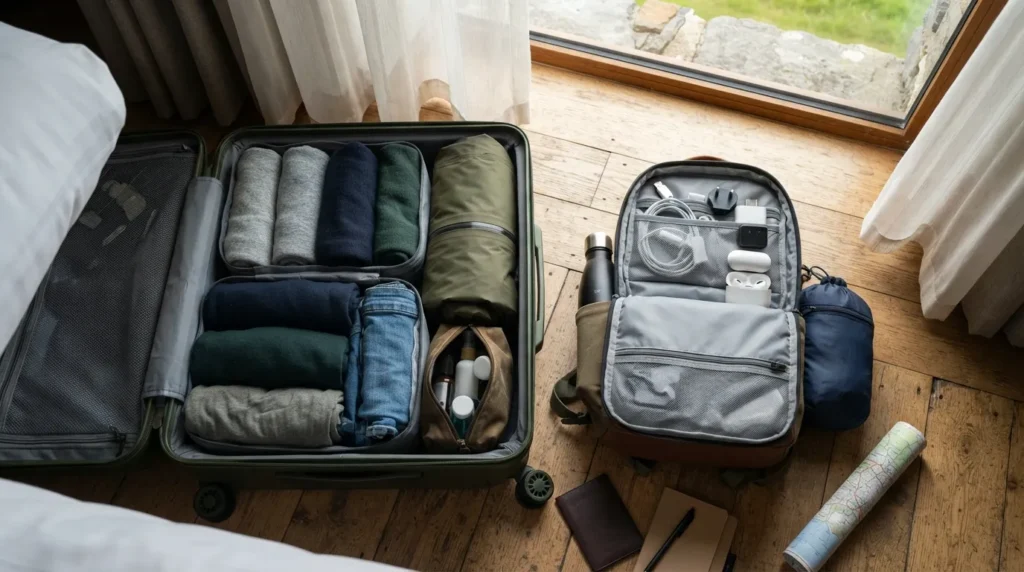
Traveling light makes many Ireland itineraries easier.
This is particularly relevant when your trip includes multiple accommodations, rental cars, public transport, narrow streets, or frequent hotel changes.
Vagabond Tours advises travelers to keep luggage compact and notes that large luggage can be inconvenient on tours with limited vehicle capacity.
Carry-On Suitcase or Checked Luggage?
A carry-on suitcase can work very well for a short trip if you pack strategically.
A checked suitcase may make sense when:
- You are traveling for two weeks or longer
- You need bulky winter clothing
- You have specialist outdoor equipment
- You are traveling with children
- You want extra space for souvenirs
For a five-to-seven-day trip, a compact suitcase can often be enough.
Day Bags and Personal Items
Your main luggage should stay at your accommodation or in the vehicle while your day bag carries what you need during sightseeing.
A small backpack, crossbody bag, or fanny pack can hold:
- Phone
- Wallet
- Passport when necessary
- Power bank
- Water bottle
- Snacks
- Sunglasses
- Rain layer
- Small personal items
Keep valuable documents and money secure and avoid carrying unnecessary items.
Packing Cubes and Organization
Packing cubes can separate clothing into useful groups:
- Tops
- Bottoms
- Underwear and socks
- Cold-weather layers
- Toiletries
Compression packing cubes can save space, but they can also encourage overpacking.
Vacuum compression bags are useful for bulky clothing but are usually unnecessary for a lightweight summer trip.
Practical scenario: Put sweaters and outer layers in one cube, daily clothes in another, and underwear and socks in a third. When you reach your hotel, you can find what you need without unpacking the entire suitcase.
Toiletries and Health Essentials
Toiletries are easy to overpack.
Start with the items you actually use every day.
Everyday Toiletries
A compact toiletry bag can include:
- Toothbrush
- Toothpaste
- Shampoo
- Soap or body wash
- Deodorant
- Moisturizer
- Sunscreen
- Chapstick
- Hair brush
- Makeup
- Face wipes
- Contact lenses
- Eye drops
- Razor
- Personal hygiene products
Travel-size containers can reduce bulk, particularly when you are using carry-on luggage.
You do not need full-size bottles unless you specifically require them.
First Aid and Medications
A small first aid kit is useful for minor problems.
Consider:
- Prescription medication
- Painkillers
- Band-Aids
- Personal medication
- Motion-sickness medication if required
- Basic stomach remedies
- Tweezers
- Nail clippers
Keep prescription medication accessible rather than packing it somewhere difficult to reach.
One Ireland packing guide specifically recommends keeping prescription medication in your carry-on rather than checked luggage.
Practical scenario: If your checked suitcase is delayed, you still have your essential medication, toiletries needed immediately, and basic travel documents with you.
Personal Care Extras
Do not pack something simply because it appears on someone else’s checklist.
For example, if your hotel provides a hairdryer and you are not camping or staying somewhere without towels, there is little reason to use valuable luggage space for those items.
Travel Documents and Money
Documents are among the most important Ireland travel essentials because replacing forgotten clothing is easy; replacing a missing document is much harder.
Passport and Important Documents
Keep your essential documents together but do not put everything in one unsecured place.
Depending on your trip, you may need:
- Passport
- Driver’s license
- Travel insurance information
- Accommodation reservations
- Car rental information
- Flight details
- Activity confirmations
- Emergency contact information
Make digital copies of important documents and keep them accessible offline.
The Infinite Ireland checklist also recommends carrying a passport copy separately from the original and keeping reservation and emergency information organized.
Currency and Cards
The currency depends on which part of the island you are visiting.
The Republic of Ireland uses the euro (€), while Northern Ireland uses pound sterling (£). Ireland.com’s current travel checklist confirms this distinction.
Credit and debit cards are useful for everyday purchases, but carrying a small amount of appropriate cash can still be convenient.
Do not assume that the same currency arrangement applies everywhere on the island.
Example: If your itinerary covers Dublin and Galway, plan around euros. If it includes Northern Ireland, such as Belfast, account for pounds sterling as well.
Before You Leave Home
A useful pre-trip checklist includes:
- Check your passport validity
- Confirm accommodation
- Confirm flights
- Confirm car rental
- Check your travel insurance
- Notify your bank if necessary
- Download useful travel apps
- Charge electronics
- Save emergency contacts
- Check your itinerary
- Keep copies of important documents
The Infinite Ireland pre-trip checklist also recommends reconfirming reservations, checking documents, charging electronics, and leaving itinerary information with someone at home.
Electronics and Power Essentials
Technology can make an Ireland trip much easier, but only if you can keep everything charged.
Type G Adapter and Charging
Ireland uses three-pronged plugs and a 230V/50Hz electrical supply. Tourism Ireland recommends bringing an adapter for your devices.
For many travelers, the most useful electronics are:
- Smartphone
- Phone charger
- Type G power adapter
- Power bank
- Camera
- Camera charger
- Extra battery
- SD card
- Headphones
- E-reader or Kindle
- Laptop if genuinely needed
A voltage converter is not automatically necessary for every traveler. Check whether your particular device supports the local voltage before connecting it.
Phones, Cameras, and Other Devices
Your smartphone can replace several separate items, including:
- Camera
- Map
- Travel guidebook
- Itinerary
- Translation tool
- Booking information
- Communication device
If photography is a priority, bring an extra battery and SD card.
Ireland.com’s checklist specifically recommends a camera, battery charger, and spare memory cards for travelers who plan to photograph the scenery.
Practical scenario: If you are driving through rural areas and photographing coastal landscapes all day, a power bank and spare camera battery are more useful than bringing a laptop you rarely plan to open.
What to Pack for Road Trips, Hiking, and Day Trips
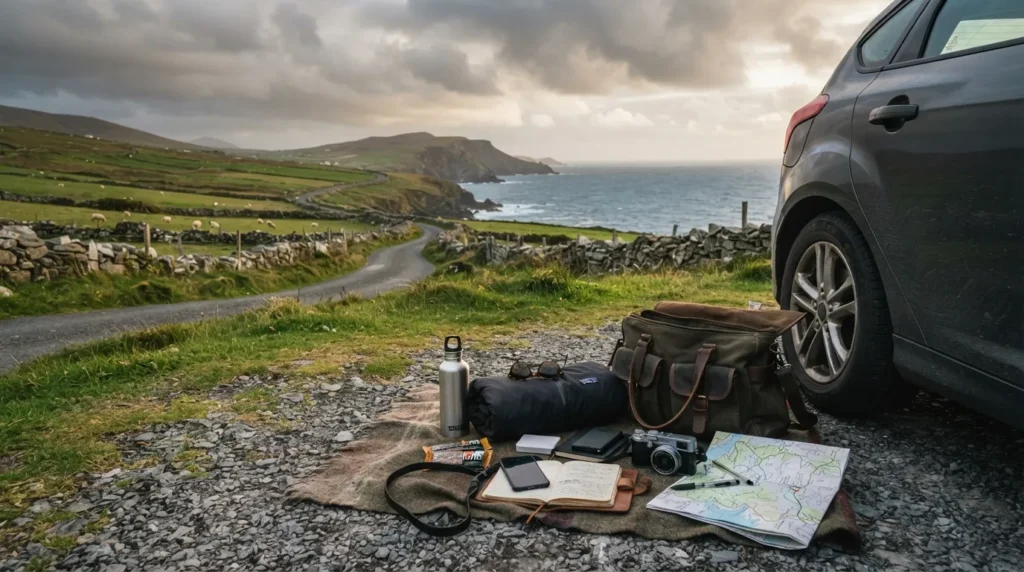
Your activity list should influence your final packing decisions.
Ireland Road Trip Essentials
For a self-drive Ireland trip, consider carrying:
- Driver’s license
- Car rental information
- Phone holder
- Charging cable
- Offline maps
- Road map
- Water bottle
- Snacks
- Sunglasses
- Waterproof jacket
- Day bag
Keep important booking details accessible.
A physical road map can also be useful as a backup, particularly when exploring rural areas.
Hiking and Outdoor Gear
If hiking is genuinely part of your itinerary, add:
- Hiking boots
- Wool socks
- Lightweight waterproof layer
- Comfortable walking trousers
- Small backpack
- Water bottle
- Snacks
- Hiking poles if needed
- First aid supplies
Do not pack hiking-specific equipment simply because you are visiting Ireland.
A traveler spending most of the trip in cities has little reason to carry heavy hiking boots.
What to Carry in Your Day Bag
A practical day bag might contain:
Morning: water bottle, phone, wallet, sunglasses and light layer.
Afternoon: waterproof jacket, power bank and snack.
Evening: reservation details, small personal items and anything needed for the journey back.
This approach keeps your day comfortable without turning your backpack into a second suitcase.
What You Can Leave at Home
One of the easiest ways to improve your packing is to decide what not to bring.
Depending on your accommodation and itinerary, you may be able to leave behind:
- Multiple heavy coats
- Several pairs of formal shoes
- Large toiletries
- Bulky towels
- Hairdryer
- Excessive formal clothing
- Too many pairs of jeans
- Duplicate electronics
- Large quantities of snacks
- Unnecessary outdoor equipment
Vagabond specifically advises against packing formal wear for most of its Ireland tours and notes that hotels provide items such as hairdryers and towels, although requirements vary by accommodation and activity.
Do not follow this blindly. Always check your own accommodation.
Example: If your hotel confirms that a hairdryer is provided, leave yours at home. If you are camping or doing water activities, your requirements may be completely different.
Ireland Packing Checklist: Quick Reference
Use this final checklist before closing your suitcase.
Clothing
- T-shirts
- Long-sleeved shirts
- Lightweight sweater
- Cardigan or fleece
- Jeans or lightweight pants
- Leggings
- Optional shorts
- Sleepwear
- Underwear
- Wool or regular socks
- Scarf
- Hat
- Gloves for colder seasons
Rain and Weather
- Waterproof jacket
- Raincoat if preferred
- Waterproof shoes if needed
- Compact umbrella if useful
- Sunglasses
Footwear
- Comfortable trainers or walking shoes
- Waterproof footwear
- Hiking boots only if hiking
- Optional second pair
Toiletries
- Toothbrush
- Toothpaste
- Shampoo
- Soap
- Deodorant
- Moisturizer
- Sunscreen
- Chapstick
- Hair brush
- Makeup
- Face wipes
- Contact lenses and solution
Health
- Prescription medication
- Painkillers
- Band-Aids
- First aid kit
- Personal medication
- Nail clippers
- Tweezers
Documents
- Passport
- Driver’s license
- Travel insurance
- Accommodation reservations
- Car rental information
- Flight information
- Emergency contacts
Money
- Credit card
- Debit card
- Appropriate cash
- Wallet
Electronics
- Smartphone
- Charger
- Type G adapter
- Power bank
- Camera
- Extra battery
- SD card
- Headphones
- Kindle or e-reader
Day Trips
- Small backpack
- Reusable water bottle
- Snacks
- Travel umbrella
- Travel guidebook
- Notebook
- Camera
- Waterproof layer
Frequently Asked Questions About Packing for Ireland
What should I pack for a trip to Ireland?
Start with versatile layers, a waterproof jacket, comfortable walking shoes, toiletries, travel documents, payment cards, a Type G adapter, phone charger, and a small day bag. Add hiking or specialist gear only if your itinerary requires it.
What type of clothing should I pack for Ireland?
Pack clothing that can be layered. T-shirts, long-sleeved shirts, lightweight sweaters, fleece, jeans or trousers, and a waterproof outer layer are useful combinations.
Ireland.com’s travel guidance specifically recommends layers because weather conditions can change during the day.
Do I need waterproof shoes for Ireland?
They are useful, particularly if you expect rain, coastal walks, countryside excursions, or muddy trails. For a mostly urban trip, comfortable trainers may be enough, but waterproof footwear provides extra flexibility.
What currency should I bring to Ireland?
The Republic of Ireland uses euros, while Northern Ireland uses pound sterling. Cards are widely used, but carrying some appropriate cash can be convenient.
What kind of adapter do I need in Ireland?
Ireland uses three-pronged plugs and a 230V/50Hz electricity supply, so travelers whose devices use different plugs should bring a suitable adapter.
Should I pack an umbrella for Ireland?
You can, but it is not necessarily the best rain solution. A waterproof jacket is more useful when walking because it keeps your hands free and can provide protection against wind as well as rain.
One Ireland packing guide specifically favors a waterproof outer layer, while another recommends a compact windproof umbrella as an optional item.
Should I bring hiking boots to Ireland?
Only if hiking is part of your itinerary. For ordinary sightseeing, comfortable walking shoes or trainers are generally more practical.
Can I pack for Ireland in a carry-on?
Yes, especially for a short trip. Choose versatile clothing, wear your bulkiest shoes while traveling, use packing cubes, and avoid duplicate items.
A recent carry-on-focused Ireland packing guide demonstrates how a one-week trip can be approached with limited luggage.
How many clothes should I take for a week in Ireland?
A practical starting point is around 3–4 bottoms, 5–7 tops, one or two warm layers, one waterproof jacket, enough underwear and socks for the trip, sleepwear, and one or two pairs of suitable shoes. Laundry can reduce the amount needed for longer trips.
Final Ireland Packing Tips
The best Ireland packing list is not the longest one. It is the one that gives you the flexibility to deal with changing weather, long walks, casual evenings, and unexpected plans without carrying unnecessary weight.
Build your wardrobe around layers. Keep rain protection accessible. Choose shoes for walking rather than photographs alone. Keep documents, medication, money, and chargers easy to reach.
Most importantly, pack for your itinerary, not someone else’s.
With the right Ireland travel essentials in your bag, you can spend less time worrying about what you forgot and more time enjoying Ireland.