
Table of Contents
Why Long-Haul Flight Essentials Matter
A ten-hour flight can wreck your skin, your sleep schedule, and your patience — or it can feel like a manageable stretch of quiet time. The difference almost always comes down to preparation.
The right long-haul flight essentials turn a cramped economy seat into a workable space for rest, hydration, and light productivity. This isn’t about overpacking. It’s about choosing a small set of items that do real work: comfort, hygiene, connectivity, and organization.
This guide walks through every category you need to cover before an international or long-haul flight, from noise-cancelling headphones to passport wallets, with practical examples and a printable-style checklist at the end.
Frequent flyers tend to converge on the same short list of items after enough trial and error — not because they’re trendy, but because they solve recurring, predictable problems. Dry cabin air, dead phone batteries, stiff joints from sitting still for ten-plus hours, and the mental fog of crossing multiple time zones are the same four challenges on nearly every long-haul route, whether you’re flying economy or business class.
Rather than buying everything on a generic packing list, it helps to think in categories: comfort, hygiene, connectivity, organization, and health. Each section below covers one of those categories in depth, with specific product types (not just vague suggestions) so you can build a kit that actually gets used, not one that sits in a drawer after a single trip.
If you want more destination-specific packing advice once your long-haul flight essentials are sorted, browse our travel essentials blog for city and country-specific guides.
Comfort Essentials for Long-Haul Flights
Comfort is the foundation. If your body is tense, cold, or overstimulated, nothing else on this list matters as much.
Noise-Cancelling Headphones and Earbuds
A solid pair of noise-cancelling headphones or AirPods does more than block engine drone — it lets you control your environment. Over-ear options like Bose tend to isolate sound better on long flights, while compact AirPods or Sudio earbuds save space in a small bag.
If you’re pairing headphones with an in-flight entertainment system that only offers a headphone jack, pack a small Bluetooth transmitter. It’s a two-dollar fix for a genuinely annoying problem.
Example: On a 14-hour flight to Tokyo, swapping wired airline headphones for your own noise-cancelling pair can be the single biggest comfort upgrade of the trip — quieter cabin noise means less mental fatigue on arrival.
Sleep Mask, Neck Pillow, and Travel Blanket
A contoured sleep mask blocks light better than the flat kind and won’t press on your eyelids. Pair it with a neck pillow — the Trtl style wraps and supports from the side, which works better for window-seat sleepers than the inflatable donut shape.
A lightweight cashmere shawl or travel blanket adds warmth without bulk, and doubles as a scarf or lap cover during layovers.
Compression Socks
Compression socks (merino wool or a brand like 2XU) reduce swelling and improve circulation on flights over four hours. Put them on before takeoff, not after your legs already feel heavy — prevention works better than correction here.
Cozy Layers: Scarf, Wrap, and Joggers
Cabins run cold, then hot, then cold again. Cozy joggers or soft pants, layered with an oversized scarf or sarong, let you adjust without needing a full outfit change. This layering approach also works well for the temperature swings of a layover in a different climate.
Easy On/Off Shoes and Gripper Slippers
Slip-on shoes make security lines faster and airplane-floor trips to the bathroom easier. Gripper slipper socks are a small but genuinely comfort-boosting addition once you’re settled into your seat.
Skincare and Hygiene Essentials for the Plane
Cabin air has extremely low humidity — often under 20% — which dries out skin fast. A short, deliberate skincare routine counters that.
Hydrating Skin Care and Sheet Masks
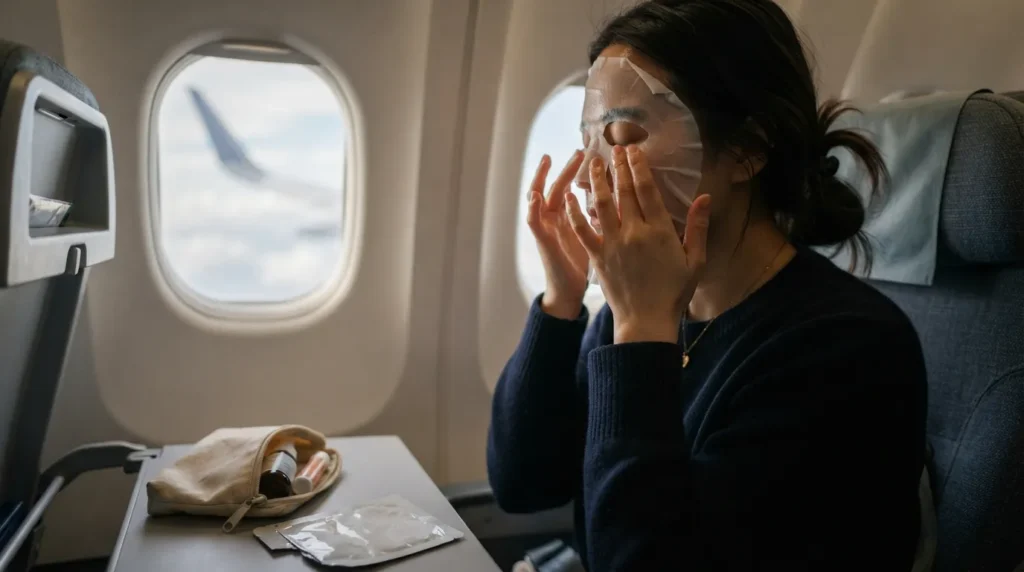
Pack a hydrating serum or cream in travel-size bottles, plus a sheet mask or beauty mask for a mid-flight boost. An Evian facial spray works as a quick refresh at any point without needing a mirror or sink.
Example: Applying a sheet mask an hour before landing lets your skin absorb it fully and avoids arriving with visible mask marks.
Facial Cleansing and Antibacterial Wipes
Micellar water wipes remove makeup without water, which matters when the lavatory sink is barely usable. Keep antibacterial wipes separate for tray tables, armrests, and seatback screens — high-touch surfaces that rarely get a deep clean between flights.
Lip Balm, Hand Lotion, and Hand Sanitizer
Lips and hands dry out fastest in-flight. A good lip balm, hand lotion, and a lavender-scented hand sanitizer cover the basics without adding much weight to your bag.
Toothbrush, Deodorant, and a Freshen-Up Kit
A compact freshen-up kit — toothbrush, travel toothpaste, deodorant, and a solid perfume — makes a real difference before landing or during a layover, especially on flights with a same-day connection.
Tech and Connectivity Essentials for Long Flights
Portable Charger and MagSafe
An Anker power bank or MagSafe charger keeps your phone alive through a flight with spotty seatback power. Bring a cable long enough to reach your seat pocket comfortably — cramped charging setups are a small but constant annoyance.
eSIM and Universal Adapter
A pre-prepped eSIM means you land with data already active, no hunting for airport SIM kiosks. Pack a universal adapter if you’re connecting internationally, even if you don’t think you’ll need to charge anything at the gate.
Offline Entertainment: Books, Podcasts, and Movies
Download books, podcasts, and movies before boarding. In-flight WiFi is often too slow or too expensive to stream reliably, and airline entertainment libraries don’t always match your taste.
Mobile Tripod and AirTag
A small mobile tripod is useful if you’re documenting a trip in transit. An AirTag in your checked bag or carry-on gives real peace of mind on layovers with tight connections.
Example: On a two-leg trip with a 55-minute connection, an AirTag lets you confirm your checked bag actually made the transfer before you land at your final destination, instead of finding out at the carousel. Pair this with a tech pouch that keeps all your cables, adapters, and small electronics in one grab-and-go unit, so nothing gets left behind in a seat-back pocket during a rushed gate change.
Bags, Wallets, and Packing Organization
Carry-On Bag and Everyday Tote
A structured carry-on like the Away Everywhere bag holds up over repeated trips, while a soft tote (Longchamp is a popular pick) works as your personal item for magazines, a laptop, and snacks.
Packing Cubes and Compression Bags
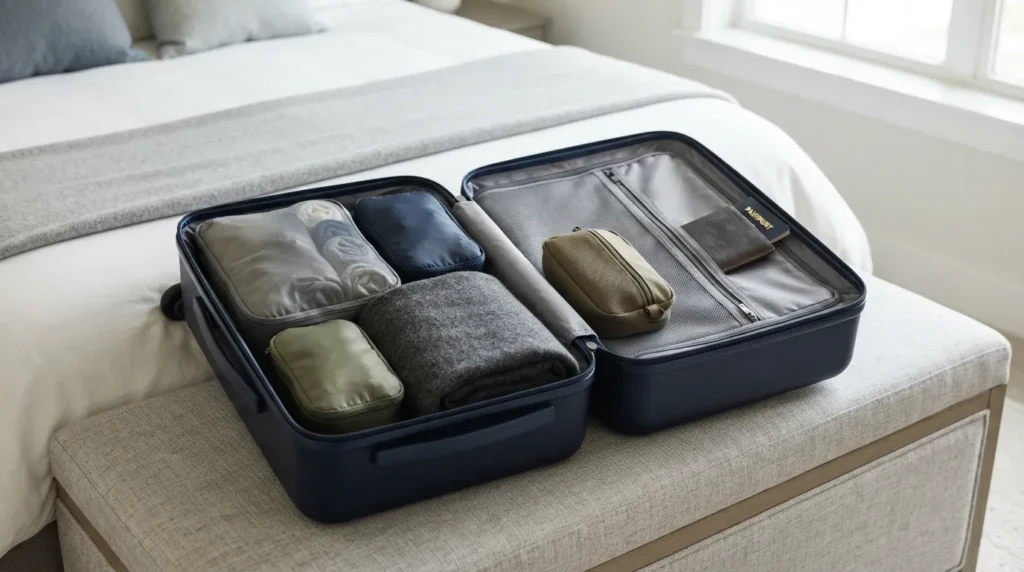
Packing cubes keep clothing sorted by day or category, and compression cubes buy extra space for bulkier items like a travel blanket. This system also speeds up repacking during a layover or hotel stop.
Passport Holder, Travel Wallet, and Small Insert Bag
A dedicated passport wallet keeps your passport, boarding passes, and travel documents in one place. A compact travel wallet (July is a well-reviewed option) or a small insert bag keeps your everyday cards separate from travel documents, so you’re not digging through both at security.
Toiletry Kit and Cosmetic Case
A quart bag or Stasher reusable bag handles liquids for security, while a separate cosmetic pouch holds makeup and skincare you’ll actually use mid-flight, not just what’s packed for the destination.
Snacks, Hydration, and Health On Board
Reusable Water Bottle and Electrolytes
A collapsible or stainless steel reusable water bottle — filled after security — solves the “one small cup of water per service” problem. Electrolyte packets help offset the dehydrating effect of cabin air, especially on flights over eight hours.
Snacks That Travel Well
Meat sticks, nuts, and dried fruit hold up well without refrigeration. Packing your own food in a mason jar or reusable container avoids relying entirely on airline meal timing, which rarely matches your actual hunger.
Medications and Travel Insurance
Keep prescription medications in their original packaging in your carry-on, never checked luggage. Travel insurance is worth the cost on international trips, particularly for trip interruption or medical coverage outside your home country.
International Travel Documents and Money Management
Passport, Visas, and Copies
Check passport expiration dates well before booking — many countries require six months of validity beyond your travel dates. Keep a photo and a physical copy of your passport separate from the original.
Currency, Cards, and RFID Protection
An RFID wallet protects card data from skimming in crowded airports. Carry a small amount of local currency for arrival, since not every taxi or small vendor accepts cards.
How to Beat Jet Lag on Long-Haul Flights
Jet lag comes from your circadian rhythm lagging behind the new time zone. According to CDC’s jet lag guidance, the disruption between your internal clock and local time is what drives most of the fatigue travelers feel after landing. A few habits reduce its impact:
- Shift your sleep schedule by an hour or two in the days before departure.
- Set your watch to the destination time zone as soon as you board.
- Use a sleep mask and avoid screens in the final hour before your planned sleep window.
- A jet lag kit — melatonin, blue-light-blocking glasses, and a scheduling app — helps you commit to the new time zone instead of fighting it.
Example: Flying from New York to Singapore, sleeping on the plane according to Singapore’s nighttime hours (not New York’s) shortens recovery time by a day or more.
Hydration also plays a bigger role in jet lag recovery than most people expect. Cabin air pulls moisture from your body over a long flight, and dehydration alone can mimic several jet lag symptoms — headaches, fatigue, and difficulty concentrating. Pairing a reusable water bottle with an electrolyte packet every few hours does double duty: it fights dehydration and gives your body an easier transition once you land.
Carry-On Weight Limits and Packing Tips
Weight limits vary widely by airline and route, especially outside the US. Check the specific allowance before you pack, not after you’re at the counter paying a fee.
| Airline Type | Typical Carry-On Weight Limit | Typical Personal Item |
|---|---|---|
| US Domestic Carriers | No strict weight limit (size-based) | Under seat, size-restricted |
| European Carriers | 8–10 kg (18–22 lbs) | 1 small bag, often free |
| Budget/Low-Cost Carriers | 7–8 kg (15–18 lbs), strictly enforced | May require paid add-on |
| Asian/Middle Eastern Carriers | 7–10 kg, varies by cabin class | Usually included |
Packing tip: weigh your carry-on at home before departure. A kitchen scale and a hanging luggage scale both work, and it takes two minutes to avoid a gate surprise.
Before You Fly: Setting Yourself Up for Success
Fly in the Morning
Morning flights have fewer cumulative delays than evening ones, since problems compound throughout the day. An early departure also protects your sleep schedule better on the arrival end.
Pick a Good Seat
A window seat suits sleepers who don’t want to be disturbed for bathroom breaks; an aisle seat suits anyone prioritizing movement and easy exits. Seat-mapping tools let you check legroom and recline before booking.
What to Wear on a Long Flight
Layered, breathable clothing beats anything restrictive. Soft joggers, a t-shirt, an oversized scarf, and easy slip-on shoes cover nearly every cabin temperature scenario without needing a mid-flight outfit change.
A Light Fitness Routine Before Flying
A short walk, some light stretching, or even ten minutes of mobility work before heading to the airport helps counter the hours of stillness ahead. It won’t eliminate stiffness on a twelve-hour flight, but it does reduce how sluggish you feel stepping off the plane, and it’s a habit worth building into your pre-flight routine alongside packing.
Making the Most of Layovers
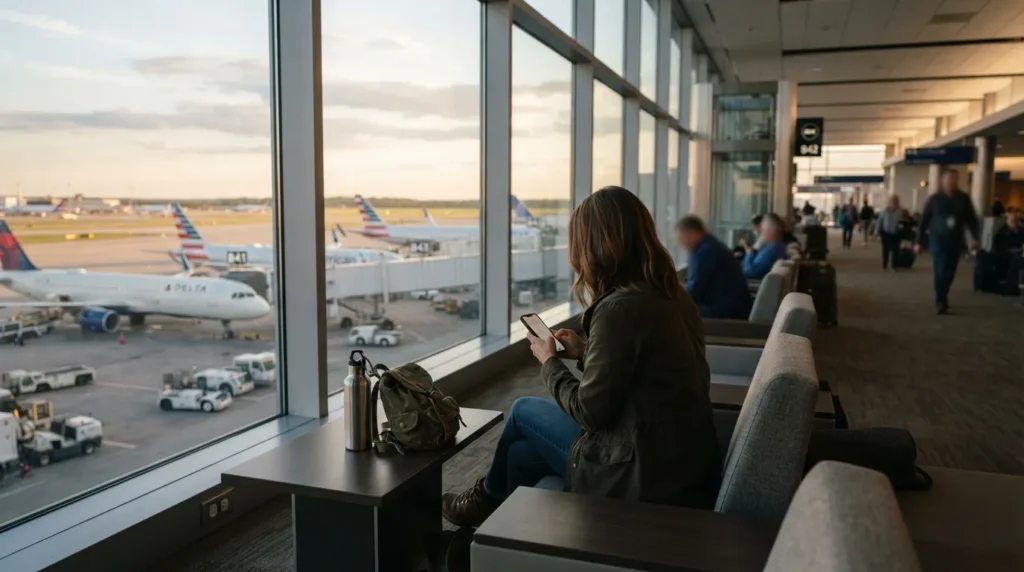
A layover over two hours is enough time to freshen up, eat a real meal, and stretch your legs away from the gate. Use the freshen-up kit here — brushing your teeth and reapplying deodorant genuinely resets how the second leg of the trip feels.
Example: A three-hour layover in Amsterdam is enough time to leave the airport briefly (with the right visa status) or simply walk the terminal’s full length a few times to counter hours of sitting.
What to Pack vs. What to Skip
Not everything marketed as a “travel essential” earns its space in a carry-on. Here’s a practical comparison:
| Worth Packing | Often Skippable |
|---|---|
| Noise-cancelling headphones | A second full outfit change |
| Reusable water bottle | Bulky travel pillow if you already have a wrap |
| Compression socks | Multiple skincare products beyond a hydrating basic |
| Portable charger | Paper guidebooks (use offline maps instead) |
| Sheet mask or hydrating spray | Full-size toiletries |
| Passport wallet with copies | Excess cash beyond arrival needs |
Final Long-Haul Flight Essentials Checklist
- Noise-cancelling headphones or earbuds
- Sleep mask, neck pillow, travel blanket
- Compression socks
- Layered clothing: scarf, joggers, easy shoes
- Hydrating skincare, sheet mask, lip balm
- Cleansing and antibacterial wipes
- Hand sanitizer and hand lotion
- Toothbrush, toothpaste, deodorant
- Portable charger and cables
- eSIM activated, universal adapter packed
- Offline books, podcasts, and movies downloaded
- Carry-on bag, packing cubes, small insert bag
- Passport wallet, travel documents, copies
- RFID wallet with cards and local currency
- Reusable water bottle and snacks
- Medications in original packaging
- Travel insurance confirmed
- Jet lag plan: melatonin, glasses, schedule shift
FAQ: Long-Haul Flight Essentials
What are the most important long-haul flight essentials?
Noise-cancelling headphones, a sleep mask, compression socks, a portable charger, and a reusable water bottle cover the highest-impact categories: comfort, connectivity, and hydration.
How do I avoid dry skin on a long flight?
Use a hydrating serum before boarding, a facial spray mid-flight, and a sheet mask about an hour before landing. Cabin humidity is often below 20%, so skin dries out faster than on the ground.
What should I wear on a long-haul flight?
Breathable, layered clothing — joggers, a t-shirt, a scarf or wrap, and easy slip-on shoes — adapts to cabin temperature swings better than a single heavier outfit.
How can I beat jet lag faster?
Shift your sleep schedule before departure, set your watch to destination time immediately, and align in-flight sleep with your new time zone rather than your home one.
What’s the best carry-on weight for long-haul flights?
It depends on the airline: budget carriers often cap carry-ons at 7–8 kg, while full-service international carriers allow closer to 10 kg. Always check your specific airline before packing.
Do I need travel insurance for international flights?
It’s strongly recommended for international and long-haul trips, particularly for medical coverage and trip interruption, since domestic health insurance often doesn’t apply abroad.
What should I pack in my personal item versus my carry-on?
Keep immediate-need items — headphones, sleep mask, chargers, medications, and a small skincare pouch — in your personal item so you’re not opening the overhead bin mid-flight. Save clothing, packing cubes, and anything you won’t need until landing for the larger carry-on.
Final Thoughts
Long-haul flight essentials aren’t about packing more — they’re about packing the right handful of items that solve real problems: dry skin, dead phone batteries, stiff legs, and a scrambled sleep schedule. Build your kit once, and every future long-haul flight gets easier from there.